

Bath Salts vs Bath Bombs: Which Belongs in Your Routine?
You buy a bath bomb because it looks beautiful on the shelf. You grab a bag of bath salts because someone told you they help sore muscles. Then both sit on your bathroom counter for three weeks while you take plain showers. If that sounds familiar, the problem is not laziness. It is that nobody actually explained what these two products do differently, when each one earns its place in your evening, and which one is worth spending money on given what your body and skin actually need. This guide cuts through the noise on bath salts vs bath bombs so you can make a real decision.
Table of Contents
- What Bath Salts Actually Are
- What Bath Bombs Actually Are
- Quick Takeaways
- The Real Difference in Benefits
- Which One Suits Your Skin Type
- Bath Salts vs Bath Bombs: Side by Side
- How to Fit Each Into Your Evening Routine
- Frequently Asked Questions
- References
What Bath Salts Actually Are
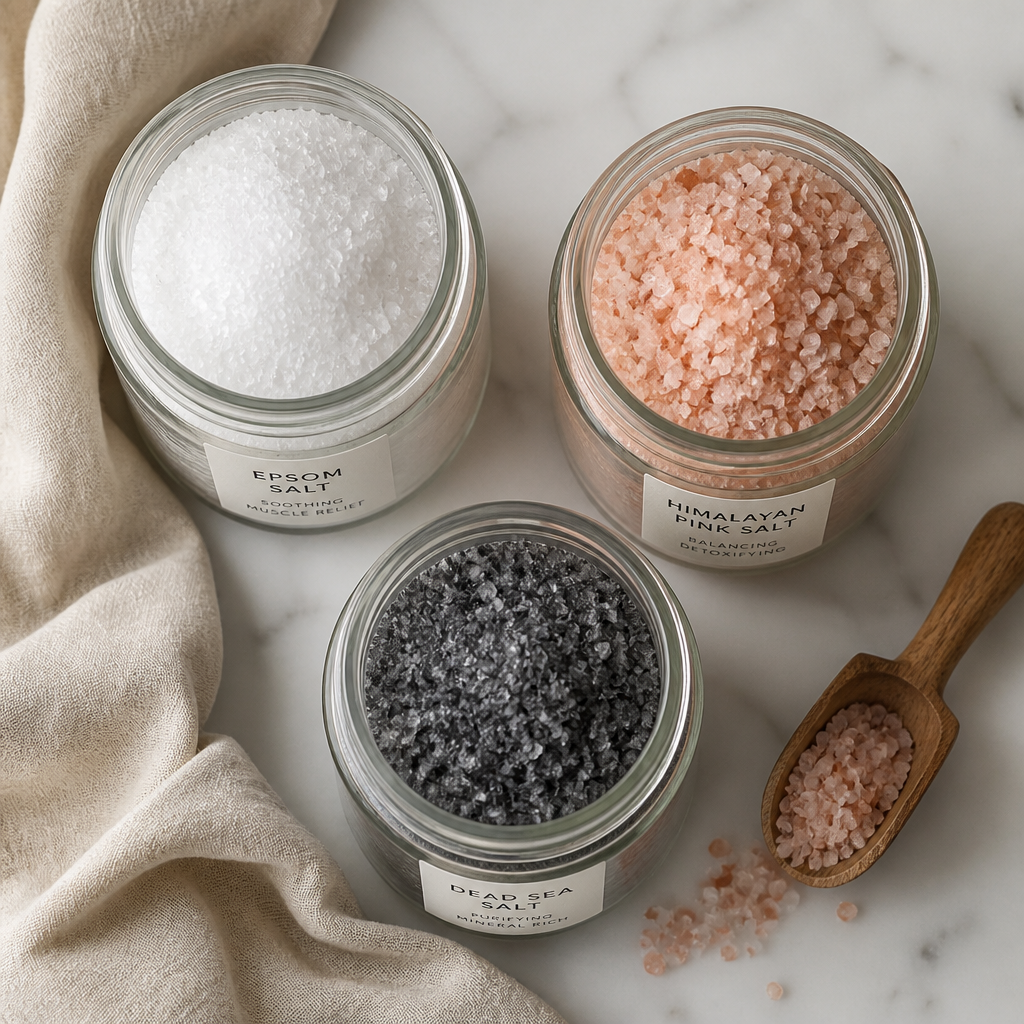
Bath salts are mineral-based soaking compounds, and the term covers several distinct varieties. The three you will encounter most often are Epsom salt (magnesium sulfate), Himalayan pink salt, and Dead Sea salt. Each has a different mineral composition and a different primary benefit, so choosing one matters more than most people realize.
Epsom salt is the workhorse of the group. It is rich in magnesium, and magnesium plays a role in muscle and nerve function. Warm water combined with Epsom salt is a long-standing recovery tool for sore muscles, tension headaches, and general end-of-day physical fatigue. Himalayan pink salt brings a broader spectrum of trace minerals and is often credited with supporting skin hydration and circulation. Dead Sea salt is among the most mineral-dense options available and has a history of use for skin conditions including dryness and irritation.
Bath salts do not fizz. They dissolve steadily into warm water, enriching the soak with minerals and, when essential oils are blended in, with scent. The experience is quieter than a bath bomb, more adjustable (you control exactly how much you use), and far more stripped back in terms of added ingredients. That simplicity is both their strength and the reason some people find them less exciting.
Pro tip: For a post-workout soak, use two full cups of Epsom salt dissolved in warm (not scalding) water and soak for at least 20 minutes. Going shorter cuts off the time your skin needs to absorb the mineral-rich water.
What Bath Bombs Actually Are
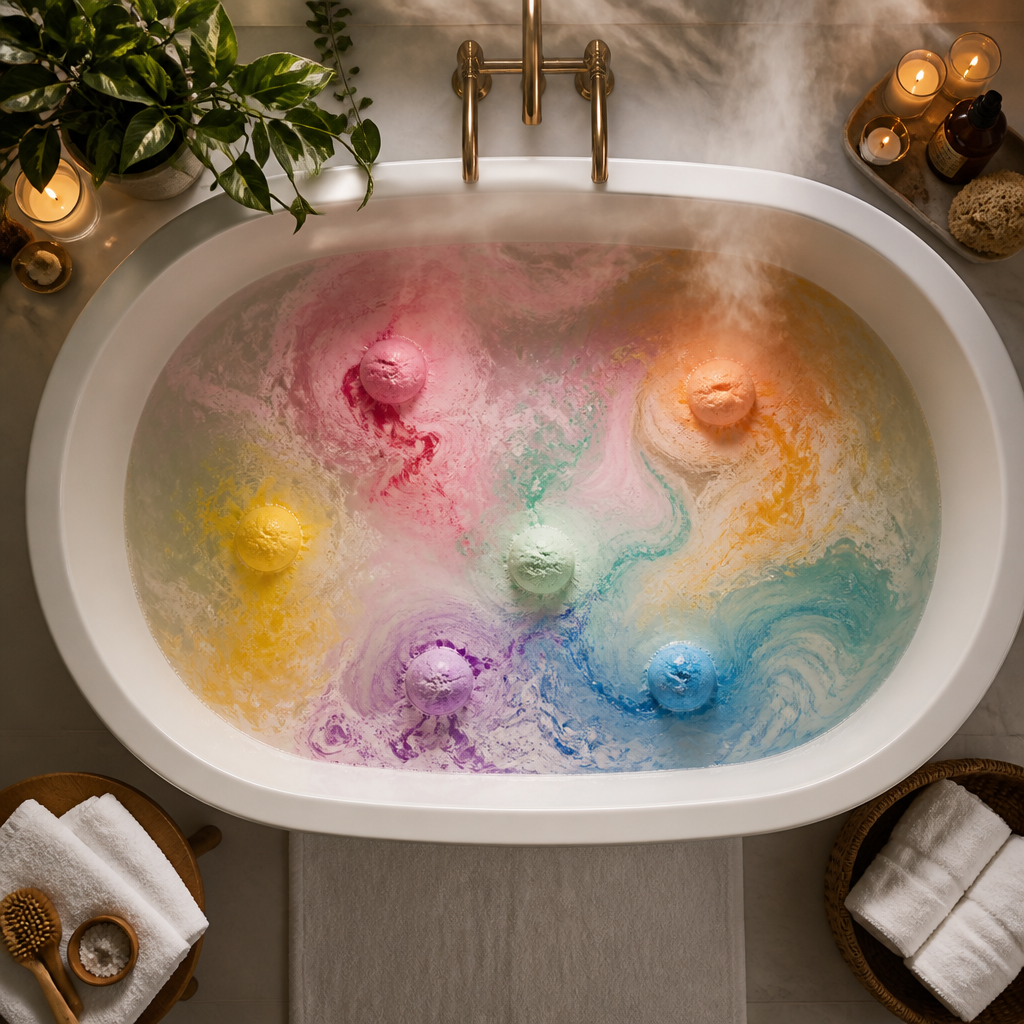
A bath bomb is a compacted dry mixture that reacts the moment it hits water. The reaction comes from baking soda and citric acid combining in a liquid environment to release carbon dioxide, which produces the signature fizz. That part is chemistry. Everything else in the formula, the oils, colorants, fragrances, flower petals, and moisturizers, is where brands make choices that either add real value or just add noise.
Good bath bombs include skin-softening carrier oils like coconut oil, sweet almond oil, or shea butter. These stay suspended in the bathwater and deposit a light layer of moisture on skin as you soak. Some formulas also include essential oils for aromatherapy benefit. The most thoughtfully made bath bombs deliver a genuine sensory experience: visual fizz, layered scent, and skin that genuinely feels different when you step out.
The legitimate criticism of bath bombs is ingredient quality. Many commercial options contain synthetic dyes, artificial fragrance compounds, and glitter (often plastic-based) that serve the shelf appeal but not your skin. Reading the ingredient list before buying is not optional. If it reads like a chemistry textbook with no recognizable plant or mineral names, the product is probably more decoration than self-care.
Quick Takeaways
| Key Insight | Explanation |
|---|---|
| Bath salts are better for muscle recovery | Epsom salt (magnesium sulfate) is specifically linked to muscle relaxation and reducing physical tension after exercise or long days on your feet. |
| Bath bombs are better for a mood-lifting experience | The fizz, scent, and color create an immediate sensory shift that makes an ordinary bath feel like an intentional ritual, regardless of what the water does to your skin. |
| Sensitive skin should approach bath bombs with caution | Citric acid, synthetic dyes, and artificial fragrance compounds found in many bath bombs can irritate reactive skin. Plain bath salts with minimal additives are the gentler default. |
| Dry skin gets more from a well-formulated bath bomb | Bath bombs containing carrier oils like coconut or shea leave a fine moisturizing layer on skin during the soak. Most plain bath salts do not include this. |
| You are not locked into one or the other | Many consistent self-care routines rotate between both: bath salts for physical recovery nights, bath bombs for deliberate wind-down evenings. |
| Ingredient quality separates useful products from decorative ones | A bath bomb with natural oils and essential oils delivers genuine skin and mood benefits. One filled with synthetic fragrance and plastic glitter does not. |
| Soaking time matters as much as the product | For either product, a 20-to-30-minute soak gives your skin and body adequate time to absorb the minerals or oils in the water. |
Both bath salts and bath bombs are often purchased as gifts or personal treats, but they serve genuinely different functions. Understanding that distinction changes how you shop and how much satisfaction you actually get from your evening soak. At Bathwater and Beyond, the approach to curating bath products is built on exactly this kind of intention, choosing items that earn their place in a real routine rather than just looking good in a photograph.
The Real Difference in Benefits
The most common mistake people make when comparing these two products is treating them as interchangeable. They are not. They target different needs, and confusing them means spending money on the wrong product for the result you actually want.
What Bath Salts Do Well
Bath salts are primarily a therapeutic tool. The magnesium in Epsom salt is associated with muscle relaxation, reduced physical tension, and calming the nervous system. People who use Epsom salt baths consistently often report better sleep on the nights they soak, which connects to magnesium's role in supporting the body's natural wind-down process. Himalayan salt contributes trace minerals that support skin texture over time. Dead Sea salt, with its dense mineral profile, has documented use in soothing dry or irritated skin.
Bath salts are also a detox aid in the practical sense. Warm saltwater draws out impurities through the skin, and the mineral content supports the skin's barrier function. This is the kind of benefit that compounds quietly over regular use rather than delivering a dramatic single-session result.
What Bath Bombs Do Well
Bath bombs are strongest at delivering an immediate, mood-shifting experience. The fizz is not just a gimmick. The act of watching and hearing it creates a deliberate break from the mental noise of the day. Paired with a quality essential oil blend in the formula, that sensory experience has a real calming effect that bath salts cannot easily replicate at the same intensity.
Beyond mood, a bath bomb made with quality carrier oils genuinely moisturizes skin during the soak. Dry skin in particular responds well to an oil-rich bath bomb because the warm water opens pores and the oils penetrate more effectively than a simple topical moisturizer applied after a shower. This is a legitimate skin benefit, not marketing copy, but it depends entirely on whether the bath bomb you choose actually contains those oils in meaningful amounts.
The best bath product is the one that matches what your body needs tonight, not what looked best on the shelf last week. Rotating between bath salts and bath bombs based on your day is more effective than committing to one product unconditionally.
Pro tip: If you want the muscle-relaxing benefits of Epsom salt and the moisturizing benefits of a bath bomb at the same time, add a half-cup of Epsom salt directly to the water before dropping in a bath bomb that contains carrier oils. The two are compatible, and many seasoned bathers combine them this way.
Which One Suits Your Skin Type
Skin type is one of the most practical filters you can apply when choosing between these two products. Neither is universally safer or better. The right answer depends on what your skin actually needs.
Dry Skin
Dry skin benefits most from bath bombs that contain nourishing carrier oils. The combination of warm water and emollient oils in the bath creates a light moisture barrier on skin that persists after you towel dry. Plain bath salts without added oils can actually pull moisture from the skin if you soak too long, particularly in hot water. If you choose bath salts with dry skin, opt for varieties that include coconut oil, jojoba oil, or similar additions in the formula.
Sensitive or Reactive Skin
This is where bath salts win clearly. Plain bath salts, particularly unscented Epsom salt or Himalayan salt with minimal additives, are among the gentlest bath products available. Bath bombs often contain citric acid (which can irritate reactive skin in high concentrations), synthetic dyes, and fragrance compounds that trigger flare-ups in people prone to sensitivity. If you want to use a bath bomb with sensitive skin, look specifically for formulas without synthetic colorants and with fragrance from natural essential oils only.
Oily or Combination Skin
Oily skin tends to respond well to bath salts because the mineral content helps balance excess oil production without stripping the skin. Himalayan pink salt in particular is a good option here, as its mineral profile supports the skin without over-drying. Bath bombs with heavy oils can feel counterproductive for oily skin types, though formulas using lighter oils like sweet almond or grapeseed work better than those built around coconut oil or shea.
Bath Salts vs Bath Bombs: Side by Side
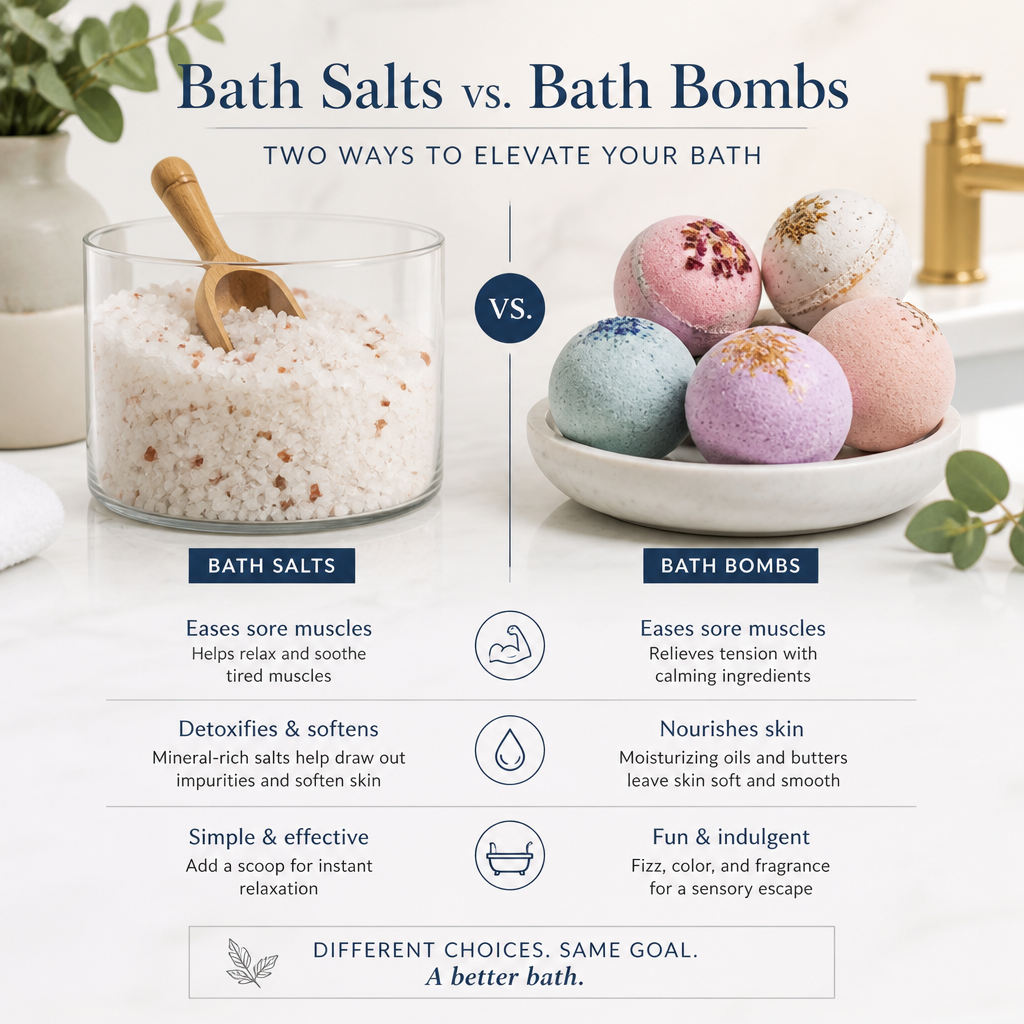
The table below compares three different use cases directly so you can match product to purpose without ambiguity.
| Use Case | Bath Salts | Bath Bombs |
|---|---|---|
| Post-workout muscle recovery | Strong choice. Epsom salt (magnesium sulfate) is a go-to for physical tension and soreness. Use 2 cups dissolved in warm water for 20+ minutes. | Secondary option unless the bomb contains added Epsom salt. Fizz and scent help with mental recovery but do not deliver the same mineral dose. |
| Evening wind-down and stress relief | Solid for physical relaxation. Less effective at creating the deliberate sensory shift that signals to your brain that the day is done. | Strong choice. The ritual of dropping a bath bomb and watching the fizz, combined with essential oil aromatherapy, actively shifts your mental state. |
| Dry skin hydration during the soak | Limited unless the formula includes added oils. Choose salt blends that specifically list carrier oils in the ingredients. | Strong choice when the bomb contains quality carrier oils like coconut, sweet almond, or argan. Avoid bombs with mostly synthetic ingredients. |
| Sensitive or reactive skin | Strong choice. Unscented or lightly scented varieties with natural-only ingredients are among the gentlest bath options available. | Use with caution. Citric acid, synthetic dyes, and artificial fragrance are common irritants. Seek clean-formula options specifically labeled for sensitive skin. |
| Gift giving | Well received when paired with a quality soak ritual. Less visually dramatic than a bath bomb but appreciated by those who use their bath as a genuine recovery tool. | Crowd-pleasing gift. The presentation is strong, the experience is accessible, and the variety of scents and formulas makes personalization easy. |
How to Fit Each Into Your Evening Routine
The reason most bath products go unused is that people buy them without a specific use case in mind. A bag of Epsom salt or a beautiful bath bomb sitting on the shelf is not a routine. It is a purchase. The distinction matters if you actually want the benefits.
Building a Bath Salt Soak into Your Week
Bath salts work best on a schedule tied to physical need rather than mood. If you work out regularly, a post-exercise soak two to three times a week with Epsom salt is the most straightforward application. If your body tension is more chronic and stress-related than physical, a Sunday evening bath salt soak before your most demanding work week is a reliable reset. Dissolve the salts fully before stepping in, swirl the water to distribute them evenly, and aim for 20 to 30 minutes of actual soaking time. The water temperature should be warm but not so hot that you feel drained when you get out.
Making a Bath Bomb an Intentional Ritual
Bath bombs deliver their strongest benefit when the experience is deliberate. That means setting the environment first: dimmed lighting, a candle if you use them, and no phone within reach. Drop the bomb in, wait for the fizz to finish or at least get well underway, and then step in. The aromatherapy benefit of an essential-oil-based bath bomb is genuinely more noticeable in a calm space than when you are half-distracted by a notification. Use bath bombs on evenings when the primary goal is mental decompression rather than physical recovery.
At Bathwater and Beyond, the monthly curated drops often include both bath salts and bath bombs precisely because a well-rounded evening routine draws from both. Browse the collections to find options that match both your skin type and your evening goals, without the inflated price tags that come with traditional spa or luxury wellness brands.
When You Do Not Have to Choose
Adding a half-cup of Epsom salt to a bath before dropping in a bath bomb is a practical move that many regular bathers use. You get the mineral-rich water from the salt and the moisturizing oils and aromatherapy from the bomb. The fizz still works. The salts still dissolve. The only thing to watch is that the bath bomb you choose is high quality enough to deliver actual oils into the water rather than just color and synthetic scent. A bath bomb that leaves oily rings in your tub is doing its job. One that leaves only pink water and a plastic glitter residue is not.
Frequently Asked Questions
Can you use bath salts and bath bombs in the same bath?
Yes, and it works well. Dissolve your bath salts in the water first, then drop in the bath bomb. The two are chemically compatible and combining them gives you the mineral soak benefits of the salts alongside the moisturizing oils and aromatherapy of the bomb. Use a bath bomb with quality carrier oils rather than one built primarily on synthetic colorants.
Are bath bombs bad for sensitive skin?
Not all bath bombs, but many are. The typical culprits are synthetic dyes, artificial fragrance, and citric acid in high concentrations. If you have sensitive or reactive skin, look specifically for bath bombs labeled for sensitive skin that use natural essential oils for scent and no synthetic colorants. When in doubt, plain Epsom salt or Himalayan salt with minimal additives is the lower-risk option.
How often should you take a bath salt soak?
Two to three times per week is a practical frequency for regular therapeutic benefit. Daily Epsom salt baths are generally considered safe for most people, but there is no additional benefit to soaking every single day if you are using it for muscle recovery or stress. Match the frequency to your actual need rather than treating it as a daily obligation.
Do bath bombs actually moisturize your skin?
Yes, but only if the formula contains genuine carrier oils in meaningful amounts. Look for oils like coconut oil, sweet almond oil, argan oil, or shea butter listed in the first half of the ingredient list. If the only skin-adjacent ingredients are fragrance and colorant, the bath bomb will not deliver meaningful moisturization, just a colorful soak.
Which is a better gift: bath salts or a bath bomb?
Bath bombs are the stronger gift for most people because they are visually appealing, approachable, and require no measuring or preparation. They are also easier to customize by scent and occasion. Bath salts make a better gift when you know the recipient uses their bath intentionally for recovery or has specific skin sensitivities that make the simpler ingredient list more appropriate. Pairing both together is often the most thoughtful choice.
Does the type of bath salt actually matter?
Yes. Epsom salt (magnesium sulfate) is the best choice for muscle recovery and tension relief because of its magnesium content. Himalayan pink salt is a good all-rounder that supports skin texture and works well for combination skin. Dead Sea salt is the most mineral-dense and is particularly suited to dry or irritated skin. Buying a blend that lists multiple salts gives you overlapping benefits, but knowing what the primary salt is helps you match the product to your primary goal.
How long should you soak for the best results?
Twenty to thirty minutes is the effective range for either product. Less than fifteen minutes does not give your skin enough exposure time to the mineral-rich or oil-rich water. More than forty-five minutes in hot water can leave skin feeling dry and depleted, particularly if the water has been drawn very hot. Warm rather than scalding water also keeps the essential oil compounds in a bath bomb from volatilizing too quickly.
We would love to hear how you use bath salts and bath bombs in your own evening routine. Drop your thoughts in the comments or reach out through our contact page.
References
- Bath Salts vs Bath Bombs: Ingredients, benefits, and key differences explained
- Bath Bombs vs Bath Salts: A comprehensive guide to choosing the right soak
- What is the difference between bath bombs and bath salts: ingredients and skin benefits
- Bath Bombs vs Bath Salts: Which one is better for relaxation?
- Bath Bombs vs Bath Salts vs Bubble Bath: Full comparison of benefits and best uses