

Best Candle Scents for Your Evening Wind-Down
Most people spend more time choosing a candle based on how it looks on a shelf than on whether the scent will actually help them decompress. That is a common mistake, and it is why so many people own half-burned candles that sit unused. Choosing candles for relaxation is not about finding something that smells nice in general. It is about matching a specific scent profile to the specific work your nervous system needs done at the end of the day. Get that match right and a candle becomes a real part of your evening wind-down, not a decorative afterthought. This guide tells you exactly how to do it.
Table of Contents
- Quick Takeaways
- Why Scent Actually Matters for Your Evening Wind-Down
- The Best Candle Scents by Evening Need
- Scent Comparison: Which Profile Fits Your Night
- How to Read a Candle Before You Buy
- Building Your Evening Ritual with Candles
- Common Mistakes That Kill the Mood
- Frequently Asked Questions
- References
Quick Takeaways
| Key Insight | Explanation |
|---|---|
| Match scent to your specific need, not just your taste | Lavender and chamomile calm anxious minds, while sandalwood and cedarwood signal rest time for tired-but-wired nights. |
| Timing changes everything | Light your candle 30 to 60 minutes before you want the room to feel calm. Scent needs a full melt pool to travel properly. |
| Overly strong fragrance is counterproductive | Artificial or overpowering scents can overstimulate rather than calm. Subtle, well-balanced aromas work better for long-term evening use. |
| Wax type and wick quality affect scent delivery | Candles made with natural waxes and cotton wicks tend to diffuse fragrance more gradually and cleanly, which suits relaxation better than a sharp, immediate blast of scent. |
| Consistency builds association | Your brain needs repeated exposure to build a relaxation cue. Using the same scent nightly for one to two weeks reinforces the wind-down signal. |
| Do not mix competing fragrance profiles in one room | Running two strong candles at once creates olfactory confusion. Your nose stops processing either scent effectively. |
| Evening scents differ from daytime scents | Lighter citrus and eucalyptus work well during the day for alertness. Deeper, warmer notes like vanilla, amber, and sandalwood are the right call for evenings. |
Why Scent Actually Matters for Your Evening Wind-Down
Scent is the only sense with a direct neurological pathway to the areas of the brain that govern emotion and memory. That is not aromatherapy marketing. It is the reason a smell can shift your mood in under a second, faster than a song or a photograph. When it comes to your evening wind-down, that speed matters because the body does not flip a switch from stress to rest. It transitions, and the right scent can accelerate that transition.
Aromatherapy candles are formulated specifically to work with this system. The scents released interact with your brain to help reduce cortisol, the primary stress hormone, and support the parasympathetic nervous system response that your body needs to move toward genuine rest. This is why the scent you choose is not cosmetic. It is functional.
The useful distinction is between scents that calm by settling a room, such as sandalwood and amber, and scents that calm by clearing it, such as eucalyptus and lavender. Most people need one of each depending on the night.
The challenge is that not all scents work the same way for everyone, and not all candles deliver scent the same way. A poorly made candle with synthetic fragrance can create the opposite of calm, producing the kind of headache-inducing intensity that makes you open a window rather than unwind. The candles that actually support relaxation prioritize natural, clean-burning formulations and balanced fragrance profiles.
The Best Candle Scents by Evening Need
The most common mistake when shopping for aromatherapy candles is treating scent choice as a matter of personal taste alone. Taste matters, but the more useful question is: what does my mind and body need tonight? Different scent profiles address different states.
When You Are Anxious or Wound Up
Lavender is the most well-established choice here. Its floral and herbaceous aroma is widely associated with reducing stress and promoting better sleep. Chamomile is a close companion, with a gentler, softer apple-like quality that is particularly good for nights when you feel raw or overstimulated rather than just tired.
Bergamot is worth knowing about too. It has a citrusy, slightly spiced character that lifts mood while still calming the nervous system, making it useful when anxiety comes with a low-energy fog rather than racing thoughts. It calms without sedating, which is ideal if you still have a couple of hours before bed.
When You Are Tired But Your Brain Will Not Quit
This is the wind-down problem that most people actually have. Sandalwood is the go-to here: smooth, warm, and woody, it grounds and centers without pulling you toward drowsiness prematurely. Cedarwood operates in a similar register, and both of these base notes are specifically effective for signaling rest time to a brain that has been running on stimulation all day.
Vanilla works well in this context too. It is warm and dry rather than sweet in a bakery sense, and it functions best as a base note that lingers after the lighter notes have settled, creating a cozy, low-stimulation atmosphere that is genuinely conducive to winding down.
When You Need Clarity Before You Can Rest
Some evenings you cannot relax because you feel mentally cluttered, not tired. Eucalyptus is the right call here. It is fresh and clean, and it helps clear the mind and relieve tension without the sedating heaviness of deeper base notes. It works well paired with lavender once you have moved from the clarity phase into the rest phase of your evening.
Pro tip: Consider keeping two candles: a eucalyptus or bergamot option for the early evening when you need to decompress and transition, and a sandalwood or vanilla option for the later wind-down hour before sleep. Light them in sequence, not simultaneously.
Scent Comparison: Which Profile Fits Your Night
Not every evening is the same, and not every scent serves the same moment. This table breaks down the three most practical evening scent profiles so you can match the candle to the night rather than just grabbing whatever is closest.
| Scent Profile | Best Evening Scenario | Key Scents in This Category |
|---|---|---|
| Calming and Floral | Anxiety, stress, racing thoughts, emotionally heavy days | Lavender, chamomile, jasmine, rose |
| Warm and Grounding | Mental fatigue, need to signal rest, tired but wired | Sandalwood, cedarwood, vanilla, amber, patchouli |
| Fresh and Clearing | Mental clutter, early evening transition, need to decompress before you can rest | Eucalyptus, bergamot, fir needle, clean herbal blends |
In practice, most people will rotate across these three depending on the week. That rotation is healthy. Switching between two to three complementary scents every few weeks also helps prevent your nose from adapting to a single scent and stopping to register it fully.
How to Read a Candle Before You Buy
The scent listed on a candle label is only part of the story. What actually determines whether a candle delivers a clean, gradual, effective fragrance experience is the wax type, the wick, and the quality of the fragrance itself.
Wax Type and What It Means for Your Evening
Natural waxes, including soy, coconut, and coconut-soy blends, tend to burn slower and release fragrance more gradually than paraffin. That gradual release is exactly what you want for an evening wind-down ritual, where the goal is a consistent, low-level scent building over 30 to 60 minutes rather than an immediate strong burst. Candles made with natural waxes also produce less soot, which matters if you are burning them regularly in a bedroom or bathroom.
Paraffin is not automatically harmful, but it tends to produce a stronger initial scent throw that can tip over into overstimulation in an enclosed space. For relaxation purposes, gradual and consistent beats strong and fast.
Wick Quality and Scent Delivery
A cotton wick keeps the flame lower and more stable, which supports a cleaner, more even burn. An untrimmed wick is the primary source of soot and uneven burning, not the wax type. Trim to about a quarter inch before each burn and you will dramatically improve both the scent delivery and the lifespan of the candle.
Fragrance Oil vs. Essential Oils
Pure essential oil candles are often marketed as the premium choice, but they are not always the better relaxation tool. Some essential oils have low flash points and cannot be used at concentrations high enough to produce meaningful scent throw in a candle. High-quality fragrance oils, particularly those that are phthalate-free and made to clean-burning standards, can actually deliver a more consistent and reliable scent experience for relaxation purposes. The key phrase to look for is a clean, balanced formulation rather than the marketing claim of "all-natural."
Pro tip: When shopping for candles specifically for your evening wind-down, look at burn time as a proxy for value and ritual longevity. A candle with a 40 to 50-hour burn time represents weeks of evening rituals, not a single occasion.
Building Your Evening Ritual with Candles
A candle scent only works as a relaxation tool if it becomes a consistent cue. Your brain does not respond to a single use. It builds associations over repeated exposure, and that is why scent conditioning takes time. Sporadic use prevents your brain from forming the relaxation association that makes a wind-down ritual feel automatic.
The practical approach is to light your candle around 30 to 60 minutes before you want to be fully in rest mode. This gives the scent time to fill your space and allows your nervous system to begin its wind-down response gradually rather than trying to force an immediate state change. Place the candle somewhere you will actually spend time during that window: beside the bath, on the nightstand, on a reading table.
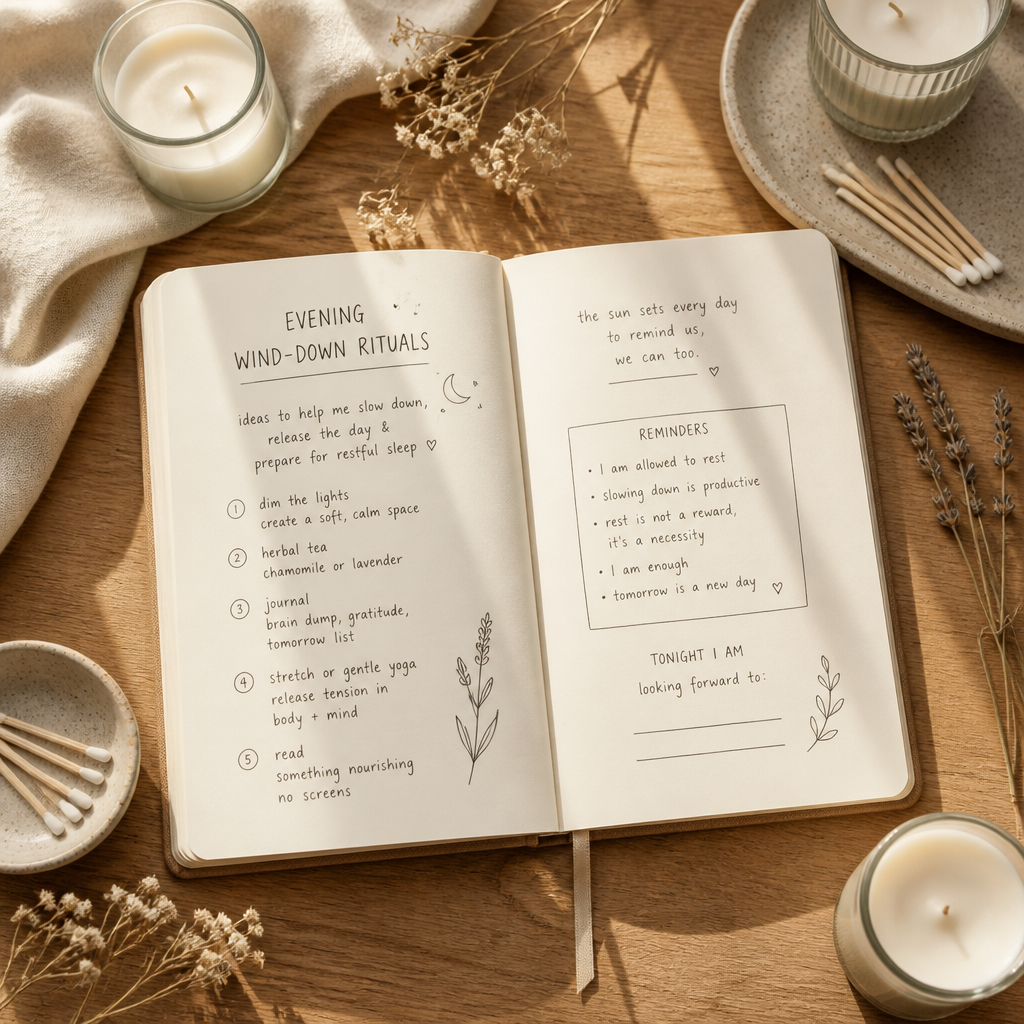
Pair the candle with one other low-stimulation activity, whether that is a bath, reading, journaling, or slow breathing. The candle becomes the signal that the working part of the day is finished. At Bathwater and Beyond, the idea behind curated evening-routine products is exactly this: not luxury for its own sake, but deliberate, repeatable rituals that your body can learn to recognize and respond to. A thoughtfully chosen candle fits into that same logic. It is not decorative. It is functional.
Rotate between two to three complementary scents rather than using the same one every single night. This keeps your olfactory system engaged and prevents the adaptation that makes a once-effective scent fade into the background of your room.
Common Mistakes That Kill the Mood
Knowing which scent to choose is only useful if you also know how to avoid the habits that undercut any candle ritual. These are the most common ones.
Burning Multiple Strong Candles at Once
Running two scented candles in one room creates olfactory confusion. Your nose cannot effectively process competing fragrance profiles, and the result is a muddled, often overwhelming smell that is the opposite of calming. One well-chosen candle in the right spot is always better than two.
Not Letting a Full Melt Pool Form
Blowing out a candle before the entire top layer has melted leads to tunneling, where the candle burns down the center and wastes the outer wax. For most single-wick candles, allow three to four hours for a full melt pool on the first burn. This also ensures the scent throw is at its full potential for subsequent burns.
Choosing Scent Based on the Cold Throw Alone
The cold throw is how a candle smells sitting unlit in the shop or on a shelf. It gives you a rough idea of the scent family, but it does not tell you how the fragrance will behave when heated. A candle that smells intensely floral cold can become lighter and more diffuse when burning, and vice versa. If you can, try a smaller size or sampler before committing to a large candle for your regular evening ritual.
Burning Too Close to Sleep
You should always extinguish a candle before you sleep. Never leave one burning unattended. The target is to run your wind-down candle for 30 to 60 minutes before bed, then extinguish it with enough time for the room to settle. The ritual is in the lighting and the scented hour, not in falling asleep with the flame still going.
Storing Candles in Direct Sunlight
UV exposure weakens fragrance over time. Store your candles in a cool, dark location between uses to protect the scent integrity. This is especially important for natural wax candles, which tend to be more sensitive to heat and light than paraffin alternatives.
Frequently Asked Questions
What is the single best candle scent for relaxation and sleep?
Lavender is the most consistently effective choice for sleep support and anxiety reduction, and it is the scent most commonly recommended for evening use. If you find pure lavender too sharp, a lavender and chamomile blend softens it considerably. For nights when your mind is busy rather than anxious, a warm sandalwood base note often works better than a floral profile.
How long before bed should I light my relaxation candle?
Light it 30 to 60 minutes before you want to be in full rest mode. This window gives the scent enough time to build throughout your space and allows your nervous system to begin its wind-down response gradually. Always extinguish the candle before you sleep, never leave it burning overnight.
Can I use the same candle scent every night, or should I rotate?
You can use the same scent nightly while you are building the relaxation association, which generally takes one to two weeks of consistent use. After that association is established, rotating between two to three complementary scents every few weeks helps prevent your nose from adapting to the point where you stop registering the scent at all. Think of the rotation as maintenance, not disruption.
Are aromatherapy candles better than regular scented candles for wind-down?
Aromatherapy candles are specifically formulated with fragrance profiles chosen for their neurological effects rather than just general pleasantness. That said, the label "aromatherapy" is not regulated, so what matters more than the label is the actual ingredient quality. Look for clean-burning wax, phthalate-free fragrance, and scent profiles in the calming, floral, or warm-woody categories. A well-made scented candle with those characteristics will outperform a poorly made "aromatherapy" candle every time.
What wax type is best for relaxation candles?
Natural waxes such as soy, coconut, and coconut-soy blends are generally the better choice for evening rituals because they burn slower and diffuse fragrance more gradually. That gradual, consistent scent release is what you want for a wind-down setting. It supports relaxation without the overstimulation that can come from a very strong, immediate scent burst.
Can I use a candle in the bathroom during a bath?
Yes, and a bath is one of the best contexts for a relaxation candle. Keep the candle on a stable, heat-resistant surface away from any flammable materials, ensure the bathroom is ventilated (slightly cracked door or window helps), and never place the candle where water could reach it. A single candle with a calming scent, combined with warm water, is one of the most effective evening wind-down combinations available without any special equipment or expense.
How do I know if a candle scent is too strong for my space?
If you develop a headache within 20 minutes of lighting a candle, the fragrance load is too high for the room size, or the fragrance quality is poor. Move to a larger space, let in fresh air, or switch to a candle with a lighter scent throw. Relaxation candles should be noticeable but never overwhelming. If you find yourself aware of the smell as a smell rather than as a background atmosphere, it is too strong for its purpose.
What candle scent has made the biggest difference in your own evening routine? Share what works for you in the comments below.
References
- Guide to relaxing candle fragrances and how to choose the right scent for your mood and space
- How to choose and use relaxing candles effectively based on your nervous system's needs
- Overview of the most effective relaxing candle scents for calm, serenity, and pre-sleep routines
- How to build a sustainable evening relaxation ritual using candles and intentional scent choices
- Seven benefits of aromatherapy candles for stress reduction, sleep quality, and relaxation