

Calm Bathroom Ideas for August: Your Easiest Room Reset
Most bathrooms are actively stressful. Half-empty product bottles crowd every surface, harsh overhead lights flatten the mood, and the only scent in the air is whatever soap you grabbed last. Yet your bathroom is the one room you use at both ends of every single day, which makes it the highest-leverage space to get right when you want to feel calmer at home. This August, instead of waiting for a full renovation, a few targeted calm bathroom ideas will shift the entire atmosphere in a weekend. What follows is a practical guide to building a relaxing bathroom setup that actually holds up past the first Sunday you try it.
Table of Contents
- Quick Takeaways
- Why Your Bathroom Is Worth the Effort
- Start With Decluttering, Not Decorating
- Light the Room for Calm, Not Just Function
- Scent Is the Fastest Mood-Changer in the Room
- Bring In Natural Elements That Actually Survive a Bathroom
- Build an August Evening Ritual, Not Just a Routine
- Comparing Three Approaches to a Relaxing Bathroom Setup
- Frequently Asked Questions
- References
Quick Takeaways
| Key Insight | Explanation |
|---|---|
| Declutter before you decorate | Visual clutter is a proven stressor. Remove everything you do not use daily before adding any new items to the space. |
| Lighting determines mood more than colour does | Swapping a bright overhead bulb for a warm-toned alternative or adding a low-wattage lamp costs almost nothing and changes the feel of the room immediately. |
| Lavender, eucalyptus, and sandalwood are the reliable calm trio | These scents are consistently associated with relaxation and are available in candles, diffusers, and bath soaks at every price point. |
| Humidity-tolerant plants do real work | Aloe, pothos, and air plants improve air quality and add a grounding, natural quality without needing direct sunlight. |
| Thick towels and a robe are not luxuries | The physical sensation of wrapping yourself in something soft after a bath is a genuine signal to the nervous system that the day is done. |
| August evenings are ideal for bath rituals | Late-summer heat makes a warm soak feel earned. A consistent evening ritual timed to sunset trains your body to wind down earlier. |
| Curated products outperform a crowded shelf | Five products you actually love and use perform better for calm than thirty products that make you search and second-guess every night. |
Why Your Bathroom Is Worth the Effort
The bathroom is the room most people give the least intentional thought to, yet use with the most daily frequency. You enter it bleary-eyed before coffee and you return to it when the day finally ends. That repetition means any friction or visual noise you encounter there compounds over time, and any calm you build there also compounds.
The case for investing in a relaxing bathroom setup is not about aesthetics for their own sake. It is about building a predictable physical environment that tells your nervous system it is safe to slow down. That is exactly what a curated self-care space does: it removes decisions, reduces visual stimulation, and cues relaxation through scent, light, and touch before you even step into a bath or shower.
August specifically is an underrated month for this kind of reset. Schedules loosen slightly, evenings arrive with long, slow light, and most people feel the shift from summer energy toward something quieter. Use that natural transition to anchor your evenings in a room that actually supports rest.
Start With Decluttering, Not Decorating
The single most effective calm bathroom idea costs nothing and takes about forty-five minutes. Remove every product from every surface and put back only what you use in a given week. That means the half-finished face scrub from January goes, the duplicate shampoos get consolidated, and the three different body washes get narrowed to one you actually like.
A calmer bathroom is not built by adding things. It is built by ruthlessly removing the things that create visual noise and decision fatigue every morning.
Visual clutter is a genuine stressor. Interior designers consistently recommend limiting bathroom surfaces to only your daily-use products, and storing everything else in a cabinet, drawer, or another room entirely. The logic is straightforward: more objects competing for attention means more low-level cognitive load, even when you are not consciously registering it.
What to keep on the counter vs. what to hide
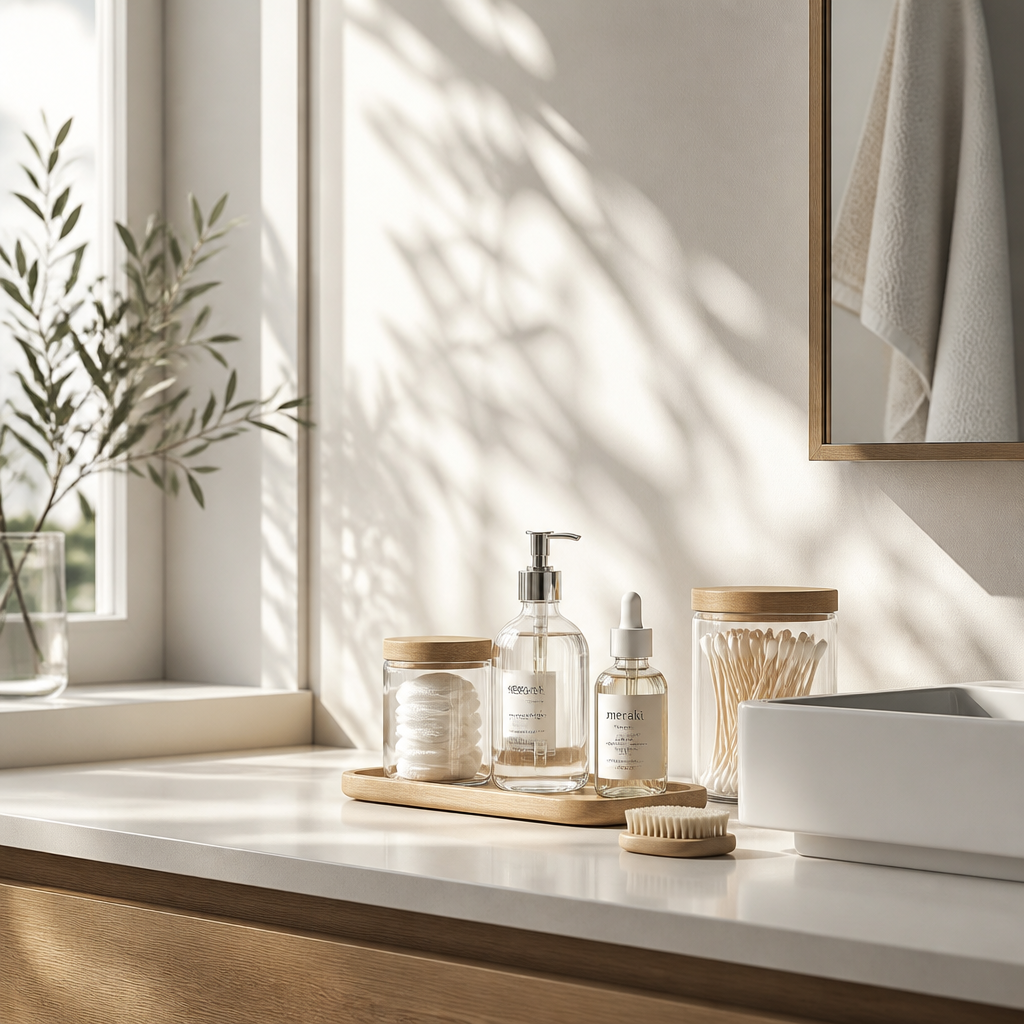
Keep on the counter: one hand soap, one facial cleanser, a moisturizer you use every day, and a single candle or small plant. Hide everything else in a basket, drawer, or under-sink organizer. A common mistake here is keeping things out "just in case." In practice, if you haven't used it in the past two weeks, it doesn't belong on the counter.
Once surfaces are clear, use a small tray to corral your essentials. A tray does two things: it signals intention (these items belong here, nothing else does), and it makes cleaning the counter faster, which means you'll actually do it.
Pro tip: Before spending a single dollar on new calm bathroom accessories, spend an hour editing what you already have. A clear counter in a plain white bathroom is already more peaceful than a cluttered shelf filled with luxury items.
Light the Room for Calm, Not Just Function
Most bathroom lighting is designed for task precision, which is exactly what makes it bad for winding down. A single bright overhead fixture delivers the visual equivalent of a performance review: nowhere to hide, everything exposed, nervous system on alert.
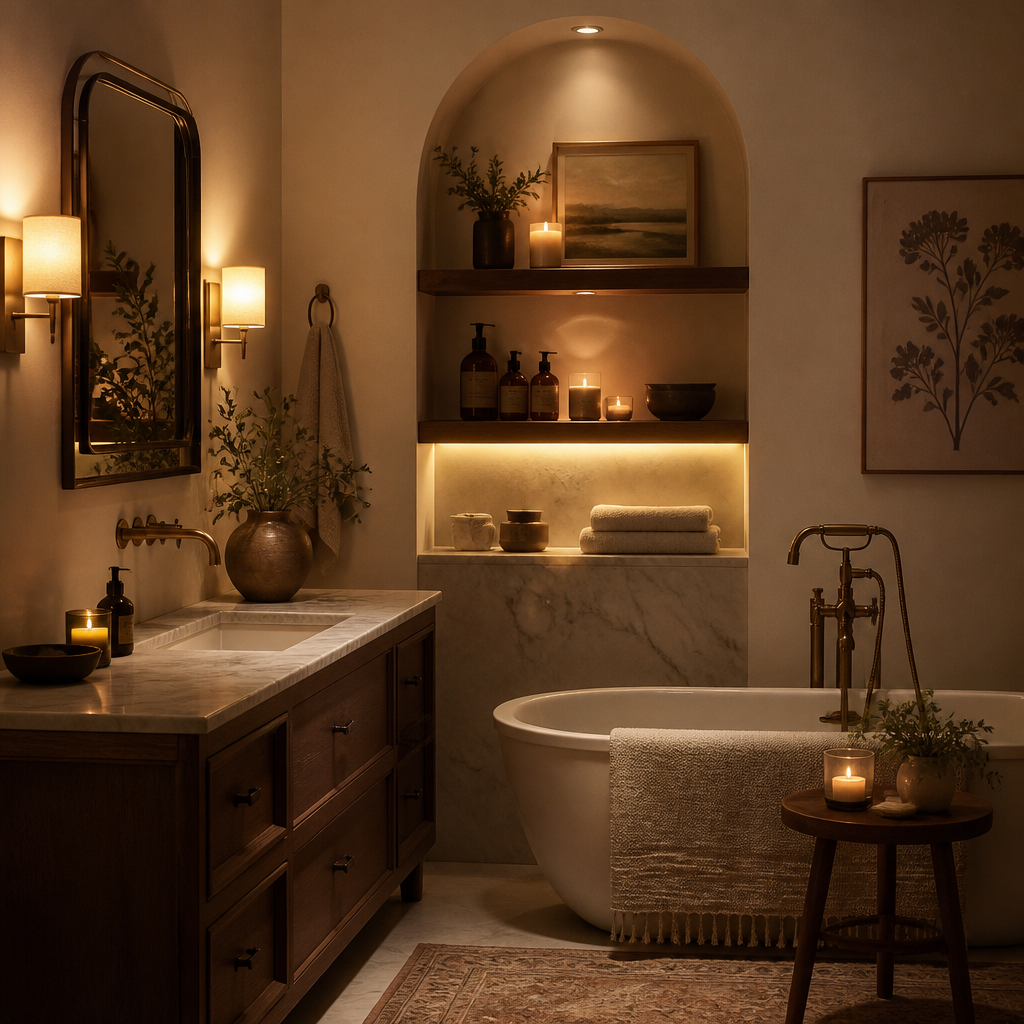
The fix is layered lighting. Warm-toned bulbs (look for around 2700K colour temperature) in any existing fixture immediately soften the feel of the room. Add a secondary light source, such as a low-wattage bedside-style lamp placed on a countertop shelf, and the difference is significant. Candles add the warmest, most flickering light of all, which is why they appear in virtually every calm bathroom guide written by anyone who has actually tried this.
Candles vs. electric warm-light alternatives
Candles win on atmosphere. A single well-chosen candle near the bathtub creates warmth and scent simultaneously, which is efficient. The practical consideration is safety: never leave a lit candle unattended, place it on a heat-safe surface away from towels, and blow it out before you drift off. If you prefer a no-flame option, a small Himalayan salt lamp or a warm-glow plug-in night light gives similar ambient warmth without the open flame.
For August specifically, summer evenings mean you can begin your bath or shower routine while there is still natural light coming through frosted or curtained windows. Natural light in the late afternoon is genuinely calming, and timing your evening routine to make use of it is one of the easiest adjustments available to you.
Pro tip: If you have a dimmer switch in your bathroom, set it to about thirty percent brightness for any evening bath or shower. If you don't have a dimmer, a simple plug-in lamp with a warm bulb on the counter does almost the same job for under twenty dollars.
Scent Is the Fastest Mood-Changer in the Room
Of all the senses, smell changes the felt quality of a space fastest. You can repaint a wall and still need to adjust to the new colour. But light a sandalwood candle in a cluttered bathroom and the mood shifts in under a minute. This is why scent deserves serious attention in any calm bathroom strategy.
The most reliably calming scents, across a wide range of sources, are lavender, eucalyptus, chamomile, sandalwood, and vanilla. Lavender and eucalyptus are the workhorses of the bathroom specifically because they cut through the ambient moisture and project well without becoming overpowering. Sandalwood and vanilla work better in smaller, drier spaces or as secondary notes in a candle blend.
Delivery method matters as much as the scent itself
Candles are the most atmospheric delivery method. A quality candle placed near the tub, where warmth from the water helps diffuse the scent gently, creates the most enveloping effect. Diffusers with essential oils are consistent and adjustable but lack the visual warmth of a flame. Bath soaks with essential oils or botanicals give you direct skin contact with the scent, which is particularly grounding during a soak.
A common mistake is using too many scents at once. One primary scent source per bathroom session is enough. If your candle is lavender, don't also add a eucalyptus bath bomb and a citrus diffuser. The overlap creates olfactory noise rather than calm.
At Bathwater and Beyond, the candle and bath essential selections are chosen specifically for this kind of intentional, single-note pairing. Rather than buying three mediocre-smelling products, one excellent candle and a matching bath soak will do more for a relaxing bathroom setup than a shelf full of competing options.
Bring In Natural Elements That Actually Survive a Bathroom
Natural materials signal "calm" to the brain in a way that plastic and synthetic surfaces don't. This is not mystical, it is just the result of a lifetime of associating forests, water, and stone with quiet. Introducing even one or two natural elements into your bathroom changes the room's visual character more than most decorating decisions.
Plants that actually thrive in a humid bathroom
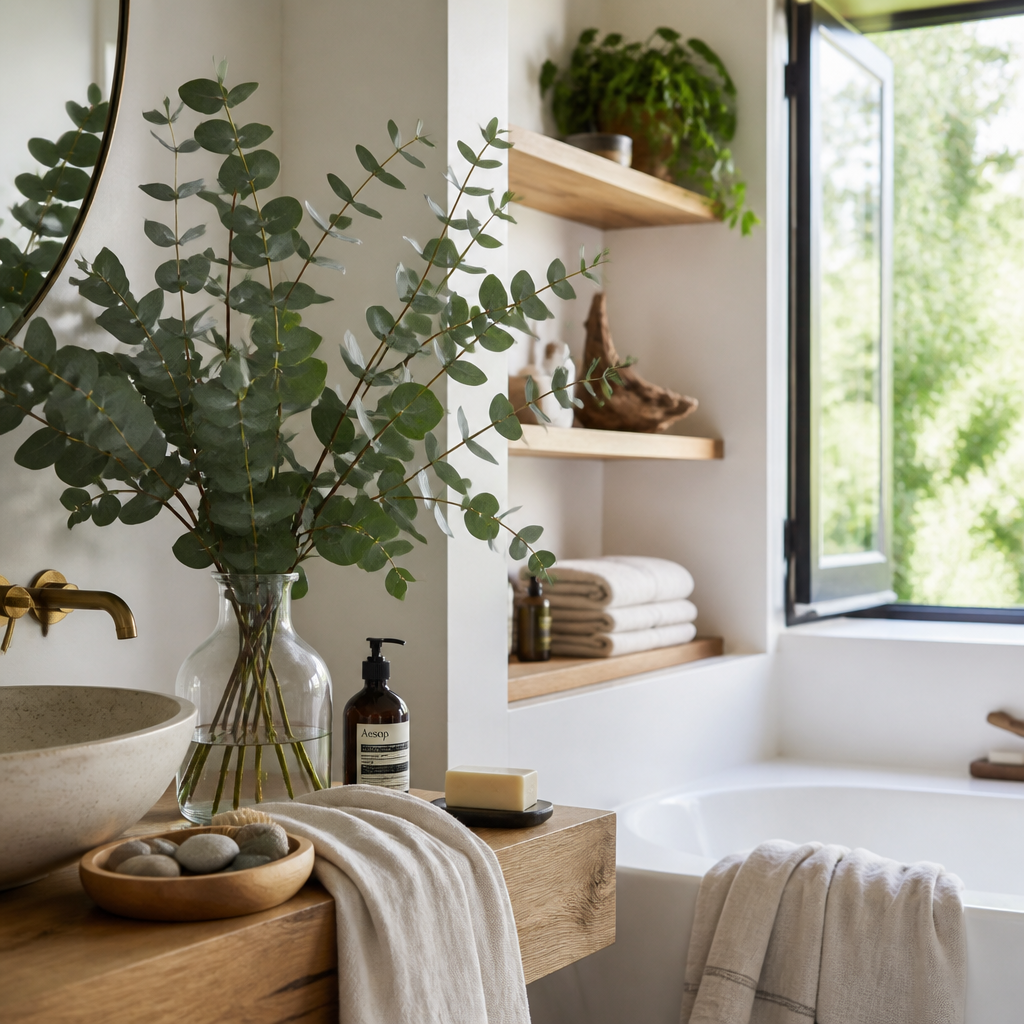
The mistake most people make is buying a beautiful plant from a garden centre and watching it die in a windowless bathroom within three weeks. The species that work reliably in bathrooms are those adapted to low light and high humidity: pothos, peace lily, snake plant, aloe vera, and most air plants. These don't need direct sunlight and they genuinely improve air quality. Place one on a shelf, window ledge, or on the floor in a simple ceramic pot and you've added life to the room without adding visual clutter.
Wood, stone, and textile accents
A small wooden tray, a bamboo bath caddy, or a river-stone soap dish cost almost nothing and immediately shift the room's material palette toward natural calm. Earth tones including beige, warm brown, olive green, and soft grey work particularly well in bathroom settings because they neither excite nor depress. They simply hold space.
For textiles, the equation is simple: quality over quantity. Two thick, properly laundered towels folded neatly feel more luxurious than a stack of thin mismatched ones. If you have been meaning to upgrade your towels or add a robe to your bathroom ritual, August is an excellent moment. The physical sensation of wrapping up after a warm soak is a real and immediate signal to the body that the active part of the evening is over.
Build an August Evening Ritual, Not Just a Routine
A routine is something you do on autopilot. A ritual is something you do with attention. The distinction matters because self-care at home in August works best when the bathroom becomes the container for a deliberate transition from the day into the evening, not just a place where you mechanically wash before bed.
The structure of an effective evening bathroom ritual has a few consistent elements. Start by tidying the space before you begin (this takes ninety seconds if the counter is already clear). Set the lighting to warm and low. Choose one scent for the session and introduce it before you undress. Then move through your skin or hair care without rushing, without your phone, and without the news playing in the background.
The August-specific opportunity
Late August evenings have a particular quality. The light changes earlier than midsummer, the heat of the day has usually softened by eight or nine in the evening, and there is a natural pull toward winding down that is easier to work with than resist. A warm bath in late summer is genuinely restorative in a way that a rushed shower is not. Even fifteen minutes in warm water with a quality bath soak is enough to shift your physical state meaningfully.
Timing matters. If you can begin your bathroom ritual while there is still some ambient light in the room, you allow your circadian rhythm to follow a more natural descent into dark rather than going from bright phone screen to complete darkness in five minutes. This is one of the quieter, more effective calm bathroom ideas: use the season's natural light to your advantage.
The products you keep in the bathroom for this ritual should be chosen rather than accumulated. A bath soak you love, a candle that does one job well, a robe that makes stepping out of the bath feel like a reward. Bathwater and Beyond's limited monthly drops are built around exactly this kind of curation: fewer, better things rather than a cluttered haul of everything at once.
Comparing Three Approaches to a Relaxing Bathroom Setup
Not every approach to a calming bathroom fits every budget or living situation. Here is a direct comparison of three practical strategies, what each costs, and where each actually delivers on the promise of calm.
| Approach | What It Involves | Best For |
|---|---|---|
| Edit and accessorise | Declutter surfaces, introduce one candle, one plant, and upgrade towels. No renovation required. | Renters, budget-conscious shoppers, anyone who wants results this weekend. |
| Sensory layering | Build a full scent, light, and texture system: a matching candle and bath soak, warm lighting, soft robe, wooden or stone accents. | Self-care enthusiasts who want a consistent ritual and are willing to invest in a few quality pieces. |
| Full spa aesthetic | Repaint with earth tones, install a rain showerhead, add a freestanding tub, use heated towel rails, and bring in statement stone or tile. | Homeowners planning a renovation with time and budget. Results are significant but the process is disruptive. |
For most people reading this in August, the sensory layering approach delivers the best ratio of effort to result. You can build it over a few weeks using the products you already believe in and adding one curated piece at a time. The full spa aesthetic is genuinely beautiful but is not the solution for a calm bathroom this month.
Frequently Asked Questions
What are the easiest calm bathroom ideas to try without spending much money?
Declutter your counter surfaces first. This costs nothing and makes a larger difference than most purchases. From there, a single warm-toned candle and a small humidity-tolerant plant are the two most impactful low-cost additions. Both cost under twenty dollars and together they change the light, the scent, and the visual texture of the room immediately.
Which scents are best for a relaxing bathroom setup?
Lavender, eucalyptus, chamomile, and sandalwood are the most consistently effective for calm. Lavender and eucalyptus project well in humid environments and are widely available in candles, diffusers, and bath soaks. Start with one and use it consistently rather than rotating through many different scents, which prevents you from building a genuine association between that scent and relaxation.
What plants can I actually keep in a bathroom that has low light?
Pothos, snake plants, peace lilies, aloe vera, and air plants are the most reliable choices. All tolerate low light and high humidity. Aloe specifically doubles as a practical skin-care ingredient. Avoid plants that need direct sun, such as succulents, unless your bathroom has a generous south-facing window.
How do I build a self-care at home routine in August that I will actually stick to?
Start with a fixed time rather than a fixed activity. Choose a time each evening, ideally when the ambient light has softened, and commit to spending fifteen to twenty minutes in the bathroom without your phone. The ritual can be a bath, a skincare sequence, or simply a warm shower followed by a body oil. The consistency of the time and the environment matters more than the specific products you use.
Is it better to use candles or a diffuser in the bathroom?
Candles are better for atmosphere and for combining scent with warm light in a single object. Diffusers are better for consistent, controllable scent without an open flame. In practice, a candle near the bathtub during a soak is hard to beat for the full sensory experience. For a quick shower routine, a diffuser running before you enter the bathroom is more practical. Many people find value in having both, but start with whichever matches your current evening ritual most closely.
Can a small or rented bathroom still feel genuinely calm?
Yes, and in some ways a smaller bathroom is easier to transform. Fewer surfaces to clear, less space to fill, and scent diffuses more effectively in a compact room. Renters can do everything in this guide without making a single permanent change: clear the clutter, add a plant in a pot, use a freestanding candle or lamp, and fold their towels neatly. No paint, no fixtures, no landlord conversation required.
How often should I replace or refresh my bathroom's self-care products?
The honest answer is: when you stop looking forward to using them. A bath soak you've been using for three months and still enjoy is working. One you bought on a whim and dread finishing is wasting shelf space and quietly adding to the visual and psychological clutter of the room. Edit seasonally, at a minimum, and resist the habit of accumulating more than you will realistically use in thirty to sixty days.
What does your bathroom calm routine look like right now, and which of these ideas are you most likely to try first? Share your thoughts below or tag us so we can see your August bathroom reset.
References
- Interior design advice on how to make a bathroom more relaxing, including decluttering and colour psychology tips
- Decluttering your bathroom to create a calm, spa-like atmosphere at home
- How to build an evening bath ritual that supports better sleep and a calmer end to the day
- Seventeen spa-like bathroom ideas from an interior designer, including natural elements and sensory layers
- How to bring natural materials, plants, and light into a bathroom to create a calming environment