

Evening Ritual Checklist: 10 Steps to Wind Down
Most people treat sleep like a light switch. They work, scroll, stress, and then expect their body to shut off on command. It does not work that way. Your nervous system needs a bridge between the demands of the day and genuine rest, and that bridge is a deliberate evening routine. This checklist gives you 10 concrete steps to build one that actually sticks, without turning it into another chore. Whether you have 20 minutes or a full hour, the right wind-down ritual can shift how you sleep, how you feel, and how you start the next morning.
Table of Contents
- Quick Takeaways
- Why Your Evening Routine Matters
- The 10-Step Evening Ritual Checklist
- How Long Should Your Wind-Down Routine Take?
- Comparing Wind-Down Approaches
- Building Your Self-Care Checklist Around Your Life
- Common Mistakes That Sabotage Your Relaxation Ritual
- Frequently Asked Questions
- References
Quick Takeaways
| Key Insight | Explanation |
|---|---|
| Start before you feel tired | Begin your wind-down routine 60 to 90 minutes before bed, not when your eyes are already heavy. Your nervous system needs runway time to shift gears. |
| Dim light is a non-negotiable first step | Overhead lighting keeps your brain in daytime mode. Switching to lamps or candles is one of the fastest ways to signal that the day is ending. |
| A warm bath does more than relax muscles | Soaking in warm water raises your surface temperature, and the subsequent cool-down mimics the natural drop your core body temperature takes before sleep onset. |
| Repetition matters more than perfection | Doing the same small actions nightly builds a conditioned response. Your brain starts anticipating rest instead of resisting it. |
| Screen use before bed delays melatonin | Blue light from phones and screens suppresses melatonin production, which is the hormone that makes you feel sleepy. A hard cutoff 60 minutes before bed makes a measurable difference. |
| Your self-care checklist should remove effort, not add it | If your routine feels like another task to manage, it will not last. The best rituals are quiet, low-stakes, and easy to restart after a skipped night. |
| Sensory cues accelerate the transition | Scent, warmth, and texture tell your nervous system where it is. A specific candle, robe, or bath product used only at night becomes a reliable sleep trigger over time. |
Why Your Evening Routine Matters
Sleep is not a switch. Your body moves from alertness to rest through a gradual biological process, and your behavior in the hours before bed either supports or fights that process. When you skip a deliberate evening routine, you are essentially asking your nervous system to go from full activation to deep sleep with no transition, which is why so many people lie awake even when they are exhausted.
Your circadian rhythm, the internal clock that governs your sleep-wake cycle, responds to environmental cues like light, temperature, and habitual behavior. When those cues are consistent, your brain gets a clear signal that rest is coming. When they are inconsistent, as they are for most people who scroll right up until the moment they close their eyes, that signal never arrives cleanly.
A good relaxation ritual does not need to be elaborate. It needs to be consistent. Even a 20-minute routine, done the same way each night, begins to train your nervous system to downshift on cue. That is the entire mechanism. The steps below are designed to work with that mechanism, not against it.
The 10-Step Evening Ritual Checklist
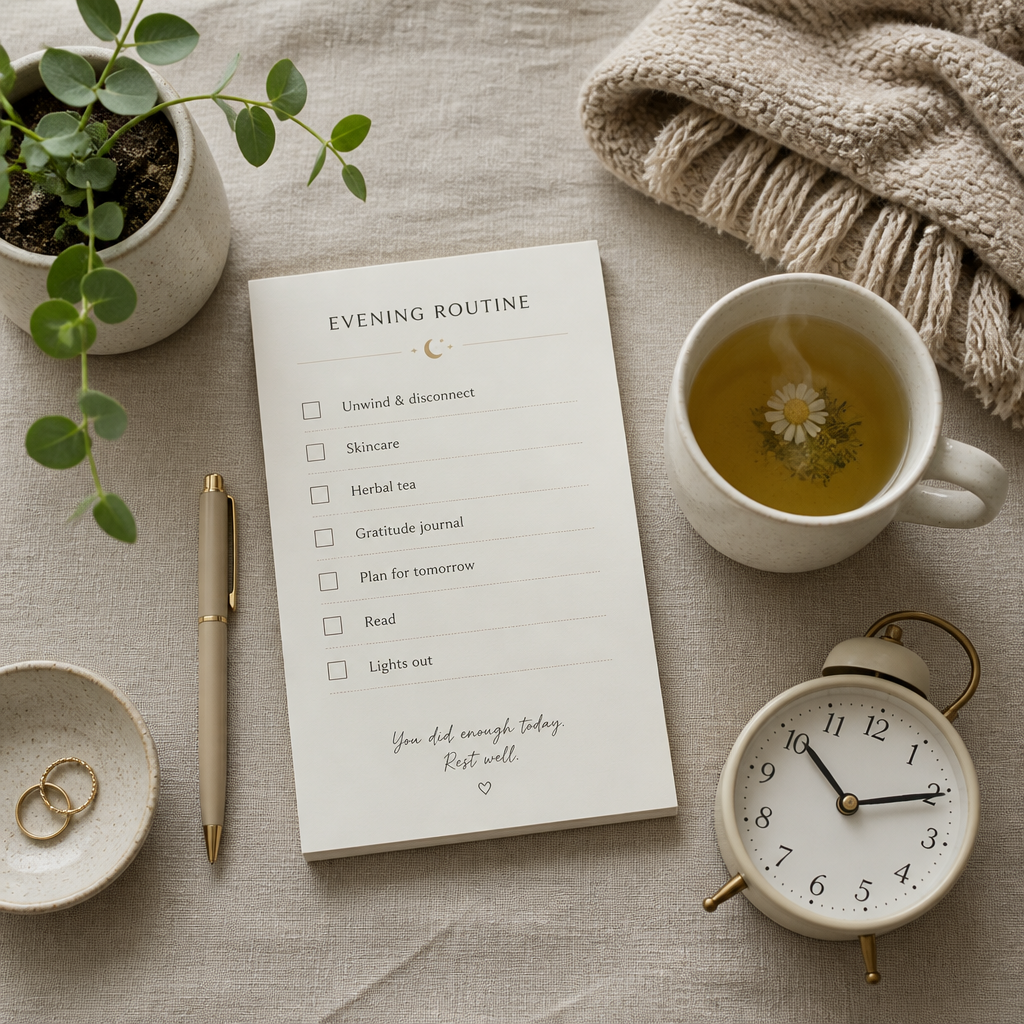
Run through this checklist in order. You do not have to do every step every night, but the more consistently you repeat the sequence, the more effective each step becomes. Treat this as a menu you pull from, not a performance you have to nail.
Step 1: Set a Hard Stop Time
Choose a time each evening, ideally 60 to 90 minutes before sleep, when work, planning, and problem-solving end. Put it in your calendar if you have to. This is the moment you stop adding things to your mental load and start subtracting them. Without a defined stopping point, the day just bleeds into the night.
Step 2: Lower the Lights
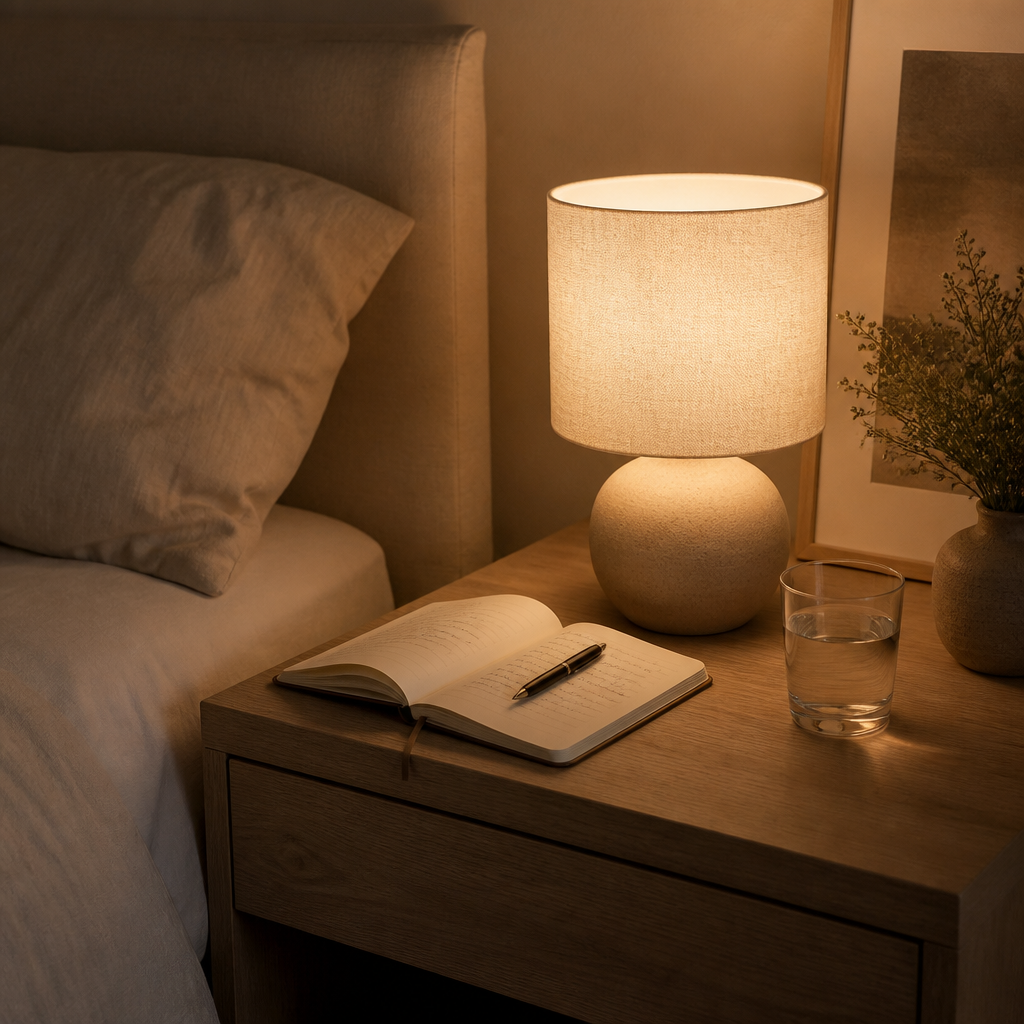
Turn off overhead lights and switch to a single lamp or a candle. This one change, taking less than 30 seconds, begins the biological cascade that leads to melatonin release. Bright overhead lighting tells your brain it is still midday. Soft, warm-toned light tells it something different. This is the foundation of every other step.
Pro tip: Keep a quality soy or beeswax candle on your bathroom vanity and light it at the start of your routine. The act of lighting it becomes its own cue. Bathwater & Beyond's monthly product drops regularly include curated candles selected specifically for this kind of sensory anchoring.
Step 3: Take a Warm Bath or Shower
A warm soak is one of the most physiologically sound steps in any wind-down routine. Warm water raises your skin temperature, and when you get out, your body rapidly loses heat. That drop in core body temperature mimics what your body does naturally as it prepares for sleep. The result is faster sleep onset and deeper early-stage sleep.
For a bath, adding a quality soak product, whether that is magnesium-rich salts, a softening oil, or a scented bath fizz, deepens the sensory experience and makes the ritual feel worth repeating. This is exactly where a curated product like the ones in Bathwater & Beyond's bath soaks collection earns its place: not as a luxury indulgence, but as a functional part of a routine that works.
Step 4: Do a Simple Skin and Body Care Sequence
After your bath or shower, apply a body lotion or oil while your skin is still slightly damp. Move slowly. This is not about skincare results, though those follow. It is about the deliberate, tactile attention to your own body that tells your nervous system it is safe to slow down. A robe helps here, too. Wrapping yourself in something soft immediately after bathing is a sensory signal that the day is done.
Step 5: Make a Warm, Non-Caffeinated Drink
The act of making something warm and holding it slows your pace. Herbal teas, warm oat milk, or a calming adaptogen blend all work. The specific drink matters less than the ritual of making and holding it. Avoid anything with caffeine, including most green teas, and skip alcohol, which disrupts sleep architecture even when it feels like it helps you fall asleep.
Step 6: Do a Two-Minute Brain Dump
Grab a notebook and write down everything still circling in your head: tomorrow's tasks, unresolved worries, things you meant to do. The goal is not to solve anything. The goal is to offload it from your working memory onto paper, where it will still be waiting for you tomorrow. This practice alone reduces the racing-mind phenomenon that keeps so many people awake.
Step 7: Stretch or Do Gentle Movement
Five to ten minutes of slow, floor-based stretching, nothing vigorous, helps release physical tension stored from sitting, commuting, or standing all day. Focus on the hips, lower back, and neck, which carry most stress. This is not exercise. It is closer to telling your body that effort is finished for the night.
Step 8: Engage in Low-Stimulation Reading
Read a physical book, not a screen, and pick something genuinely low stakes. This is not the time for thrillers, business books, or anything that will make you want to keep reading past midnight. A gentle novel, short essays, or even rereading something familiar works better. The point is to give your mind something quiet to do while the rest of you settles.
Pro tip: Keep your wind-down book physically separate from whatever you read during the day. Having a dedicated "night book" reinforces the ritual. If your eyes close mid-page, the routine still worked.
Step 9: Practice a Brief Breathing Exercise
Two to three minutes of slow, intentional breathing activates your parasympathetic nervous system, the one responsible for rest and recovery. A simple approach: inhale for four counts, hold for four, exhale for six to eight. The extended exhale is the key mechanism. It slows your heart rate and reduces cortisol more effectively than an equal-length inhale and exhale.
Step 10: Create a Consistent Sleep Environment
Before you get into bed, make your room as dark, cool, and quiet as possible. Check the temperature, lower or block any ambient light, and remove anything that creates visual noise or mental stimulation. Your bedroom should be a cue for sleep, not a second living room. If you use a sleep mask, a weighted blanket, or a specific scent on your pillow, use it the same way every night. Consistency is what makes these sensory cues effective.

How Long Should Your Wind-Down Routine Take?
The honest answer: as long as you will actually do it. A five-minute routine done every night beats a 90-minute ritual done twice a month. That said, there are practical windows worth knowing.
A 20 to 30-minute routine covers the essentials: dim the lights, take a quick shower, make a drink, do a brain dump, and breathe. This is enough to create a real transition and is sustainable for most adults on busy nights.
A 45 to 60-minute routine allows for a proper bath soak, more thorough body care, and reading time. This is the version worth building toward, not because longer is automatically better, but because the bath component adds a physiological advantage that quick showers cannot fully replicate.
Anything beyond 60 minutes starts to feel like a project, which defeats the purpose. If your routine is regularly taking over an hour, you are adding steps that are more about aspiration than function. Trim back to what genuinely calms you.
The best wind-down routine is not the most elaborate one. It is the one your nervous system has learned to trust.
Comparing Wind-Down Approaches
Not all wind-down strategies are equal. Below is a comparison of three common approaches people take to their evening routine, along with an honest assessment of what each delivers.
| Approach | What It Involves | Best For |
|---|---|---|
| The Minimal Shift | Dimming lights, silencing the phone, and brewing one cup of tea. Takes 5 to 10 minutes. No special products required. | Exhausted nights, beginners, or anyone rebuilding a routine after weeks of skipping it. Low barrier means it actually gets done. |
| The Sensory Ritual | A warm bath with a soak product, a candle, body care, a robe, and a specific drink. Takes 40 to 60 minutes. Relies on intentional products to create sensory anchors. | People who respond well to physical comfort cues and want their evening to feel like a genuine reset, not just a pre-sleep checklist. |
| The Mind-First Approach | Brain dump journaling, breathwork, and low-stimulation reading. Takes 20 to 30 minutes. No special products needed but requires more mental engagement than the minimal shift. | Overthinkers and people whose main barrier to sleep is a racing mind rather than physical tension or stimulation from screens. |
In practice, the most effective routines combine elements from at least two of these approaches. The sensory ritual gives your body something to respond to. The mind-first approach gives your mental chatter somewhere to go. The minimal shift is what you fall back on when energy is low, and falling back on something is far better than abandoning the habit entirely.
Building Your Self-Care Checklist Around Your Life
A self-care checklist that does not account for your actual evenings will fail within two weeks. The steps above are designed to be modular, meaning you pull what works on a given night and leave the rest. Some nights you have the time and energy for a full bath and reading session. Other nights you light a candle, do three deep breaths, and call it done. Both count.
For People with Young Children or Unpredictable Schedules
Anchor your routine to one or two non-negotiable steps rather than trying to protect a full hour. The brain dump and light dimming are the two highest-yield steps for anxious, time-poor adults. If you can do only two things, do those.
For Gift-Shoppers Building a Ritual Kit for Someone Else
If you are putting together a self-care gift, think in terms of sensory anchors: a quality bath soak, a candle with a warm scent profile, and a robe or wrap. These items map directly onto steps 2, 3, and 4 of this checklist and give the recipient a ready-made ritual rather than just a collection of products. Bathwater & Beyond's curated gift sets are built around exactly this logic, which is why they work as presents in a way that random wellness items do not.
For People Who Have Tried Routines Before and Failed
The problem is almost always expectation, not discipline. If you have told yourself you need a perfect 60-minute routine and then missed three nights in a row, you stopped. Reframe the goal: a 10-minute version of your routine still counts. Skipping one night does not break anything. What breaks the habit is deciding a missed night means the routine is over.
Common Mistakes That Sabotage Your Relaxation Ritual
Most wind-down routine failures come down to the same handful of patterns. Recognizing them ahead of time is the fastest way to avoid them.
Starting Too Late
If you begin your wind-down routine at the moment you want to be asleep, it will not work. The physiological changes that lead to sleep, temperature drop, melatonin rise, cortisol reduction, take time. Starting 60 to 90 minutes before your target sleep time is not optional. It is the mechanism.
Keeping Screens in the Bedroom
A phone on your nightstand is an invitation to scroll, which defeats every other step in your routine. Charge your phone outside the bedroom, or at minimum, put it face-down and on silent before step one of your checklist. This is the most uncomfortable recommendation in this list and also the highest-impact one.
Using Alcohol as a Relaxation Tool
Alcohol makes you drowsy, but it fragments sleep, suppresses the restorative stages, and increases waking in the second half of the night. People who drink to wind down often feel like they slept but wake up tired. If unwinding without alcohol feels difficult, that is worth paying attention to, but it is separate from optimizing your evening routine.
Building a Routine You Secretly Resent
If your self-care checklist includes things you added because they seemed like the right things to do rather than because they actually feel good to you, cut them. A resentment-inducing step poisons the rest of the routine. Your evening ritual should feel like something you get to do, not something you have to do. Start there and add from that foundation.
Frequently Asked Questions
How long does it take for an evening routine to start working?
Most people notice a difference within one to two weeks of consistent practice. The key word is consistent. Your nervous system learns through repetition, so even a short routine done every night builds a conditioned response faster than a long routine done occasionally. Give it 10 to 14 nights before deciding whether it is helping.
What is the single most important step in a wind-down routine?
If you can only do one thing, dim the lights. It is the fastest way to shift your body's biological signals toward rest and costs nothing. Everything else builds on that foundation. The warm bath is a close second because of the temperature-drop mechanism it triggers, but light reduction is the non-negotiable first step.
Is a bath actually better than a shower for winding down?
For the specific purpose of sleep preparation, yes. The warm water immersion raises your surface temperature more thoroughly, and the subsequent cool-down more closely mimics the natural drop in core body temperature that your body uses as a sleep signal. A warm shower still helps, but a bath with a quality soak product gives you an additional physiological advantage.
What should I do if I have too much anxiety at night to follow a routine?
Start with the brain dump step before anything else. Write down every thought circling in your head without filtering or organizing. This externalizes your mental load and reduces the cognitive churn that makes anxiety worse at night. Then move into the physical steps, specifically the breathing exercise, which directly activates your parasympathetic nervous system. If nighttime anxiety is severe or persistent, that is a conversation for a healthcare provider, not a self-care checklist.
Can I adapt this checklist for someone I am buying a gift for?
Absolutely. The best self-care gifts map to specific steps in a real routine rather than just being pretty products. A bath soak covers step 3, a quality candle covers step 2, and a robe or wrap covers step 4. When someone receives a gift that connects to a sequence they can actually follow, it gets used. That is the difference between a thoughtful gift and a decorative one that sits on a shelf.
Do I need expensive products to make an evening ritual work?
No, but quality matters more than price. One well-made bath soak or candle that you genuinely enjoy using will do more for your routine than a shelf full of mediocre products you avoid. The sensory element of a ritual works because it is specific and pleasurable. Bathwater & Beyond is built around this idea: curated, quality-first products at prices that do not require a luxury budget.
What if I work late and cannot start a routine 90 minutes before bed?
Compress, do not cancel. A 15-minute version of your routine, dim the lights, do a quick brain dump, take three slow breaths, is far better than no transition at all. The condensed version does less physiologically, but it still signals your nervous system that the shift is happening. On nights like this, skip the bath and prioritize the mental steps, since cognitive winding down is often more important for late workers than physical relaxation.
What does your current evening routine look like, and what is the one step you find hardest to actually stick to? Share your experience in the comments.
References
- The science behind evening wind-down routines, circadian rhythms, and melatonin production
- Practical evening wind-down approaches for tired adults and homebodies
- Gentle evening self-care practices for building a flexible nightly routine
- A structured 45-minute evening routine plan for better sleep
- Evening routine strategies that signal your body it is time to rest