

Home Scent Layering: Build a Calming Atmosphere
Most people burn a single candle and wonder why their home never quite feels like the spa-like sanctuary they imagined. The answer is home scent layering, the practice of combining multiple fragrance formats and delivery methods so that scent fills a space consistently, not just in one corner for twenty minutes. Research from the Smell & Taste Treatment and Research Foundation has documented that ambient scent measurably reduces perceived stress levels, yet most households treat fragrance as an afterthought rather than an intentional design element. This guide is for anyone who wants a calming home scent that actually holds, from the moment you walk in the front door to the moment you settle into a bath at the end of the night.
Table of Contents
- Quick Takeaways
- What Is Home Scent Layering and Why Does It Matter
- Understanding Scent Families for a Calming Home
- The Three-Layer System for Consistent Fragrance
- Candles and Diffusers: How to Use Both Without Chaos
- Room-by-Room Layering Strategy
- Common Mistakes That Ruin Home Scent Layering
- Comparison of Scent Delivery Methods
- Frequently Asked Questions
- References
Quick Takeaways
| Key Insight | Explanation |
|---|---|
| Layer by throw distance, not by product count | Combine one ambient diffuser (whole-room coverage), one candle (mid-range throw), and one linen spray (immediate contact) for full-spectrum coverage. |
| Stick within one scent family per space | Mixing lavender with eucalyptus works. Mixing lavender with cinnamon creates olfactory conflict and cancels the calming effect of both. |
| Sequence matters as much as selection | Start your diffuser 30 minutes before lighting a candle so the base note settles before the warmer top notes emerge. |
| Burn time and diffuser runtime should overlap by at least one hour | Running both simultaneously for at least 60 minutes creates a scent memory in a room that lingers for hours after both are off. |
| Less is more with intensity | A calming home scent at 20% intensity that holds for four hours is more effective than an overpowering burst that causes nose fatigue in 20 minutes. |
| Natural wax candles give cleaner layering | Soy and coconut wax candles release fragrance more evenly than paraffin, which means they layer more predictably with diffusers and sprays. |
| Rotate scents seasonally, not weekly | Changing scents too frequently prevents your brain from associating a particular smell with calm. Give a scent combination at least four weeks to build that conditioned response. |
What Is Home Scent Layering and Why Does It Matter
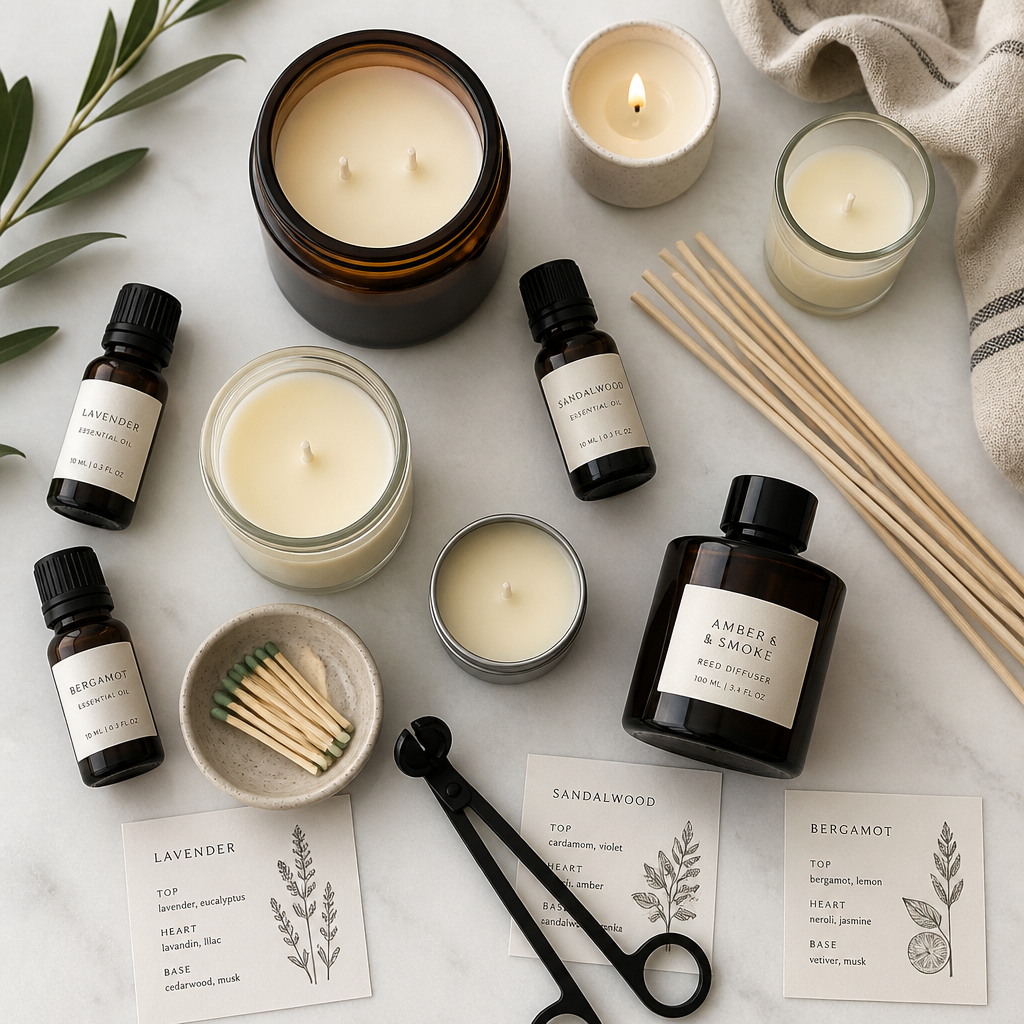
Home scent layering is the deliberate practice of using two or more fragrance delivery methods at the same time, in the same space, to create a scent profile that feels complete rather than flat. Think of it the way a perfumer thinks about top, middle, and base notes. A single candle gives you one note. Layering gives you a full chord.
In practice, a layered scent environment reads differently to the nose depending on where you are in the room, how recently the products were activated, and how the scent molecules have settled into soft surfaces like rugs, curtains, and upholstery. That depth is what separates a home that smells intentionally designed from one that just smells like a candle was lit.
The neurological case for this is real. According to research published by the American Psychological Association, olfactory stimuli bypass the thalamus and connect directly to the limbic system, the part of the brain that governs emotion and memory. This means scent triggers an emotional response faster than sound or sight. A consistent calming home scent is not just pleasant. It is a functional tool for regulating mood.
Understanding Scent Families for a Calming Home
Not all calming scents are interchangeable, and choosing the wrong combination is the fastest way to undermine the whole system. The scent families that consistently perform best for relaxation and stress reduction are florals, woodies, and green-aquatic blends. Citrus works for energy, not calm. Spice families work for warmth and coziness but can feel stimulating if overused.
The Calming Scent Families Worth Knowing
Floral-herbal is the most versatile entry point. Lavender, chamomile, and rose geranium all sit in this family and all have documented anxiolytic properties. A 2020 meta-analysis in the journal Frontiers in Behavioral Neuroscience confirmed that lavender inhalation significantly reduced anxiety scores across multiple study groups.
Woody-resinous scents like sandalwood, cedarwood, and vetiver work as base notes. They anchor a scent profile and create a sense of groundedness rather than brightness. These are the scents that make a room feel held rather than airy.
Green-aquatic scents, think eucalyptus, sea salt, and fresh fern, add a clean, spa-like quality without sharpness. They blend exceptionally well with both floral and woody families, making them ideal as the bridging note in a layered system.
A common mistake is treating scent selection like a grocery run, grabbing whatever smells good individually without checking whether the pieces work together. Before you buy anything, do a paper strip test. Hold strips from your intended candle and diffuser oil next to each other and let them dry for two minutes. If they fight each other dry, they will fight each other in your living room.
Pro tip: When building a calming scent profile, always anchor with a woody or resinous base note first, then layer a floral or green note on top. Base-first prevents the lighter notes from feeling ungrounded or thin.
The Three-Layer System for Consistent Fragrance
The most reliable approach to home scent layering is a three-layer system organized by delivery speed and throw distance. Each layer serves a specific function, and removing any one of them weakens the overall effect.
Layer One: Ambient Background
This is your diffuser, whether ultrasonic, reed, or cold-air. It operates at low intensity over a long period and fills the entire room with a consistent base. Run it for 30 minutes before introducing any other fragrance product. This layer sets the olfactory context for everything that follows.
Layer Two: Focal Warmth
This is your candle. It adds a warm, dynamic note that moves as the flame flickers and the wax pool deepens. Candles have a mid-range throw, roughly 300 to 400 square feet, which makes them ideal for reinforcing and warming the diffuser's background note. Light the candle only after the diffuser has been running for at least 30 minutes.
Layer Three: Immediate Contact
This is your linen spray, room mist, or scented bath product. It is applied directly to soft surfaces, pillowcases, robes, or towels, and creates an intimate layer of scent that you encounter at close range. This layer is what makes the experience feel personal rather than generic.
"Scent is the only sense with a direct neural pathway to the brain's emotional center. Designing your olfactory environment is designing your emotional baseline." - Dr. Rachel Herz, cognitive neuroscientist and author of The Scent of Desire
Candles and Diffusers: How to Use Both Without Chaos
The most common question people have when they first try layering is whether candles and diffusers will compete with each other and create a headache-inducing mess. The short answer is: only if you choose conflicting scents or run both at full intensity simultaneously.
The Sequencing Rule
Run your diffuser first. Let it establish a background presence for 30 minutes. Then light your candle. The candle's warmer, more complex throw will blend into the diffuser's scent rather than colliding with it. If you light both at the same time, you get two separate scent sources competing for the same olfactory bandwidth.
Intensity Calibration Between Products
Diffusers are measured in output volume, usually in milliliters per hour. Candles are measured by diameter, because a wider diameter wax pool creates a stronger throw. For a standard 200-square-foot bedroom, a diffuser running at 1.5 to 2 ml per hour pairs well with a candle that has a diameter of 3 to 4 inches. Going larger on either without adjusting the other creates imbalance.
In practice, the candle should smell like an accent within the diffuser's established scent, not a separate product entirely. If you can distinguish them as two separate smells, the intensity ratio is off. Adjust the diffuser down or move the candle closer to the room's center to blend more effectively.
Pro tip: If you find that your candle is overpowering your diffuser, trim the wick to 3 millimeters before each burn. A shorter wick produces a smaller flame, a more controlled melt pool, and a noticeably softer throw.
Room-by-Room Layering Strategy
One scent profile does not work across an entire home. The way you layer scent in a kitchen is fundamentally different from how you layer it in a bedroom, not because the products change, but because the purpose of each space changes.
Bedroom: Prioritize Sedative Notes
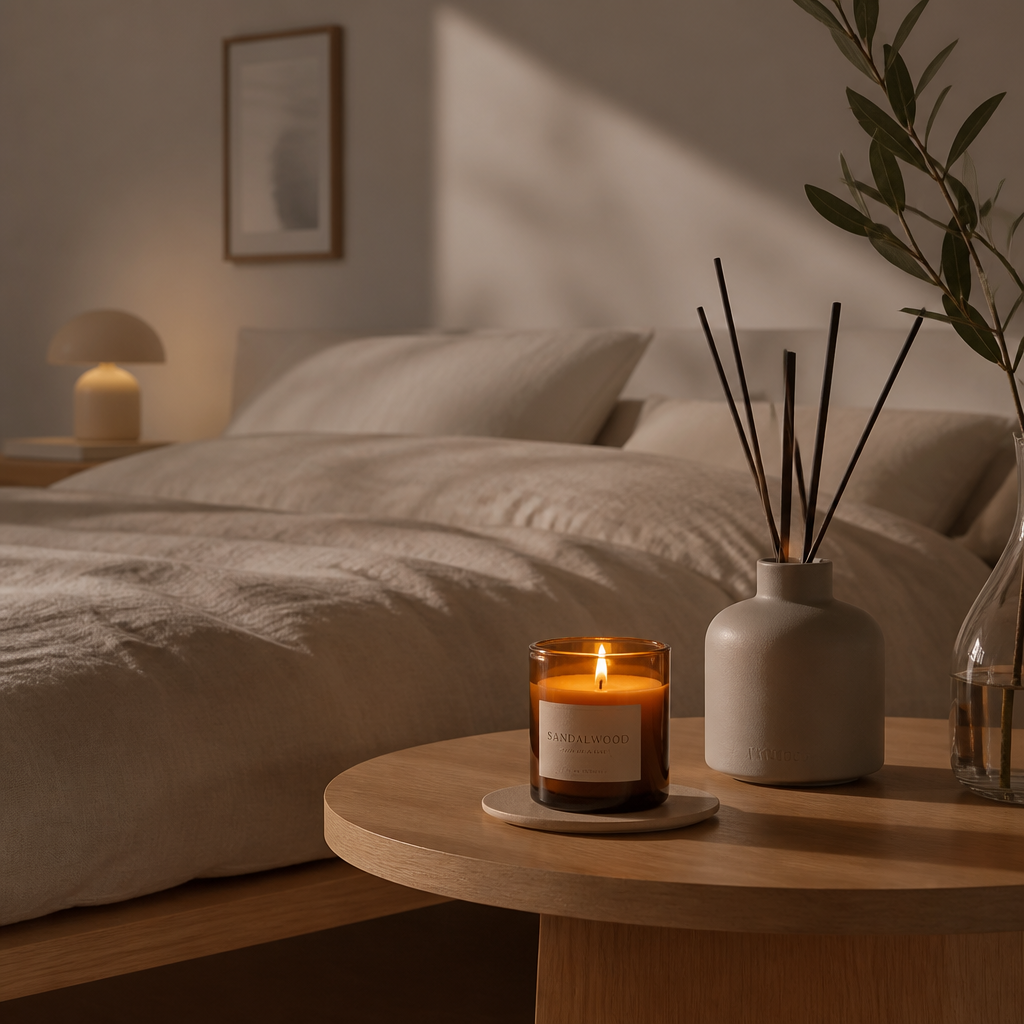
The bedroom is where your calming home scent does its most important work. Lavender, chamomile, and sandalwood are your best tools here. Run a diffuser on a timer set to begin 45 minutes before your intended sleep time. Add a linen spray to your pillow and duvet cover. Skip the candle in the bedroom unless you commit to extinguishing it well before sleep. A forgotten candle is not a wellness practice.
Living Room: Balance Calm with Presence
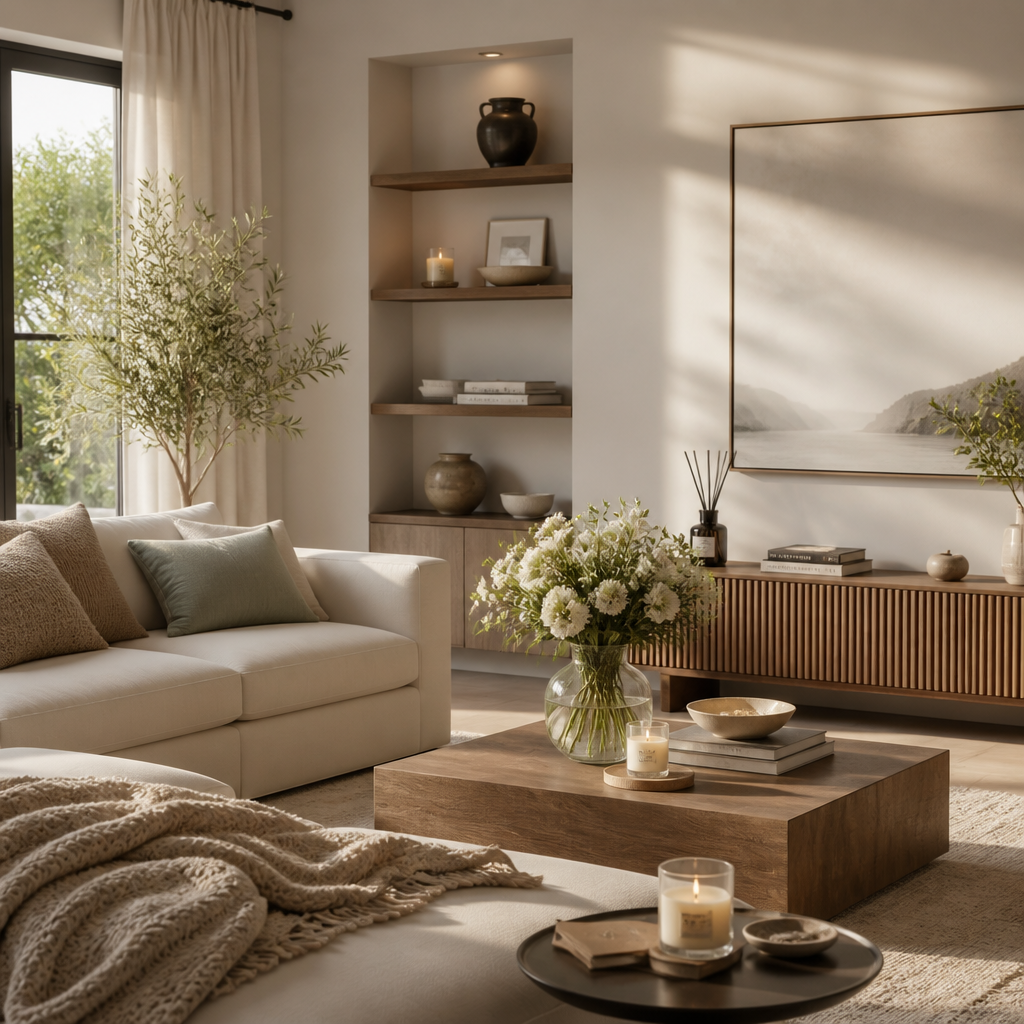
The living room needs a scent that reads as welcoming and relaxed without inducing drowsiness. Cedarwood plus bergamot is a strong combination here. The cedarwood grounds the space while bergamot adds a green brightness that keeps the room feeling alive. Use a reed diffuser for the ambient layer and a candle for focal warmth during evening hours.
Bathroom: Let the Steam Do the Work
The bathroom is the one room where you have heat and humidity as natural allies. A few drops of eucalyptus or peppermint oil on the floor of the shower (away from the drain) will release fragrance as steam rises. Add a small candle on the vanity for a secondary layer. This two-element approach works better in bathrooms than a full three-layer system because the steam amplifies everything.
Common Mistakes That Ruin Home Scent Layering
A common mistake is buying products from multiple brands without checking whether their fragrance profiles are compatible. Brand A's "lavender" and Brand B's "lavender" are almost never the same formula. One may be sharp and herbal, the other sweet and powdery. They can smell discordant when combined even though they share a label.
Another frequent error is over-relying on scent to fix a room that has persistent odor problems. Layering fragrance on top of pet smells, mildew, or stale air does not create calm. It creates a confusing and often unpleasant combination. Address the source of any baseline odors before building a scent layer on top of them. Activated charcoal bags placed discreetly in problem corners can neutralize baseline odors without adding competing fragrance.
Finally, people chronically over-saturate their spaces. Nose fatigue, medically referred to as olfactory adaptation, sets in after roughly 20 minutes of continuous exposure to the same scent at moderate to high intensity. Once your nose adapts, you add more product, which means anyone entering the room from outside experiences it as overwhelming. A calming scent that guests describe as overpowering is not doing its job. Start at 50% of your intended intensity and adjust upward in small increments.
Comparison of Scent Delivery Methods
Choosing the right combination of delivery methods depends on your room size, how long you need the scent to last, and how much active management you want to do. The table below compares the three primary options used in a layered home scent system.
| Delivery Method | Coverage and Duration | Best Role in a Layered System |
|---|---|---|
| Ultrasonic Diffuser with Essential Oils | Covers 200 to 500 sq ft depending on output setting. Runs 1 to 8 hours on a single fill. Consistent intensity with timer control. | Layer One (ambient background). Start 30 minutes before other products. Best for setting the olfactory baseline of a room. |
| Soy or Coconut Wax Candle | Covers 300 to 400 sq ft. Effective for 2 to 4 hours per burn session. Intensity increases as the wax pool widens over multiple burns. | Layer Two (focal warmth). Adds complexity and movement to the diffuser's base. Provides a visual element that amplifies the sensory experience. |
| Linen Spray or Room Mist | Immediate and localized. Scent holds on fabric for 30 minutes to 3 hours depending on formula and fiber type. No ongoing coverage. | Layer Three (intimate contact). Applied to pillows, robes, or towels for personal-scale scent that completes the full-spectrum experience. |
Frequently Asked Questions
Can I layer scents from different brands or do they need to come from the same collection?
You can absolutely layer scents from different brands, but you need to test them together before committing. Paper strip tests are helpful, but the most reliable method is running both products simultaneously in a small room for 30 minutes and evaluating whether they blend or compete. Brands within the same scent family, such as two floral-herbal products, tend to be safer cross-brand pairings than two products from different families made by different manufacturers.
How long does it take to build a scent memory in a room?
Scent memory, the psychological association between a specific smell and a specific emotional state, typically requires consistent exposure over three to four weeks. Using the same scent combination in the same space daily for that period creates a conditioned response. Over time, simply entering the room and detecting the first hint of the scent can trigger a calming response before the full layer is even established.
Is home scent layering safe for pets and children?
This depends entirely on which ingredients are used. Many essential oils commonly used in diffusers, including tea tree, eucalyptus, and cinnamon bark, are toxic to cats and dogs when inhaled in high concentrations. Children under two should not be in rooms where diffusers are running with strong essential oils. Always check ingredient safety against a veterinary or pediatric source before introducing any new fragrance product to a shared space. Fragrance-free options or specially formulated pet-safe blends are worth considering if you have animals in the home.
How do I prevent scent fatigue when I live with the same fragrance every day?
Olfactory adaptation is the main reason your home stops smelling like anything to you after a few weeks even when guests notice it immediately. The best approach is to step outside for at least 10 minutes before re-entering if you want to evaluate your scent levels. You can also take short breaks from the scent on one or two days per week to reset your sensitivity. Rotating between two complementary scent profiles every four weeks rather than switching entirely also helps maintain nose sensitivity without sacrificing the psychological anchoring effect.
What is the best entry point for someone who has never tried home scent layering before?
Start with a single scent family and two products only: one diffuser and one candle in matching or complementary scents. Choose a floral-herbal combination like lavender and chamomile for the bedroom and run them using the sequencing rule (diffuser first, candle 30 minutes later). Master the two-product system for four weeks before adding a linen spray as a third layer. Trying to implement the full three-layer system immediately makes it harder to identify what is working and what is not.
How do I choose the right candle size for my room?
A candle with a 3-inch diameter is appropriate for rooms up to 200 square feet. For rooms between 200 and 400 square feet, a 4-inch diameter candle provides adequate throw without overpowering. Rooms larger than 400 square feet typically need two smaller candles placed on opposite sides rather than one very large candle placed centrally. Multiple smaller sources distribute fragrance more evenly than a single oversized source.
Have you tried layering candles and diffusers in your own home, and which scent combinations have worked best for your evening routine? Share your experience in the comments below.
References
- American Psychological Association: research and resources on the psychology of scent and emotional response
- Statista: market data and consumer statistics on the home fragrance and wellness product industry
- National Institutes of Health: peer-reviewed studies on aromatherapy, lavender, and anxiety reduction
- Forbes: reporting on consumer wellness trends and the growing home fragrance market
- U.S. Environmental Protection Agency: guidance on indoor air quality and the use of scented products indoors