

How to Build a Self-Care Kit for a Friend in Need
When someone you care about is going through a genuinely hard time, whether that is grief, burnout, a breakup, or just prolonged stress, most people freeze. They want to help but do not know what to do. A self-care kit for a friend is one of the most practical, emotionally thoughtful things you can give, but only if it is built with real intention. Generic spa gift sets from a pharmacy shelf do not cut it. This guide walks you through exactly how to build one that lands, covering what to include, how to tailor it to your friend's situation, and where to find quality items without spending a fortune.
Table of Contents
- Quick Takeaways
- Why a Self-Care Kit Works Better Than Flowers or Food
- Understanding What Your Friend Actually Needs
- The Essential Categories Every Kit Should Cover
- How to Personalize Without Overthinking It
- Comparison of Self-Care Kit Approaches
- Budgeting and Presentation Tips
- What to Avoid Putting in a Comfort Gift
- Frequently Asked Questions
- References
Quick Takeaways
| Key Insight | Explanation |
|---|---|
| Sensory comfort is the core goal | Items that engage smell, touch, and warmth (bath soaks, candles, robes) signal safety to the nervous system, making them ideal for someone under stress. |
| Match the kit to the type of hard time | Grief kits should feel soft and low-effort. Burnout kits should eliminate decisions. Breakup kits can include more indulgent, treat-yourself items. |
| Five items is the sweet spot | Fewer than four feels thin. More than seven feels overwhelming for someone already depleted. Aim for five to six intentional pieces. |
| Include at least one "zero effort" item | Not everything requires setup or decision-making. A scented candle or a plush robe requires nothing from the recipient. That matters when someone is exhausted. |
| Presentation communicates care | How you package the kit signals effort. A reusable basket or linen bag elevates even affordable items and becomes part of the gift itself. |
| Avoid advice-forward items | Journals with prompts, self-help books, or anything that implies "you need to fix yourself" can land badly. Stick to items that offer comfort, not correction. |
| Limited-edition or curated products feel more special | Monthly product drops from specialty retailers signal that you chose something rare, not something grabbed off a shelf, which amplifies the emotional message. |
Why a Self-Care Kit Works Better Than Flowers or Food
Flowers die in five days. Food gets eaten in an evening. A well-built self-care kit stays in your friend's bathroom or bedroom for weeks, offering small moments of comfort every time they reach for it. That sustained presence is what makes it a genuinely useful gift for someone stressed, not just a gesture.
Research published through the American Psychological Association consistently shows that sensory grounding, engaging the senses of smell, touch, and warmth, is one of the most accessible ways to interrupt a stress response. Products like bath salts, body oils, and weighted textures are not frivolous. They are tools for nervous system regulation that most people will not buy for themselves when they are struggling.
The other advantage is permission. When someone is going through something hard, they often feel guilty about resting or spending time on themselves. A self-care kit from a friend is an explicit invitation to do exactly that. It removes the guilt because someone else made the decision for them.
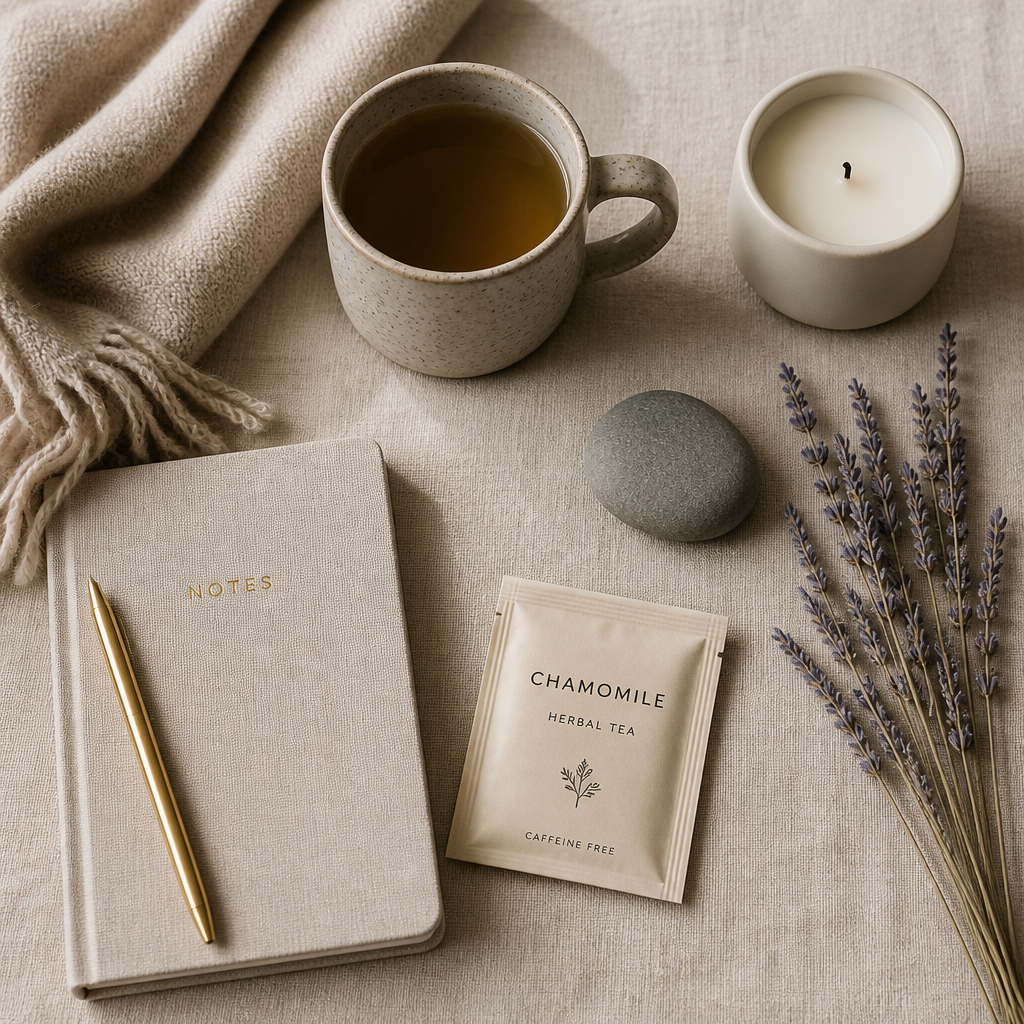
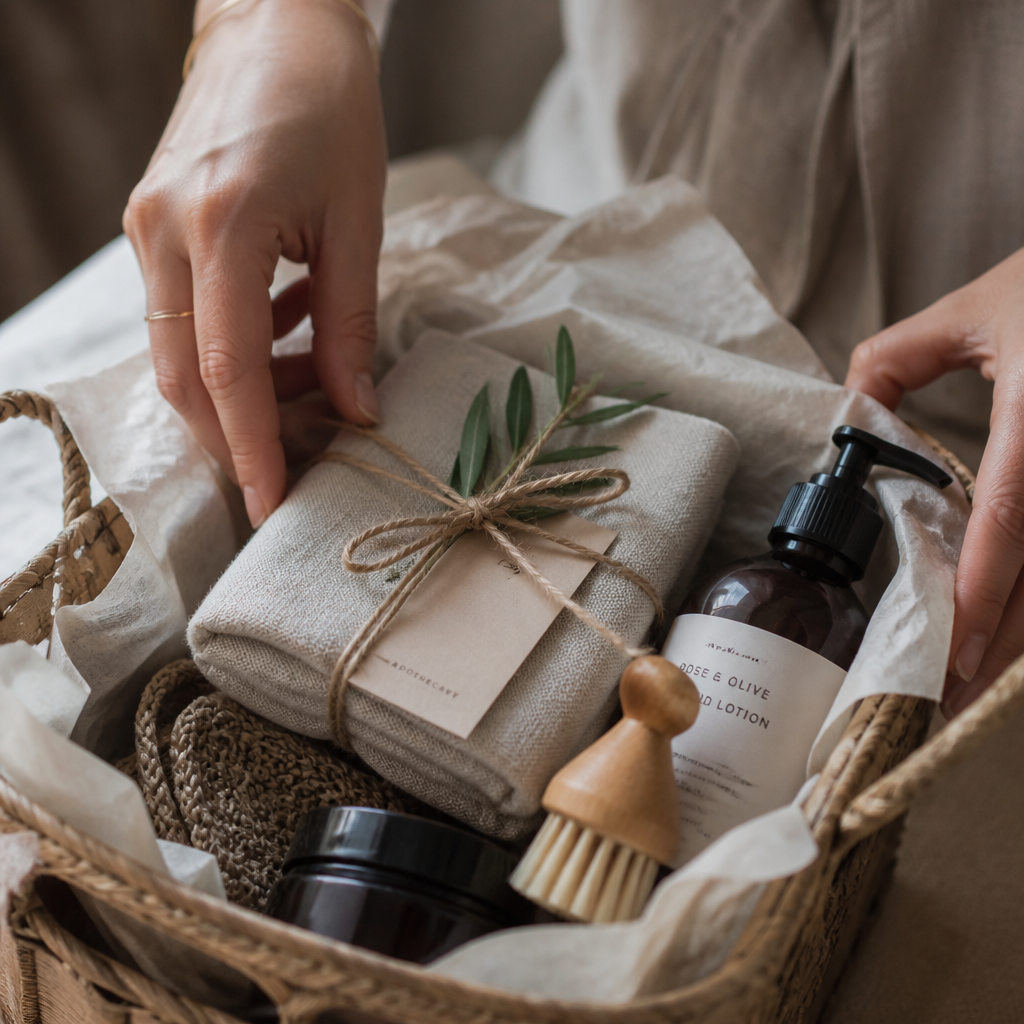
Understanding What Your Friend Actually Needs
Before you buy a single item, spend thirty seconds thinking about your friend's specific situation. The type of difficulty they are facing should shape everything about what you put in the kit.
Grief and Loss
People in grief are often physically cold, sleep-deprived, and struggling to eat properly. Prioritize warmth and softness. A plush robe, a lavender bath soak, and a gentle candle with a calming scent profile (think chamomile, sandalwood, or vanilla) address the body's physical experience of grief. Keep the items simple and low-barrier to use.
Burnout and Work Exhaustion
Burnout produces decision fatigue above almost everything else. The biggest mistake with burnout kits is including items that require research, setup, or ongoing use. A bath soak that simply drops into water, a robe that is immediately wearable, a candle that just needs a match. These are perfect. Do not include anything that requires instructions.
Relationship Stress or Breakups
This is where a bit more indulgence works well. Someone going through heartbreak is allowed to feel treated. Richer textures, more luxurious scents, items that feel genuinely special rather than purely functional. Comfort gift ideas for this situation can lean into the "you deserve this" message without apology.
Anxiety or Mental Health Struggles
Here, predictability and simplicity matter most. Familiar, calming scents like eucalyptus or lavender, soft textures, and items with a clear and obvious use. Avoid anything novel or experimental. When someone is anxious, the unknown is not appealing, even in a gift.
"Social support is one of the most robust stress-buffers known to psychological science. Physical tokens of care extend that support into moments when the giver is not present." - American Psychological Association, Stress in America Report
The Essential Categories Every Kit Should Cover
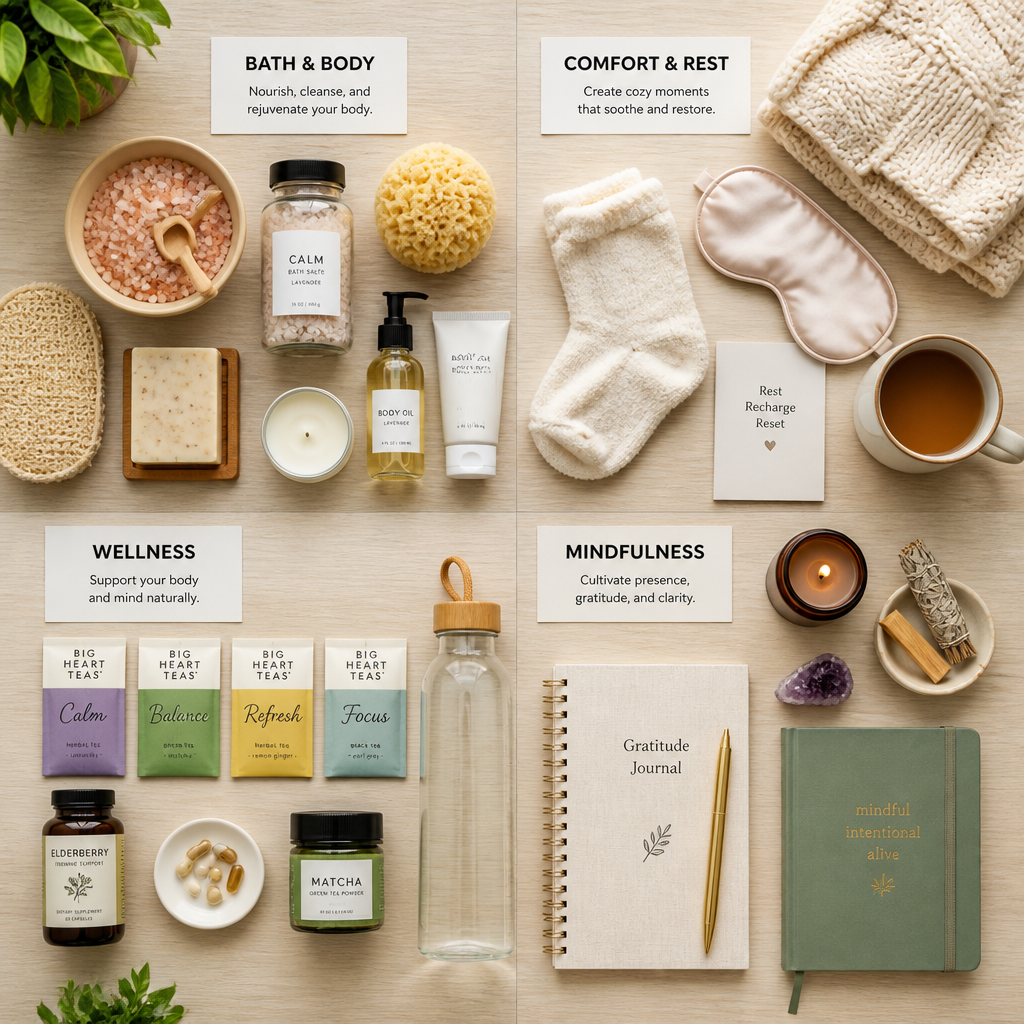
A self-care kit that works covers at minimum three sensory or comfort zones. Here is how to think about each one.
Bath and Body (The Anchor Item)
Every good self-care kit for a friend should include at least one bath or body product. This is the category that most directly signals rest. A bath soak with magnesium or Epsom salts, a bath bomb, or a high-quality body scrub all work well. Magnesium-based bath soaks in particular are worth choosing intentionally, as magnesium absorbed through the skin is associated with improved sleep quality, which is exactly what most people in distress need.
At Bathwater and Beyond, the bath essentials category covers this anchor item category well, with options designed specifically to support evening wind-down rather than just smell pleasant.
Ambient Comfort (Candles and Scent)
A candle transforms a room. It changes the light, introduces scent, and signals to the brain that it is time to slow down. Choose one with a clean burn and a scent profile appropriate to the situation. Lavender and chamomile for sleep. Eucalyptus and mint for clearing mental fog. Vanilla and sandalwood for warmth and emotional comfort.
Wearable Comfort
A soft robe, a pair of quality socks, a sleep mask. These are items people rarely buy themselves but immediately love. They require zero effort to use and provide lasting comfort. If budget allows, a plush robe is one of the highest-return items you can include in a comfort gift basket for a friend.
A Small Indulgence
This could be a specialty tea, a high-quality lip balm, a facial mist, or a single-use sheet mask. The point is a small treat that feels elevated without being over-the-top. It adds variety to the kit and gives your friend something to reach for when they want a moment of comfort but not a whole bath.
Pro tip: Include a brief handwritten note that gives your friend specific permission to use the kit right now, not to save it for later. People often hold onto gifts thinking they should wait for the right moment. The right moment is tonight.
How to Personalize Without Overthinking It
Personalization does not mean custom-printed labels or monogrammed robes. It means choosing items that reflect what you actually know about your friend. That specificity is what separates a self-care kit from a generic gift set.
Use Scent as a Shortcut to Memory
If you know your friend loves the smell of pine, or always burns vanilla candles at home, or mentioned once that lavender gives them a headache, that information is more valuable than any gift guide. Matching a candle or bath product to a scent your friend already loves makes the gift feel personal even if the item is not custom-made.
Reference a Shared Experience
Include a note that says something like "this bath soak reminded me of that weekend we spent at the cabin" or "you mentioned wanting to actually use your bathtub more, so here is a reason." Connecting the gift to a real shared moment costs nothing and means everything.
Match the Energy Level Required
This is the most overlooked personalization consideration. How much energy does your friend have right now? Someone in acute crisis needs a kit they can use at 20 percent capacity. Someone who is stressed but functional can handle a slightly more elaborate routine. Build for where they are, not where you hope they will be.
Pro tip: If you are shopping from a curated retailer like Bathwater and Beyond, check whether there are limited monthly product drops available. These items are selected for quality and purpose, not just aesthetics, which saves you the work of evaluating individual products from scratch.
Comparison of Self-Care Kit Approaches
| Approach | Best For | Key Strengths and Limitations |
|---|---|---|
| Pre-assembled spa gift set (pharmacy or department store) | Last-minute gifting with no time to curate | Convenient and widely available, but often includes filler items, synthetic scents, and products designed for visual appeal over actual use. Low emotional signal to the recipient. |
| Fully DIY kit (individual items sourced from multiple retailers) | Givers who know their friend's preferences in detail | Highest personalization potential, but requires significant research time and quality control across multiple vendors. Inconsistent quality is a real risk. |
| Curated kit from a specialty self-care retailer | Most situations, especially when quality and intention both matter | Items are pre-vetted for quality and purpose. Limited drops mean products are thoughtfully chosen, not mass-produced. Easier to build a cohesive kit without starting from zero. |
In practice, the curated specialty retailer approach wins for most people because it balances quality, intentionality, and time investment. You are not starting from scratch, but you are also not handing over a gift that feels like it came from a display bin.
Budgeting and Presentation Tips
A self-care kit does not need to be expensive to be meaningful. A common mistake is overspending on one impressive item and then filling the rest of the kit with afterthoughts. A more effective approach is to allocate your budget evenly across four to five genuinely useful items.
Budget Ranges That Work
For a budget under $50 CAD, focus on two core items, a bath soak and a candle, plus a small indulgence like a sheet mask or specialty tea, and a handwritten note. That combination covers multiple sensory zones without stretching the budget.
For $75 to $100 CAD, you can add a wearable comfort item like quality socks or a sleep mask, and package everything in a reusable linen bag or small basket that becomes part of the gift itself.
Above $100 CAD, a plush robe becomes a viable anchor item. Build everything else around it.
Presentation That Elevates Affordable Items
Wrapping tissue in a neutral color, a simple linen drawstring bag, or a small wicker basket all signal effort without being expensive. Avoid plastic wrap or department store tissue with logos. The container should feel intentional, not like it came from a gift-wrapping station at checkout.
Line the base of your container with dried flowers, cedar chips, or simply more tissue. It fills space beautifully and adds a sensory element before your friend has even touched the products.
What to Avoid Putting in a Comfort Gift
Knowing what not to include is just as important as knowing what to add. Several well-intentioned choices consistently miss the mark.
First, avoid anything that implies your friend needs to change or improve. Self-help books, guided journals with improvement prompts, fitness gear, and supplements in this vein all carry an unintentional message that the recipient is broken. That is the opposite of what you want to communicate.
Second, avoid strong or unusual scents unless you know for certain your friend loves them. Patchouli, intense florals, or heavily synthetic fragrances are polarizing. Stick to universally calming profiles: lavender, chamomile, vanilla, sandalwood, eucalyptus.
Third, skip anything with a complicated setup or a learning curve. An aromatherapy diffuser that requires pairing with an app, a multi-step skin treatment, or anything that arrives in multiple pieces with an instruction booklet demands energy your friend does not have. Every item in the kit should be immediately usable with no decision required.
Finally, avoid pairing the kit with unsolicited advice about what your friend should do to feel better. The kit is the message. Let it speak on its own.
Frequently Asked Questions
How much should I spend on a self-care kit for a friend?
Between $50 and $100 CAD is a practical range that allows you to include four to five quality items without overextending. The perceived value of a self-care kit comes from curation and presentation, not raw cost. A $60 kit assembled thoughtfully will mean more than a $120 one thrown together without intention.
What is the single most important item to include in a comfort gift for a stressed friend?
A bath soak or bath product is the anchor item that signals the most clearly that rest is the point. It is the product most directly tied to the message "stop, take care of yourself tonight." Everything else in the kit supports that invitation, but the bath product carries the emotional weight of the gift.
Is it appropriate to give a self-care kit to a male friend or a friend who does not typically use self-care products?
Absolutely. Frame it around the concept of recovery and rest rather than beauty or pampering. A magnesium bath soak, a quality candle with a woodsy or clean scent, and a soft pair of socks or a simple robe translate across any gender or lifestyle. The items do not need to look or sound "spa-like" to serve the same function.
Should I personalize the note inside the kit?
Yes, and it is one of the highest-return things you can do. A short, specific handwritten note, two to four sentences at most, explaining why you chose what you chose and giving your friend explicit permission to use the kit now rather than save it, dramatically increases how the gift lands emotionally. Generic card-verse messages add nothing.
Where is the best place to source items for a self-care kit in Canada?
Curated Canadian self-care retailers are your best starting point because the products are pre-vetted for quality and the selections are made with purpose rather than margin. Bathwater and Beyond is a strong option for this exact use case, offering thoughtfully selected bath essentials, candles, and wellness accessories through limited monthly drops, which means what you buy is not the same mass-produced item available everywhere else.
How do I know if the products I am choosing are actually good quality?
Look for products with short, recognizable ingredient lists, natural fragrance sources rather than synthetic parfum, and packaging that is minimal rather than marketing-heavy. Specialty retailers that curate rather than stock everything are a reliable filter, because their reputation depends on the quality of each item they carry.
If you have recently built a self-care kit for someone you love, we would genuinely like to know what you included and whether it landed the way you hoped.
References
- American Psychological Association, research on stress, social support, and sensory grounding
- National Institute of Mental Health, resources on stress and emotional wellbeing
- National Institutes of Health, published studies on magnesium, sleep quality, and nervous system regulation
- Forbes, reporting on the growing consumer self-care and wellness gifting market
- Statista, consumer data on wellness product spending and gift-giving behavior in North America