

How to Give a Thoughtful Self-Care Gift That Feels Personal
Most self-care gifts fail before they're even unwrapped. The problem is not the price tag. It is the generic bath set purchased at the last minute, the candle that smells like nothing in particular, the robe that says "I grabbed something." According to a 2023 Statista consumer survey, 62% of gift recipients say they have received a wellness or self-care gift that felt impersonal. Giving a thoughtful self-care gift requires knowing the difference between a curated gesture and a placeholder. This guide gives you a practical, opinionated framework for getting it right every time.
Table of Contents
- Why Self-Care Gifts Go Wrong
- Quick Takeaways
- What Makes a Self-Care Gift Feel Personal
- Personalized Gift Ideas by Recipient Type
- Unique Gifts for Women Who Already Have Everything
- How to Choose Between Gift Approaches
- The Presentation Layer: Why Packaging Matters
- Frequently Asked Questions
- References
Why Self-Care Gifts Go Wrong
The self-care gift category is enormous and, because of that, almost entirely diluted. Walk into any department store and you will find the same shrink-wrapped lavender sets, the same triple-wick vanilla candle, the same "relax" bath bomb. These items exist not because they are meaningful but because they are easy to manufacture and easy to stock.
A common mistake is equating price with personalization. Spending more on a generic set does not make it thoughtful. What makes a gift feel personal is specificity, the sense that the giver paid attention to who this person actually is.
Quick Takeaways
| Key Insight | Explanation |
|---|---|
| Scent is the most personal choice you can make | Never guess on fragrance. Ask a subtle question or choose something unscented and let the recipient personalize later. |
| Ritual-based gifts outperform product-only gifts | A product paired with a small handwritten "how to use it" card turns an item into an experience. |
| Limited-edition items signal effort | Monthly drops and curated bundles from boutique retailers communicate that you sought something specific, not something mass-produced. |
| Avoid anything that implies the recipient needs to "fix" themselves | Gifts framed around weight, sleep optimization, or stress correction can feel judgmental. Comfort-forward items are universally safe. |
| A single excellent item beats a cluttered gift set | One high-quality robe or a beautifully formulated bath soak communicates more care than a basket of ten forgettable products. |
| Packaging is part of the gift | How something arrives shapes how it is received. Presentation is not vanity. It is communication. |
| Consider the recipient's existing routine | A bath soak for someone who only showers is wasted. Ask or observe before purchasing. |
What Makes a Self-Care Gift Feel Personal
Personalization in gift-giving is not about monogramming. It is about demonstrating that you know something specific about the person you are gifting. The most effective thoughtful self-care gifts are built on three elements: relevance, ritual, and restraint.
Relevance: Match the Gift to the Person's Actual Life
Does your recipient take long baths or prefer a ten-minute shower? Do they burn candles regularly or find them a fire hazard? Do they love minimalist packaging or appreciate something that looks indulgent on their bathroom shelf? These details matter more than the product's popularity or its price point.
In practice, the easiest way to gather this information is to pay attention to what people complain about or mention offhand. Someone who says "I never take time for myself" is telling you exactly what they need: permission and tools for a slower evening. A robe, a bath soak from a small Canadian retailer like Bathwater and Beyond, or a single soy candle selected with care hits differently than anything grabbed off a shelf.
Ritual: Give an Experience, Not Just a Product
The most memorable self-care gifts are ones that prompt a habit. When you pair a product with a simple note, such as "draw a bath, add two capfuls, and give yourself 20 minutes," you are not just giving a bottle of soak. You are giving a ritual.
This is what separates a thoughtful self-care gift from a generic one. The product is the vehicle. The intention behind it is the actual gift.
Restraint: More Is Not More
Overstuffed gift baskets feel cheap regardless of the individual item quality. Choosing one or two genuinely considered products signals more effort than thirty items wrapped in cellophane. Quality over quantity is not just a brand value at retailers like Bathwater and Beyond. It is a psychology of giving. If you're working with a set budget, our self-care gifts under $50 guide is built around exactly this kind of restraint.
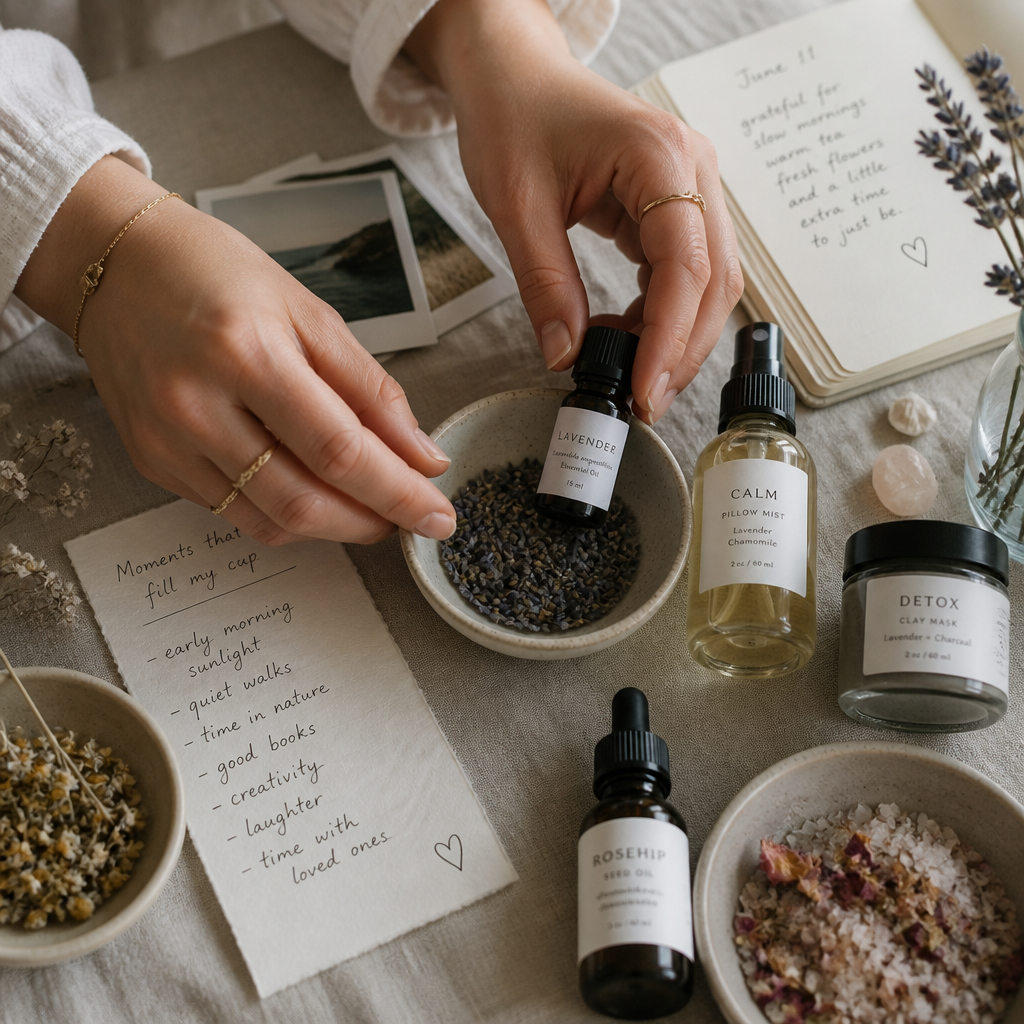
Personalized Gift Ideas by Recipient Type
The best approach to personalized gift ideas is to start with the person's lifestyle, not the product catalog. Different recipients call for different strategies, and a one-size approach always shows.
For the Perpetually Busy Professional
This person does not have time to build a multi-step routine. The best gift is something that makes the routine they already have feel more luxurious. Think: a plush robe that replaces their worn-out one, a single high-quality bath oil that dissolves into any shower, or a candle with a clean scent they can burn at their desk while working from home.
Avoid gift sets that require assembly or reading instructions. Ease of use is the gift.
For the Ritualistic Self-Care Enthusiast
This person already has a routine and they love it. Your job is to elevate it. Look for something they would not buy themselves because it feels indulgent, a limited-edition bath soak, a premium candle from a small-batch maker, or a wellness accessory that fits what they already do.
This is where curated drops from boutique Canadian retailers shine. If the product is not available in every department store chain, it signals that you went looking for something specific.
For Someone Going Through a Hard Time
Skip anything that implies productivity or self-improvement. No sleep trackers. No optimization. What someone navigating grief, burnout, or illness needs is comfort, warmth, and softness. A weighted eye mask, a richly scented bath salt, or a robe that feels like being held is the right call.
Pro tip: For recipients going through emotional difficulty, include a handwritten note over any card with a printed sentiment. Two honest, personal sentences outperform any Hallmark message.
For the Gift Recipient Who Has Everything
Consumables are your answer. Even someone with a fully stocked bathroom runs out of things. A beautiful bath soak, a premium bar of soap, or a hand cream in an elevated formula gives them something they will actually use without adding clutter. Bathorium's Drenched In Renewal Box Set is built for exactly this situation — a full consumable experience rather than one more object for a shelf that is already full. Pair it with something perishable, like a small box of artisan chocolates, and you have a complete evening-in experience.
Unique Gifts for Women Who Already Have Everything
The phrase "unique gift for women" gets searched thousands of times monthly for a reason: most people run out of ideas for the person in their life who is thoughtful about her own purchases. The mistake is trying to out-shop her. The better move is to give her something she would not discover or justify for herself.
"The best gifts are the ones the recipient would never buy themselves but immediately recognize as exactly right." - Gift culture researcher and author James Gilmore, as cited in Forbes coverage of experiential gifting trends.
In practice, that means looking outside the mainstream retailers. Monthly curated product drops from boutique Canadian brands hit this mark well because they offer items that are not universally available, not mass-produced, and built around a specific lifestyle intention rather than broad appeal.
Categories That Consistently Deliver
Bath and body consumables with elevated ingredients, robes and loungewear in unexpected textures, artisan candles in smaller-batch scent profiles, and wellness accessories that improve an existing habit without adding complexity. These categories work because they require no specific size, carry no sentimental pressure, and get used rather than stored.
A common mistake is buying something "experiential" that is actually logistical, like a spa gift card that requires scheduling and travel. The most genuinely restorative gift is one the recipient can use the same night they receive it, on the couch, in their bath, in their own space.
Pro tip: When browsing curated retailers like Bathwater and Beyond, look for items listed as part of a monthly drop. These limited-run products are the clearest signal to your recipient that you chose something intentional, not something available in every shopping cart at every retailer.

How to Choose Between Gift Approaches
There are three dominant approaches to giving a self-care gift, and each has a context where it works best. The table below breaks down the key differences to help you choose the right strategy for your recipient and occasion.
| Approach | Best For | Risk to Avoid |
|---|---|---|
| Single curated product | Someone with defined tastes, close relationships where you know their preferences | Choosing something too niche that misses their actual preferences |
| Themed bundle (2-3 items around one ritual) | Gift-giving occasions where you want impact without being excessive (birthdays, holidays) | Padding the bundle with filler items that dilute the intent |
| Consumable refill or restock | Someone whose existing preferences you already know well (a partner, a close friend) | Being too practical, which can read as low-effort if not paired with a note |
The Presentation Layer: Why Packaging Matters
Presentation is not superficial. Research from the Journal of Consumer Psychology consistently shows that gift packaging significantly affects perceived value and emotional response, even when the recipient knows intellectually that packaging is not the gift itself.
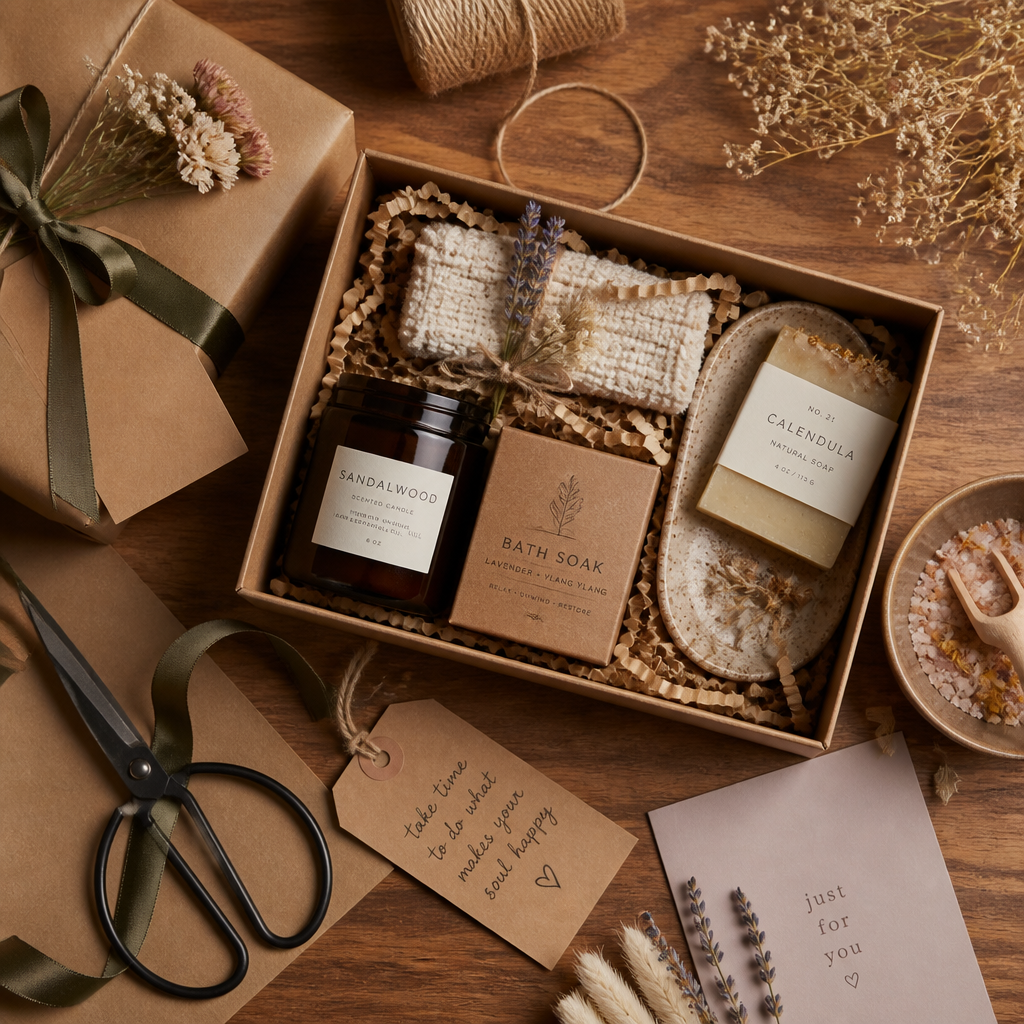
This matters for self-care gifts in particular because the unwrapping is part of the experience. A bath soak presented in a kraft-paper-lined box with a ribbon communicates something different from the same product in a plastic bag. The first says "this is an occasion." The second says "this was an afterthought."
What Good Presentation Looks Like
You do not need to over-engineer this. Tissue paper, a simple box, a handwritten note, and a consistent color palette are enough. If you are ordering from an online retailer that offers gift packaging or gift notes, use both. Retailers like Bathwater and Beyond that emphasize the gifting occasion are specifically designed to make this easy.
The note is the most important part. Skip the "hope you enjoy this" opener. Instead, write one specific sentence about why you chose this particular thing for this particular person. That sentence does more work than any amount of ribbon.
Frequently Asked Questions
How do I give a self-care gift without it feeling patronizing?
Frame the gift around indulgence rather than need. "I thought you deserved something luxurious" lands differently than "I thought you needed to relax more." The first celebrates. The second implies a deficit. Always lead with celebration, never with concern.
What is the best self-care gift for someone I do not know very well?
Unscented or lightly scented bath and body products are the safest choice. They carry no risk of triggering sensitivities, they avoid the highly personal nature of strong fragrance, and they work for almost any routine. A quality bath soak in a neutral or citrus scent, or a simple but elevated candle with a clean burn, works for almost any recipient you do not know intimately.
Should I build my own gift set or buy a curated one?
Buy curated unless you are very confident in your ability to pair items that work together aesthetically and functionally. DIY gift sets often look mismatched and can signal that no single item felt complete on its own. A pre-curated set from a thoughtful retailer communicates coherence and intention. The exception is if you are combining a curated product with something hyper-personal, like a book you know they want or a handwritten letter.
Is a self-care gift appropriate for men?
Completely. The self-care category is not gendered. Body washes, quality soaps, face balms, robes, and candles are all appropriate for any recipient. The error is in presentation: leaning on overtly feminine packaging for a male recipient can make the gift feel like an afterthought. Look for neutral or minimal packaging and focus on the product quality rather than the aesthetic category it is marketed in.
How much should I spend on a thoughtful self-care gift?
Thoughtfulness does not scale with budget, but context does. For a close friend's birthday, $50 to $100 on a single curated item or small bundle is appropriate and feels invested. For a coworker or acquaintance, $25 to $40 spent on one specific, well-chosen product beats a $60 generic kit every time. The data on perceived gift value consistently shows that specificity matters more than total spend.
What are the best self-care gifts for someone who travels frequently?
Travel-friendly formats win here: solid shampoo bars, rollable robes in lightweight fabric, travel-size versions of luxury bath products, and compact candles with lids. The goal is to make their hotel or Airbnb feel like their own space. Anything that folds, seals, or fits in a carry-on is a practical upgrade they will actually bring with them.
Have you ever given or received a self-care gift that genuinely surprised you? Share what made it stand out, or tell us what you wish the giver had done differently.
Related Reading
- Self-Care Gifts Under $50: A Curated Guide
- Self-Care Gift Ideas: The Thoughtful Evening Routine Guide
References
- Statista consumer research on gifting trends and recipient satisfaction in wellness and personal care categories
- Forbes coverage of experiential gifting, consumer behavior, and what makes gifts feel meaningful
- McKinsey research on consumer wellness spending, self-care market growth, and purchasing behavior
- Harvard Business Review analysis of the psychology of gift-giving and how personalization affects perceived value
- American Psychological Association research on stress relief, self-care rituals, and the psychology of comfort-based behaviors