

Magnesium Flakes Bath vs Epsom Salts: Beginner's Guide
Most people reach for Epsom salts because they are cheap and everywhere. What they do not know is that a magnesium flakes bath delivers more elemental magnesium per gram, absorbs differently through the skin, and produces a noticeably softer water feel that changes the entire experience. If you have been soaking in Epsom salts for years and wondering why the muscle recovery results feel inconsistent, this guide is where the answer starts.
Table of Contents
- Quick Takeaways
- What Are Magnesium Flakes and How Do They Differ from Epsom Salts
- Epsom Salts Benefits: What the Research Actually Says
- Bath Salts for Muscle Recovery: What Works and What Doesn't
- How to Use Magnesium Flakes in Your Bath Correctly
- Magnesium Flakes vs Epsom Salts vs Dead Sea Salts: Side-by-Side
- Building Your Evening Routine Around a Mineral Bath
- Frequently Asked Questions
- References
Quick Takeaways
| Key Insight | Explanation |
|---|---|
| Magnesium flakes contain more elemental magnesium | Magnesium chloride flakes are roughly 47% elemental magnesium, compared to magnesium sulfate (Epsom salt) at about 10%. You need less product per soak to reach the same mineral exposure. |
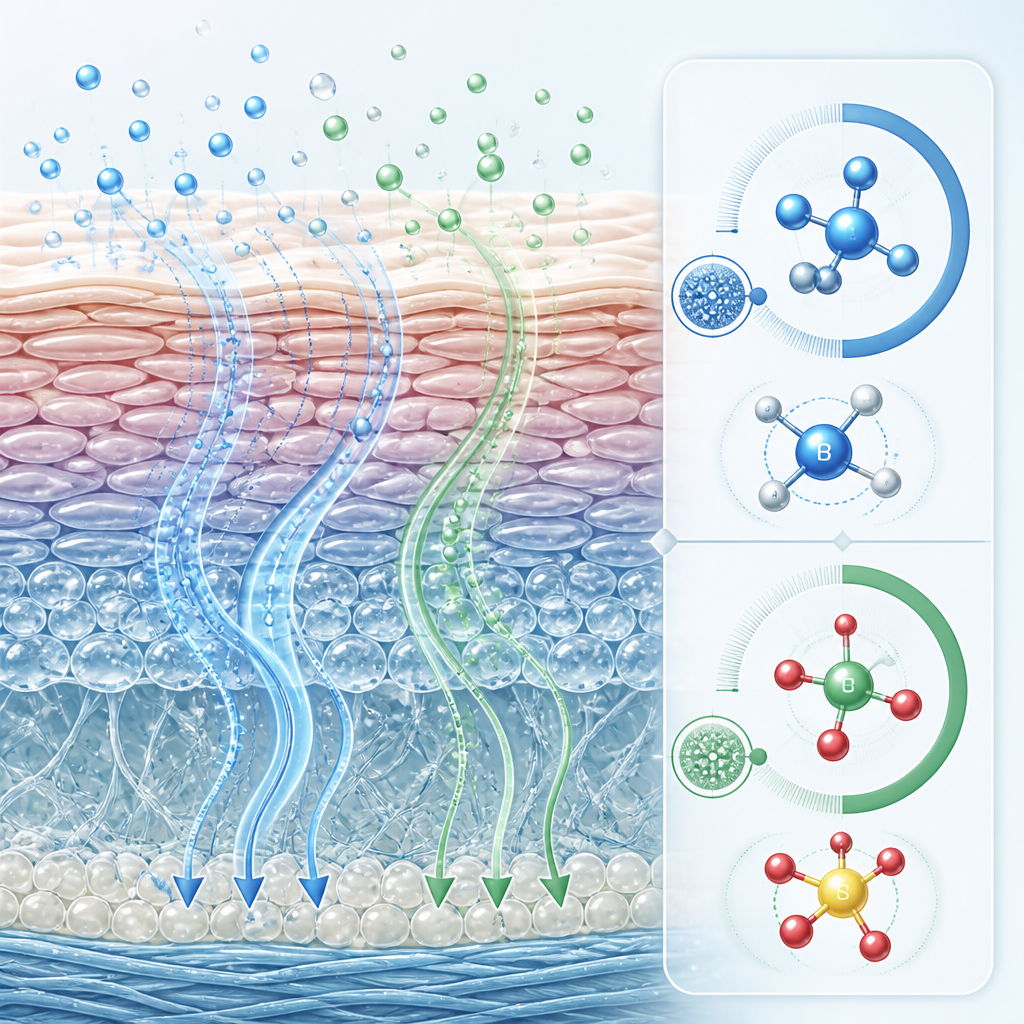
| Skin absorption is real but modest | Transdermal magnesium absorption exists, confirmed in a 2017 study published in PLoS ONE, though the effect is modest. Consistent soaking over weeks matters more than one long bath. |
| Water temperature affects how well minerals work | Hot water opens pores and increases circulation but can deplete the bath of minerals faster through evaporation. Aim for 37 to 40 degrees Celsius for optimal mineral contact. |
| Epsom salts are better for targeted muscle recovery | The sulfate component in Epsom salts supports detoxification pathways and reduces localized inflammation. For post-workout soaks specifically, Epsom salts have a clearer performance track record. |
| 20 minutes is the minimum effective soak time | Anything under 20 minutes does not give the minerals adequate contact time with skin. 30 to 40 minutes is the practical sweet spot for both relaxation and recovery goals. |
| Mixing both products is a legitimate strategy | Using half a cup of magnesium flakes with one cup of Epsom salts combines the softer skin feel and higher mineral density of flakes with the well-documented muscle and sulfur benefits of Epsom salts. |
| Hydration before and after matters more than most people think | A mineral bath is a mild detoxification event. Drinking 500ml of water before and after prevents post-bath fatigue and headaches, which are commonly misattributed to the salts themselves. |
What Are Magnesium Flakes and How Do They Differ from Epsom Salts
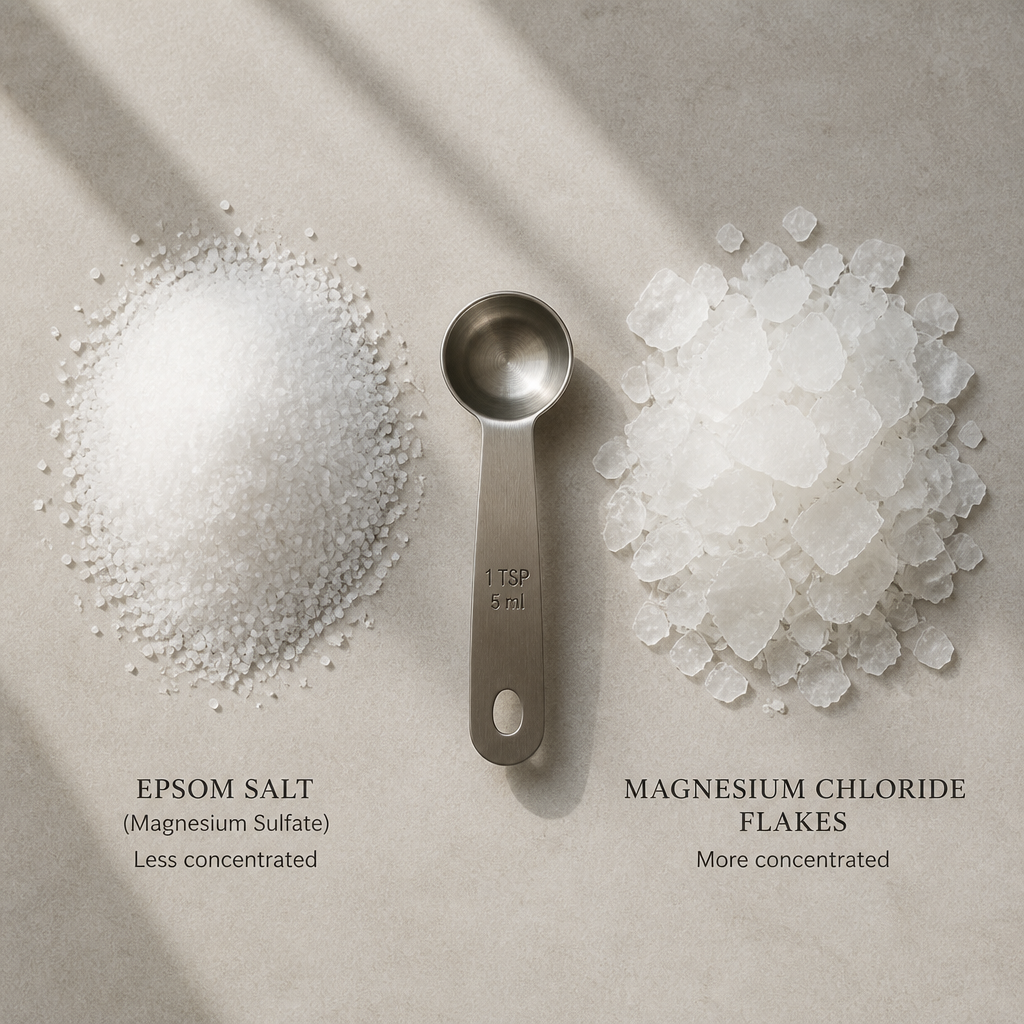
Magnesium flakes are a concentrated form of magnesium chloride, typically harvested from ancient inland sea beds or from seawater through solar evaporation. The most commonly cited source in the wellness space is the Zechstein seabed in the Netherlands, which produces a particularly pure grade of magnesium chloride with very low heavy metal contamination.
Epsom salt is chemically different. Its full name is magnesium sulfate heptahydrate. The magnesium is bound to sulfate rather than chloride, which changes how the compound behaves in water and how effectively the body can use it. In practice, magnesium chloride is considered more bioavailable because the chloride ion assists mineral transport at the cellular level.
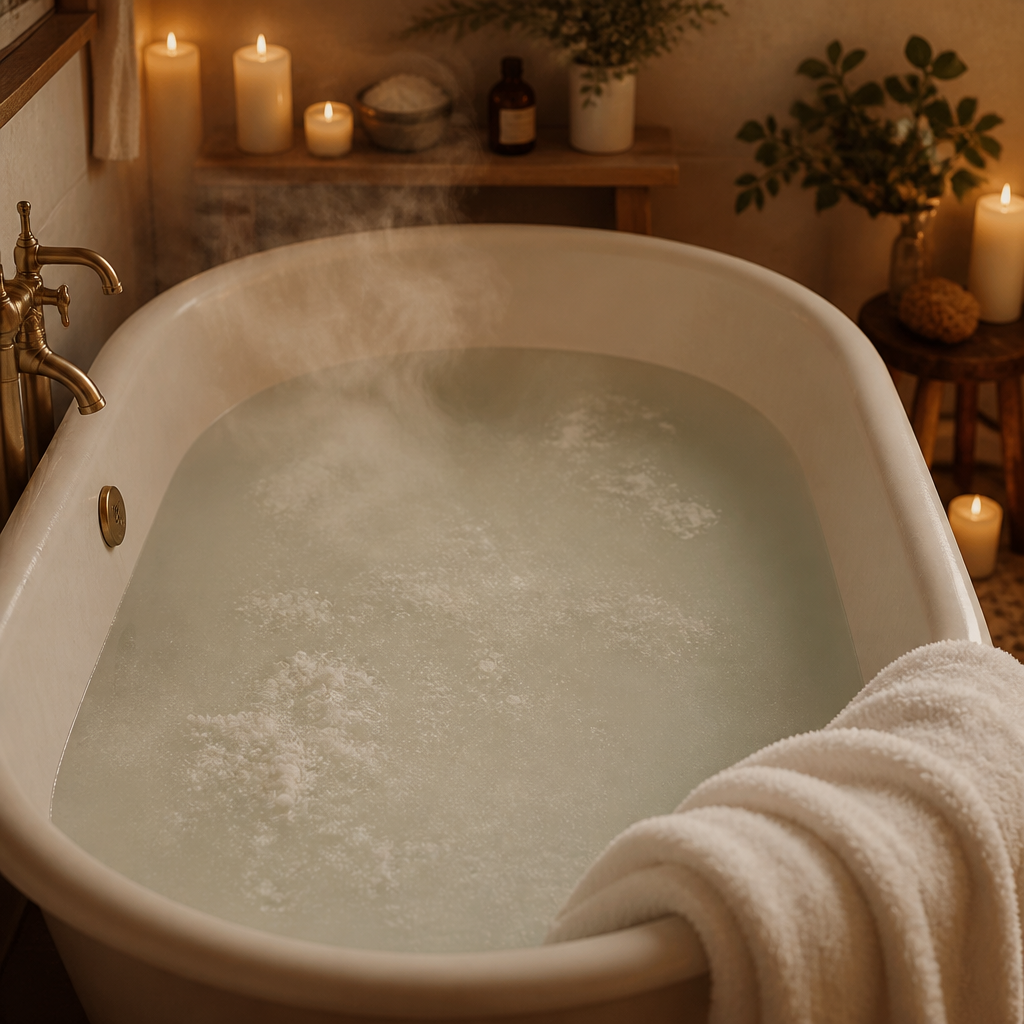
The tactile difference between the two is immediately obvious. Magnesium flakes dissolve into a slightly silky, softened water that feels noticeably different from an Epsom salt bath. If you have ever wondered why some bath soaks leave your skin feeling nourished while others leave it feeling stripped, this is usually the difference between chloride-based and sulfate-based products.
Why Magnesium Source Matters
Not all magnesium flakes are sourced from the Zechstein deposit. Cheaper products are often derived from Chinese brine sources, which have higher variability in purity. When you are putting a product directly into bathwater that contacts your skin for 30 minutes, source and testing documentation matter.
A common mistake is buying the cheapest magnesium flakes available and then concluding the product does not work. The mineral content and purity of lower-grade products can vary enough to produce meaningfully different results. Look for flakes that specify Zechstein source or that carry third-party purity testing documentation.
Pro tip: If your magnesium flakes clump aggressively in humid storage, that is actually a sign of high purity. Magnesium chloride is hygroscopic, meaning it draws moisture from the air. Store it in a sealed container away from the bathroom itself to extend shelf life.
Epsom Salts Benefits: What the Research Actually Says
The wellness industry has overclaimed on Epsom salts for decades, and it is worth being honest about where the evidence actually stands. A 2004 report by Dr. Rosemary Waring of the University of Birmingham found measurable increases in blood magnesium and sulfate levels after Epsom salt baths in a small sample group. That study is widely cited but was never published in a peer-reviewed journal, which limits its weight.
What is better established is the role of sulfate, the second component in Epsom salts. Sulfate is involved in the liver's phase 2 detoxification process and in the synthesis of glucosamine, which supports joint health. The argument for Epsom salts benefits is therefore partly about magnesium and partly about sulfur delivery, which is a separate mechanism entirely from what magnesium flakes provide.
"Raising your blood magnesium levels could help with over 300 enzymatic processes in the body, from protein synthesis to nerve function." - National Institutes of Health, Office of Dietary Supplements
The Stress and Sleep Connection
Magnesium's role in regulating the HPA axis, which controls the body's cortisol response, is the most clinically solid reason to take mineral baths seriously as part of an evening routine. A 2012 review in the Journal of Intensive Care Medicine found that magnesium deficiency was directly correlated with heightened stress responses.
For an evening bath, the mechanism works on two levels. The warm water physically lowers core body temperature after you exit the bath, which is a known sleep onset trigger. The magnesium contact simultaneously supports nervous system downregulation. You get two complementary effects from one 30-minute commitment.
Pro tip: Take your mineral bath one to two hours before your intended sleep time. This timing aligns the post-bath body temperature drop with your natural circadian rhythm, making it significantly easier to fall asleep than bathing right before bed.
Bath Salts for Muscle Recovery: What Works and What Doesn't
The conversation around bath salts for muscle recovery often conflates several different mechanisms. Heat therapy, mineral absorption, and hydrostatic pressure from water immersion all contribute to muscle recovery, but they are distinct effects. Separating them matters if you want to get the most out of your soak.
Heat alone accounts for a significant portion of post-exercise recovery benefit from baths. Immersion in warm water at 38 to 40 degrees Celsius increases blood flow to muscles, accelerates metabolic waste clearance, and reduces delayed onset muscle soreness (DOMS). Studies from the Journal of Physiology and other sports science publications consistently show that warm water immersion reduces DOMS markers by 20 to 30 percent compared to passive rest.
Where Epsom Salts Add Specific Value for Athletes
On top of heat benefits, the sulfate in Epsom salts directly supports muscle recovery by reducing localized inflammatory markers. Sulfate is a precursor to chondroitin sulfate and other joint-protecting compounds. If your recovery concerns include joint soreness alongside muscle fatigue, an Epsom salt soak addresses both pathways simultaneously.
The magnesium component reduces neuromuscular excitability, which is why post-workout cramping often decreases with regular mineral baths. In practice, athletes who add two cups of Epsom salts to a 40-degree bath and soak for 30 minutes after intense training sessions report faster perceived recovery than those using heat alone.
What Does Not Work
A single soak the night before a race does not meaningfully change performance. Mineral baths work through cumulative, consistent use. Three to four baths per week over four to six weeks is where most people notice a genuine shift in baseline muscle tension and sleep quality. Expecting dramatic single-session results is where most beginners quit too early.
How to Use Magnesium Flakes in Your Bath Correctly
The standard recommendation on most product packaging is one to two cups of magnesium flakes per standard-sized bath. That is a reasonable starting point, but it is not the full picture.
For first-time users, start with half a cup. Magnesium chloride draws toxins through the skin as a mild detoxification response, and some people experience a slight fatigue or headache after their first few high-dose soaks. This is not a sign of harm, but it is uncomfortable enough that many beginners assume the product disagrees with them and stop using it entirely.
Step-by-Step Protocol for Beginners
Fill your bath to your preferred depth and run the water to 37 to 40 degrees Celsius before adding any minerals. Add your magnesium flakes to the running water, not to still water, so they dissolve evenly before you get in. If you are combining with Epsom salts, add both during the fill phase.
Set a timer for 20 minutes as your floor. If you can extend to 30 or 40 minutes, do so. Do not add soaps, bubble bath, or synthetic fragrance to the same water. These products form a surfactant layer on the skin that physically blocks mineral absorption, which defeats the purpose of the entire soak.
After the bath, rinse briefly with cool water to remove salt residue from the skin surface. Pat dry gently and apply a light moisturizer immediately while skin is still slightly damp. Drink water before you sleep. This is a small thing that most guides skip over, but skipping it is why a lot of people wake up feeling flat after their first mineral bath.
Frequency and Dosage Progression
Week one: two to three baths at half a cup each. Week two onwards: move to one full cup per bath, three to four times per week. After four weeks of consistent use, two cups per bath is appropriate for most adults without sensitivity. People with kidney disease or severe cardiovascular conditions should consult a physician before regular high-dose mineral soaks, as the kidneys play a role in regulating blood magnesium levels.
Magnesium Flakes vs Epsom Salts vs Dead Sea Salts: Side-by-Side
Choosing between bath mineral products comes down to your primary goal. Relaxation and skin feel, muscle recovery, or skin conditions each point to a different product as the primary choice. The table below reflects practical, real-world differences rather than marketing claims.
| Product | Best For | Key Limitation |
|---|---|---|
| Magnesium Chloride Flakes | Evening relaxation, sleep support, skin softening, higher elemental magnesium delivery, sensitive skin types | More expensive per use than Epsom salts. Source quality varies significantly between brands. Less accessible in general grocery retail. |
| Epsom Salts (Magnesium Sulfate) | Post-workout muscle recovery, joint support, sulfate-dependent detoxification, budget-conscious daily use | Lower elemental magnesium per gram. Does not produce the same skin-softening effect as chloride-based products. Some users find it drying with frequent use. |
| Dead Sea Salts | Skin conditions including psoriasis and eczema, broad multi-mineral exposure (potassium, calcium, bromide), spa-like experience | Lower magnesium concentration than either magnesium flakes or Epsom salts. Higher cost. The skin condition benefits are specific to the full mineral profile, not magnesium alone. |
Building Your Evening Routine Around a Mineral Bath
A mineral bath is not a standalone event. It works best when it is anchored inside a broader evening routine that signals to the nervous system that the day is ending. At Bathwater and Beyond, the entire product philosophy is built around this idea: one ritual, done consistently, that compounds its effect over weeks rather than delivering a single dramatic moment.
The practical sequence that works: dim lights and reduce screen exposure 30 minutes before the bath. Set the water temperature while that wind-down begins. Add your minerals during fill. Use a simple robe or towel warmer so the transition out of the bath is not jarring. After drying, limit further stimulation and move toward sleep within 60 to 90 minutes.
What to Add to the Bath and What to Leave Out
A few additions genuinely enhance a mineral bath without blocking absorption. Pure essential oils like lavender or eucalyptus added directly to the water at 5 to 10 drops are compatible with mineral soaks. Dried herbs like chamomile or rose petals add atmosphere without chemical interference. A single tablespoon of coconut oil in the water provides additional skin conditioning.
What to avoid: any commercially produced bubble bath, any product containing sodium lauryl sulfate or synthetic fragrance, any foaming product. These form the surfactant layer mentioned earlier and actively compete with the minerals for skin contact. Choosing one or the other is the honest recommendation here. A mineral bath or a bubble bath. Not both.
Pro tip: Keep a dedicated bath kit ready to go in one place: your magnesium flakes, a measuring cup, your preferred essential oil, and whatever candle or ambient element you use. Reducing setup friction from five minutes to 60 seconds makes it dramatically easier to maintain a three-to-four-times-per-week habit.
Frequently Asked Questions
Can you use magnesium flakes and Epsom salts together in the same bath?
Yes, and this is actually a recommended approach for people who want both the skin softening effect of magnesium chloride and the muscle recovery properties of magnesium sulfate. Use half a cup of magnesium flakes and one cup of Epsom salts together in a standard bath. Both dissolve easily and do not interact negatively. This combination gives you a broader mineral profile than either product alone.
How long does it take to notice results from regular mineral baths?
Most people notice improved sleep quality and reduced general muscle tension within two to three weeks of taking three to four mineral baths per week. Skin softening from magnesium flakes is often noticeable within the first few sessions. Significant changes in baseline stress response or chronic muscle soreness typically require four to six weeks of consistent use.
Are magnesium flakes safe for sensitive skin?
Magnesium chloride is generally well tolerated by sensitive skin and is often better tolerated than Epsom salts, which can be drying for some people. If you have a known sensitivity to chloride-based products or active skin conditions like eczema, start with a low dose (quarter cup) and monitor skin response. Always rinse after soaking. People with open wounds or severely compromised skin barrier should consult a dermatologist before regular mineral soaking.
What is the ideal water temperature for a mineral bath?
The optimal range is 37 to 40 degrees Celsius. Water at this temperature opens capillaries near the skin surface, which supports mineral absorption and delivers the muscle relaxation effects of heat therapy. Water above 42 degrees increases cardiovascular strain and shortens comfortable soak time, reducing the effective mineral contact window. Water below 36 degrees provides minimal relaxation benefit even if the minerals are present.
Do magnesium baths actually raise magnesium levels in the body?
The honest answer is: yes, modestly. A 2017 study published in PLoS ONE measured urinary magnesium excretion as a proxy for absorption and found statistically significant increases after transdermal magnesium application. The effect size is smaller than oral supplementation, but for people who cannot tolerate magnesium supplements orally due to digestive side effects, transdermal delivery via bath is a genuinely useful alternative pathway.
How often should you take a magnesium flakes bath for maximum benefit?
Three to four times per week is the practical target for noticeable cumulative benefit. Daily baths are not harmful for most people but are not meaningfully more effective than four times per week for general wellness purposes. The frequency matters more than the duration of any single soak. Consistency over two months produces better outcomes than occasional marathon baths.
Have you tried a magnesium flakes bath as part of your evening routine, and did you notice a difference compared to regular Epsom salts soaks? Share your experience below.
References
- National Institutes of Health Office of Dietary Supplements: magnesium fact sheet covering absorption, recommended intake, and deficiency research
- PubMed and National Library of Medicine: peer-reviewed studies on transdermal magnesium absorption and mineral bath therapy
- Harvard T.H. Chan School of Public Health: evidence-based nutrition resource covering magnesium's role in sleep, muscle function, and stress response
- Mayo Clinic: clinical overview of magnesium deficiency symptoms, treatment approaches, and safe supplementation guidance
- Forbes Health: consumer wellness coverage including bath therapy trends and evidence-based self-care product guidance