

Spa Bathroom Ideas on a Budget That Actually Work
Your bathroom is probably the smallest room in your home, and also the one most likely to be ignored when it comes to intentional design. Most people treat it as purely functional, which is exactly why a few deliberate changes land so hard. You do not need to gut the room, hire a contractor, or spend thousands to create real spa bathroom ideas that hold up in daily use. What you need is a clear order of operations and an honest understanding of what actually signals calm versus what just looks good in a magazine photo.
Table of Contents
- Quick Takeaways
- Start With Decluttering: The Free Upgrade Everyone Skips
- Lighting Makes or Breaks the Mood
- Color and Texture on a Tight Budget
- The Sensory Layer: Scent, Sound, and Touch
- The Bath Setup: Where Your Products Actually Matter
- Approach Comparison: Renovation vs. Refresh vs. Ritual
- Frequently Asked Questions
- References
Quick Takeaways
| Key Insight | Explanation |
|---|---|
| Declutter before you buy anything | Cluttered countertops cancel out even the most expensive accessories. A clear surface costs nothing and delivers an immediate visual shift toward calm. |
| Swap harsh overhead bulbs for warm light | Dimmable warm-white lighting transforms the emotional feel of a bathroom faster than any decor change. It is one of the highest-impact, lowest-cost swaps available. |
| Scent is the fastest route to a spa atmosphere | Lavender, eucalyptus, and sea salt are the core spa scents. Candles or a simple diffuser placed in the bathroom deliver a sensory shift within minutes of entering. |
| Plush white towels read as luxury even when they are not expensive | White towels create the visual shorthand for spa. Rolled and stacked or hung neatly, they signal intention. Thick cotton or bamboo blends feel the best and last longest. |
| A bamboo bath tray is the single item with the highest ritual impact | It organizes your bath essentials, elevates the visual of your tub, and signals that the bath is a deliberate ritual rather than a quick rinse. |
| Natural materials do the heavy lifting visually | Wood, bamboo, stone-look accessories, and live or faux plants pull the room away from clinical and toward retreat. None of these require renovation. |
| Your robe and slippers are part of the bathroom experience | The post-bath moment is where the ritual lands. A quality robe and a soft mat underfoot extend the spa feeling past the water and into the rest of your evening. |
Start With Decluttering: The Free Upgrade Everyone Skips
The single most effective thing you can do to build a calm bathroom costs absolutely nothing. Clutter is the enemy of relaxation. No candle, no plant, no expensive bath oil will overcome the visual noise of expired products, mismatched bottles, and tangled hair tools crowding every surface. Clear the counter first. Every single item on it should earn its place.
Once surfaces are clear, reorganize what stays. Apothecary-style dispensers for soaps and body wash create visual cohesion instantly. Repurposed mason jars or simple containers work just as well for cotton rounds, bath salts, and small accessories. The goal is to store everyday essentials out of sight while leaving only a few carefully chosen items visible. This balance between storage and display is what separates a calm bathroom from a cluttered one.
A common mistake is buying more things before addressing the chaos already there. New accessories placed on top of existing clutter just add to the visual noise. Declutter first, then shop with intention. The bathroom should feel like a curated space, not a stockroom.
"Declutter, paint in calming neutral tones, add warm layered lighting with a dimmer, swap in plush white towels, and bring in natural textures like wood and a plant. These changes cost a few hundred dollars and deliver most of the spa feel."
For practical storage, think vertically. Floating shelves above the toilet, a slim ladder shelf beside the vanity, or woven baskets tucked under the sink all keep the floor clear without requiring any permanent construction. A clutter-free floor makes even a small bathroom feel spacious.
Lighting Makes or Breaks the Mood
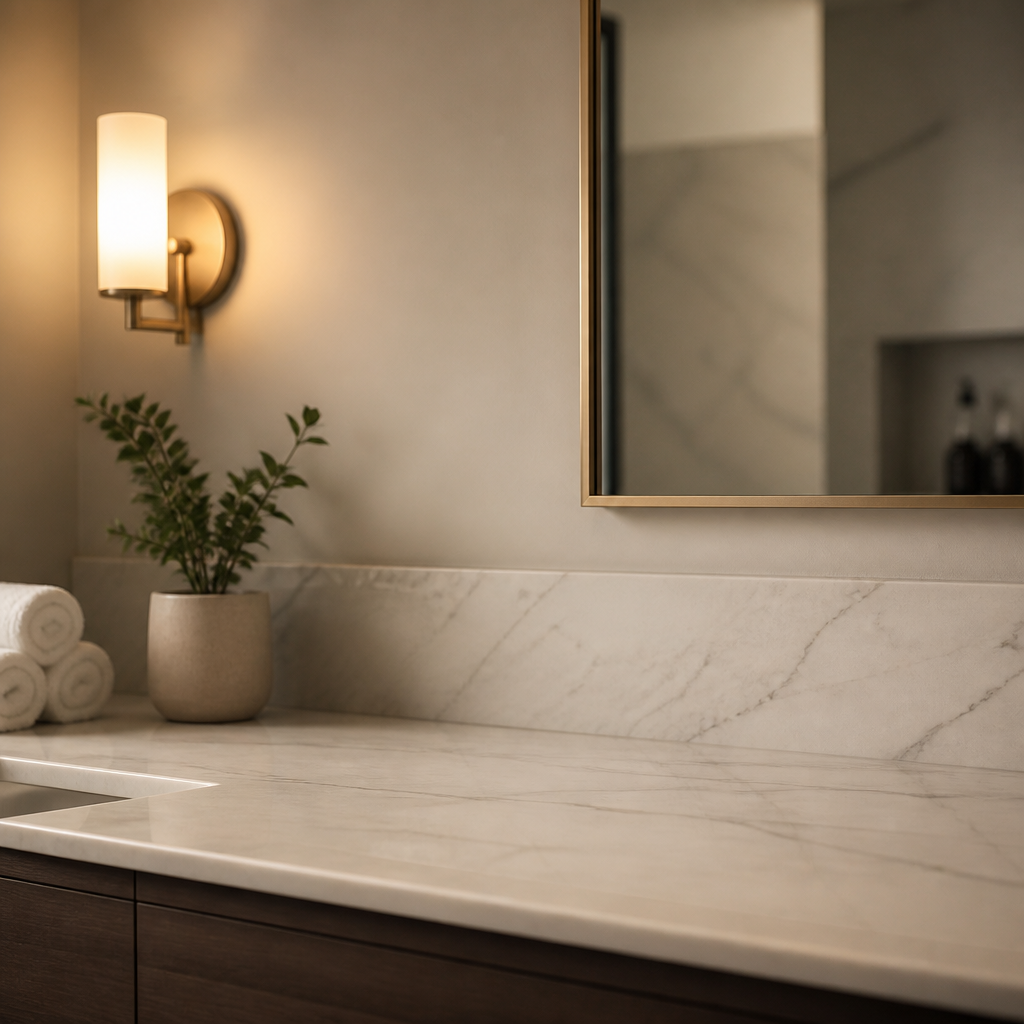
Nothing kills the spa atmosphere faster than a harsh overhead fluorescent or a cool-white LED blazing down at full brightness. Lighting is the single most underrated element in home spa on a budget transformations, and it is also one of the most affordable to change.
Dimmable Fixtures Are Worth Every Penny
Dimmable LED sconces for vanities are widely available at accessible price points and the impact is dramatic. Dim the light for bath time, bring it up for precise tasks like skincare. Warm-white bulbs in the 2700K to 3000K range are the standard recommendation for any space meant to feel relaxing. The principle is simple: cooler and brighter light activates alertness. Warmer and softer light signals that it is time to unwind.
If swapping a fixture feels like too much, the next best move is adding candles. This is not a cliche. Candlelight at bath time is the oldest, cheapest, and most reliable way to shift the quality of light in a room without touching an electrical panel. Scented candles do double duty, handling both the lighting and the scent layer simultaneously.
Pro tip: Place candles at different heights around the bathroom rather than clustering them in one spot. A candle on the edge of the tub, one on the back of the toilet tank, and one on the vanity creates layered, ambient light that genuinely mimics the warm glow of a high-end spa.
Natural Light Deserves Attention Too
If your bathroom has a window, use it. Frosted glass or light linen curtains let in natural light while maintaining privacy. Daytime baths in natural light have a completely different, equally calming quality to evening candlelit soaks. Do not cover the window with a heavy blackout treatment just because the room is a bathroom.
Color and Texture on a Tight Budget
You do not need to repaint your entire bathroom to shift the color story. Neutral-toned accessories introduced consistently across towels, bath mats, soap dispensers, and storage will create a cohesive visual scheme without touching a wall. Think soft whites, warm taupes, muted sage greens, and warm grays. These are the colors that appear in virtually every genuine spa environment because they are visually quiet.
If you are willing to paint, it is one of the highest-impact low-cost changes available. Calm colors like soft whites, warm grays, and earthy greens create a soothing environment. Even a single accent wall behind the tub painted in a muted tone will change the feeling of the whole room. Water-based, low-VOC paints are the right choice here both for air quality in a small space and for eco-conscious households.
Natural Materials Elevate Without Renovation
Wood and bamboo accents are a standard fixture in every quality spa environment for a reason. They introduce warmth and organic texture that no synthetic material replicates. A cedar or teak bath mat beside the tub, a bamboo caddy across it, a small wooden tray on the vanity: each of these items pulls the room away from clinical and toward retreat.
Plants are the other reliable performer here. Tropical varieties thrive in bathroom humidity, and even a small pothos or a stem of eucalyptus hung from the showerhead releases a light natural scent when hit by steam. Faux greenery in a quality vessel works for rooms with no natural light and still delivers the visual warmth of something living in the space.
Pro tip: Swap your plastic bath mat for a natural cedar or teak one. It is an affordable, water-resistant option that creates the immediate sensory shorthand for spa without requiring any other change in the room.
The Sensory Layer: Scent, Sound, and Touch
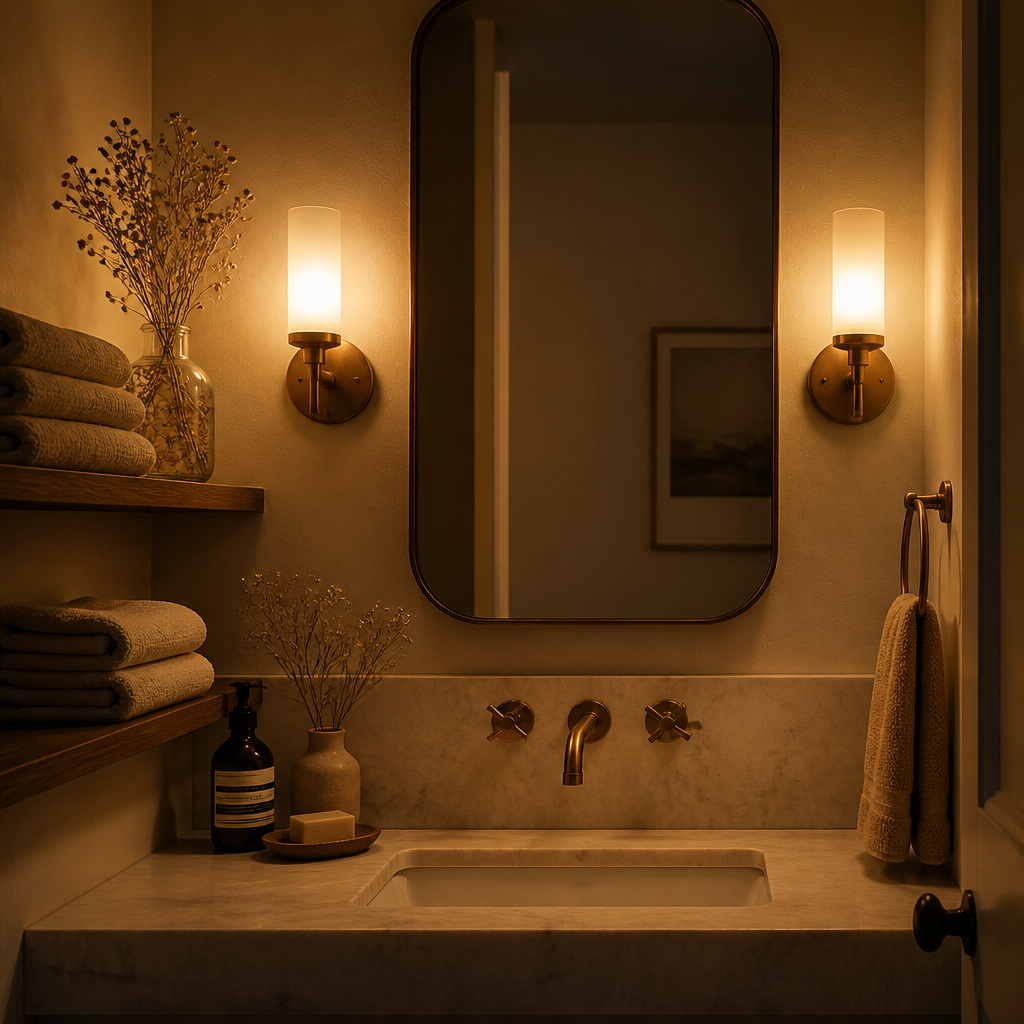
A real spa works on multiple senses at once. The visual design is only part of the equation. Scent, texture, and sound are what make the experience feel immersive rather than merely pretty. These are also the easiest and most affordable layers to add to any bathroom setup.
Scent: The Fastest Route to Calm
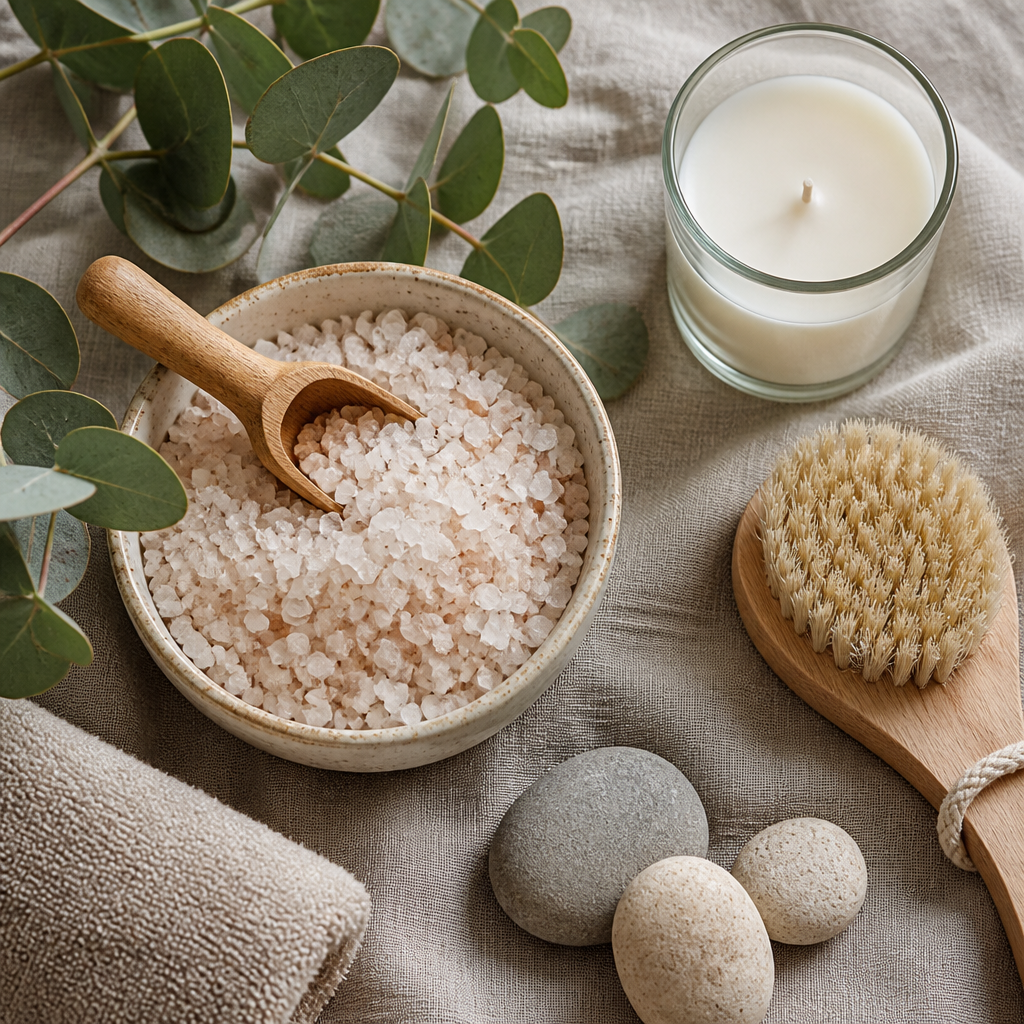
Lavender, eucalyptus, sea salt, and jasmine are the core spa scents, and each has a specific effect worth knowing. Lavender promotes relaxation and reduces stress. Eucalyptus clears the sinuses and invigorates the senses. Jasmine is known for its mood-enhancing properties. You can introduce these through scented candles, an essential oil diffuser, bath salts, or a DIY reed diffuser made with a small jar and bamboo skewers.
Candles are the most immediate option and pair naturally with the lighting layer described above. A diffuser is a better choice if you prefer a subtle, continuous scent without an open flame. For bath time specifically, scented bath salts or bath bombs deliver scent directly into the water, which means it surrounds you during the soak itself rather than just existing in the background.
Touch: Towels, Robes, and the Post-Bath Ritual
The tactile experience of a spa is largely defined by what touches your skin. Thick, soft towels in white or natural tones are the foundational textile investment. Rolled neatly in a basket or folded in a visible stack, they also serve a visual purpose. Cotton and bamboo blend towels are both soft and durable, and they hold up to repeated washing without losing their texture quickly.
The robe is where the ritual extends past the water. A quality bathrobe worn immediately after a soak keeps the warmth and relaxed state going for thirty minutes or more. Combined with soft slippers or a plush bath mat underfoot, the post-bath moment becomes part of the self-care experience rather than the end of it. These items are the bridge between the bath ritual and your evening wind-down.
Sound: Inexpensive and Deeply Effective
Soothing sound is often the missing layer in a home spa setup. A waterproof Bluetooth speaker placed safely away from water splashes lets you create a personal playlist of calming music or nature sounds. This is a modest investment that pays back every single time you use the bathroom for a deliberate self-care session.
The Bath Setup: Where Your Products Actually Matter
Once the environment is right, the products you use in the bath itself carry real weight. The bath tray is the organizing principle here. A bamboo bath caddy that fits across the width of your tub holds everything you need: a candle, a small book or magazine, your bath salts, a drink, and a soap dish. It transforms a bare tub into a prepared ritual space in under two minutes.
When choosing a bath tray, look for an adjustable design that fits most standard tub widths. Bamboo remains the top choice for practical reasons: it is naturally water-resistant, lightweight, and visually warm in any bathroom setting. The caddy also signals to your brain that the bath is intentional, which is a genuine psychological shift. The same soak in the same tub feels different when the space around it has been set with care.
For the water itself, bath salts are the most affordable way to elevate the experience. They dissolve quickly, soften the water, and deliver scent directly where you feel it most. A bath bomb is a more immersive option with color and fragrance combined. Both are far more cost-effective than commercial spa visits and can be rotated based on what you need from the evening, whether that is deep muscle relaxation, stress relief, or simply softened skin.
Pro tip: Build a small basket of bath-time essentials and keep it beside or under the tub. Stock it with your go-to bath salts, a loofah or natural sponge, a face mask, and a small candle. Having everything in one place means your bath ritual takes thirty seconds to set up, which removes the friction that stops most people from doing it consistently.
Approach Comparison: Renovation vs. Refresh vs. Ritual
There are three distinct approaches to building a spa-like bathroom, and understanding the difference helps you spend money where it actually counts.
| Approach | What It Involves | Best For |
|---|---|---|
| Full Renovation | New tile, fixtures, freestanding tub, rain shower head, built-in storage. Requires a contractor and significant budget (often $5,000 and up). | Homeowners with equity to invest and a long-term view. Results are permanent and high-impact but not necessary for the spa experience itself. |
| Budget Refresh | Paint, dimmable lighting swap, new towels, a bath mat, apothecary dispensers, a plant, and a bamboo caddy. Costs roughly a few hundred dollars all in. | Renters and homeowners who want a meaningful visual upgrade without structural changes. This approach delivers most of the spa atmosphere for a fraction of the cost. |
| Ritual-First Setup | Focus entirely on the products and accessories used during the bath itself: bath salts, a quality caddy, candles, a robe, and scent. Zero changes to the room structure. | Anyone who wants the spa experience immediately, even before addressing the room design. Works in any bathroom regardless of size or condition. |
The honest answer is that the Ritual-First approach delivers the most direct impact on how a bath actually feels. The visual environment matters, but a thoughtfully assembled bath ritual in a plain bathroom will outperform a beautifully decorated bathroom used carelessly. Ideally, you build both layers over time, starting with the ritual and layering in the refresh elements as budget allows.
Frequently Asked Questions
What are the most affordable spa bathroom ideas that make the biggest visual difference?
Decluttering the countertops, switching to warm or dimmable lighting, and replacing mismatched towels with white or neutral ones are the three changes that deliver the most visual impact for the least money. None of these require professional help or permanent alterations to the room. If you add a bamboo bath mat and a single plant, you will have addressed nearly every element that makes a bathroom feel calm and spa-like.
How do I make my bathroom smell like a spa without spending a lot?
The most effective and affordable options are scented candles in lavender or eucalyptus, a basic essential oil diffuser, or scented bath salts used during your soak. For a very low-cost option, hang a bundle of fresh eucalyptus from the showerhead. The steam from hot water activates the natural oils and fills the room with scent during every shower. DIY reed diffusers made with a small jar, carrier oil, and bamboo skewers are another nearly free alternative.
Can I build a home spa on a budget in a small or rental bathroom?
Yes, and in some ways a small bathroom is easier to transform because there is less visual space to address. Focus on the ritual layer first: a bamboo caddy, bath salts, candles, and a quality robe. These require no alterations to the room and can move with you. For surface-level visual changes, use neutral accessories, woven baskets for storage, and a small plant. None of these changes require permission from a landlord or leave any permanent mark.
What is the best bathroom self-care setup for a consistent evening routine?
The key is reducing friction. Keep a dedicated basket of bath essentials near the tub so setup takes under a minute. Stock it with your preferred bath salts or a bath bomb, a candle and lighter, a natural loofah, and anything you use on your skin during a soak. Have your robe and slippers within arm's reach of where you step out. The fewer decisions required in the moment, the more likely you are to actually do it rather than defaulting to a quick shower and skipping the wind-down entirely.
Are bath salts or bath bombs better for a spa experience at home?
They serve slightly different purposes. Bath salts dissolve cleanly, soften the water, and deliver a consistent scent. They are better for muscle relaxation and regular use. Bath bombs are more of an event: they add color, fizz, and a more intense fragrance hit, which makes them ideal for a special self-care session or as a gift. Both are affordable compared to any spa visit. If you are building a regular ritual, start with bath salts as your base and use bath bombs as an occasional upgrade.
What towels and robes actually hold up long-term without being expensive?
Cotton and bamboo blend towels offer a good balance of softness, absorbency, and durability. They stay soft through repeated washing better than purely synthetic options and feel noticeably nicer against skin. For robes, a mid-weight waffle-knit or terry cotton robe is the most practical choice. It dries quickly between uses, holds warmth well right after a bath, and does not feel stiff after laundering. White and off-white tones photograph well as gifts and read as intentionally spa-like in the context of a bathroom setup.
Have you tried any of these spa bathroom ideas in your own space? We would love to hear what made the biggest difference in your evening routine.
References
- DIY spa bathroom makeover tips and budget-friendly decor ideas
- Seven budget-friendly ways to create a spa-like bathroom at home
- Spa bathroom tips for under $50, including lighting and color advice
- How to create a spa-like bathroom on a budget without full renovation
- Twenty-one tips for creating a luxury home spa experience in your bathroom