

The Perfect Self-Care Night Routine: Bath to Bed in 60 Minutes
Most people do not struggle to find the idea of a self-care night routine appealing. They struggle to build one that actually works on a Wednesday. You get home, the evening dissolves into screens and snacks, and by 11 pm you are wired and wondering why sleep feels so far away. The problem is not willpower. It is that most evening wind-down advice is scattered across a dozen different sources, each one covering only a slice of the picture. This guide maps the full 60-minute arc, from the moment you step into the bath to the moment your head hits the pillow, so you can follow a single, coherent ritual every night without overthinking it.
Table of Contents
- Why 60 Minutes Is the Right Window
- Quick Takeaways
- Minutes 0 to 20: The Bath
- Minutes 20 to 35: The Transition Out of the Bath
- Minutes 35 to 50: The Wind-Down
- Minutes 50 to 60: Bed Prep and Environment
- Routine Comparison: Three Approaches
- Frequently Asked Questions
- References
Why 60 Minutes Is the Right Window
A good rule of thumb backed by sleep researchers is to begin your evening wind-down somewhere between 60 and 90 minutes before you want to be asleep. That window gives your body time to respond to environmental cues like dimmed lighting, which supports melatonin production, and allows your nervous system to downshift from the vigilance of the day. Shorter than that, and you are rushing. Longer, and the routine tends to drag and lose momentum.
Sixty minutes is also honest about modern life. It is achievable on a weeknight without rearranging dinner or skipping the things that matter. The structure below is built around that constraint deliberately, not as a compromise.
Pro tip: Set a single recurring alarm at the same time each evening, labelled something like "start winding down." Your nervous system learns from repetition, and the alarm removes the mental friction of deciding when to begin.
Quick Takeaways
| Key Insight | Explanation |
|---|---|
| Time your bath 60 to 90 minutes before sleep | Research points to this window as optimal for triggering the body-cooling response that signals your brain to prepare for sleep. A bath taken too close to bedtime can actually delay sleep onset. |
| Water temperature matters more than duration | The sweet spot for sleep-supporting baths is roughly 104°F to 109°F (40°C to 43°C). Too hot and you overstimulate; too cool and you miss the thermoregulatory benefit. |
| Screens off before the bath, not after | Blue light suppresses melatonin production. The bath works best when you enter it having already left your devices behind, not as a precursor to more scrolling. |
| Scent is a powerful sleep cue | Lavender, chamomile, and cedarwood have well-documented calming associations. Using the same scent consistently conditions your brain to associate it with sleep, strengthening the cue over time. |
| Moisturising immediately post-bath is not just cosmetic | Applying body lotion or oil within a few minutes of stepping out locks in moisture while skin is still warm and slightly damp. It also extends the tactile, sensory wind-down. |
| The bedroom environment is part of the routine | Cool, dark, and quiet are the three variables that consistently support sleep quality. Preparing your room before you get into bed is a deliberate act, not an afterthought. |
| Consistency beats perfection every time | A five-product bath done three nights a week beats an elaborate twelve-step ritual that never actually happens. Build the simplest version first, then add layers. |
Minutes 0 to 20: The Bath
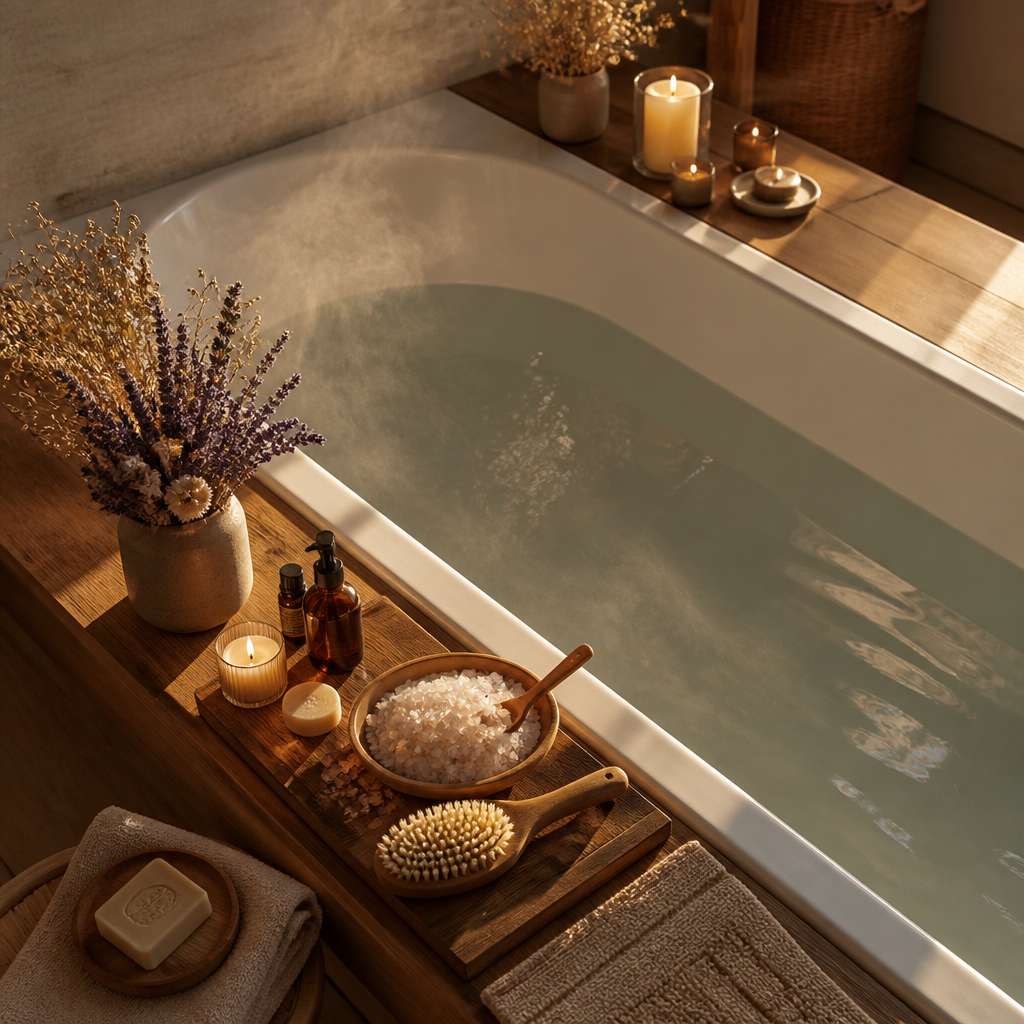
The bath is not simply the opening act. It is the physiological anchor of the whole routine. When you step into warm water, your core body temperature rises. When you step out, it drops quickly. That rapid cooling mimics the natural decline in core temperature that the body uses as a cue to initiate sleep. Research consistently points to a bath taken one to two hours before bedtime, at a water temperature between roughly 104°F and 109°F, as the most effective window for this effect.
A meta-analysis of multiple human trials found that water-based passive warming for as little as ten minutes in this temperature range can meaningfully shorten the time it takes to fall asleep. The mechanism is thermoregulatory: warm water increases blood flow to the skin, which accelerates the body's heat dissipation when you exit. Your brain reads that cooling signal as a green light for sleep.
What to Add to the Water
Epsom salts (magnesium sulphate) dissolve easily and are a standard addition for muscle relaxation. The evidence for transdermal magnesium absorption is still debated, but the warmth and ritual effect are real. Lavender essential oil is a strong supporting choice. Lavender's calming properties are among the most studied in aromatherapy, with multiple studies linking it to reduced anxiety and improved sleep quality.
Bath bombs built around bicarbonate of soda and citric acid create a sensory experience (fizz, colour, scent) without requiring you to measure anything. If you are new to bath rituals, a well-made bath bomb from a brand that keeps its ingredient list clean is a simple starting point. Bathwater & Beyond carries curated bath essentials designed for exactly this kind of evening use, without the inflated markup of luxury spa brands.
Pro tip: Light a candle before you get in. Candle light is warm-toned and low intensity, which means it does not interfere with melatonin the way overhead lighting does. A single soy or coconut wax candle with a grounding scent like sandalwood or cedar is enough to shift the atmosphere of the entire room.
What to Leave Outside the Bathroom
Your phone. This is the one non-negotiable. Even setting your phone face-down on the bathroom counter is not good enough. The pull to check it is automatic and the blue light exposure during this window directly undermines what the bath is trying to do. Leave it charging in another room. If music or ambient sound helps you relax, use a simple Bluetooth speaker with a playlist queued up before you enter.
Minutes 20 to 35: The Transition Out of the Bath
This is the part most self-care guides skip entirely, and it is where a lot of people accidentally undo the work the bath started. Moving from the bath back into a brightly lit, cluttered environment with a phone in hand resets your nervous system toward alertness. The transition should be as deliberate as the bath itself.
Skin Care While Your Skin Is Still Warm
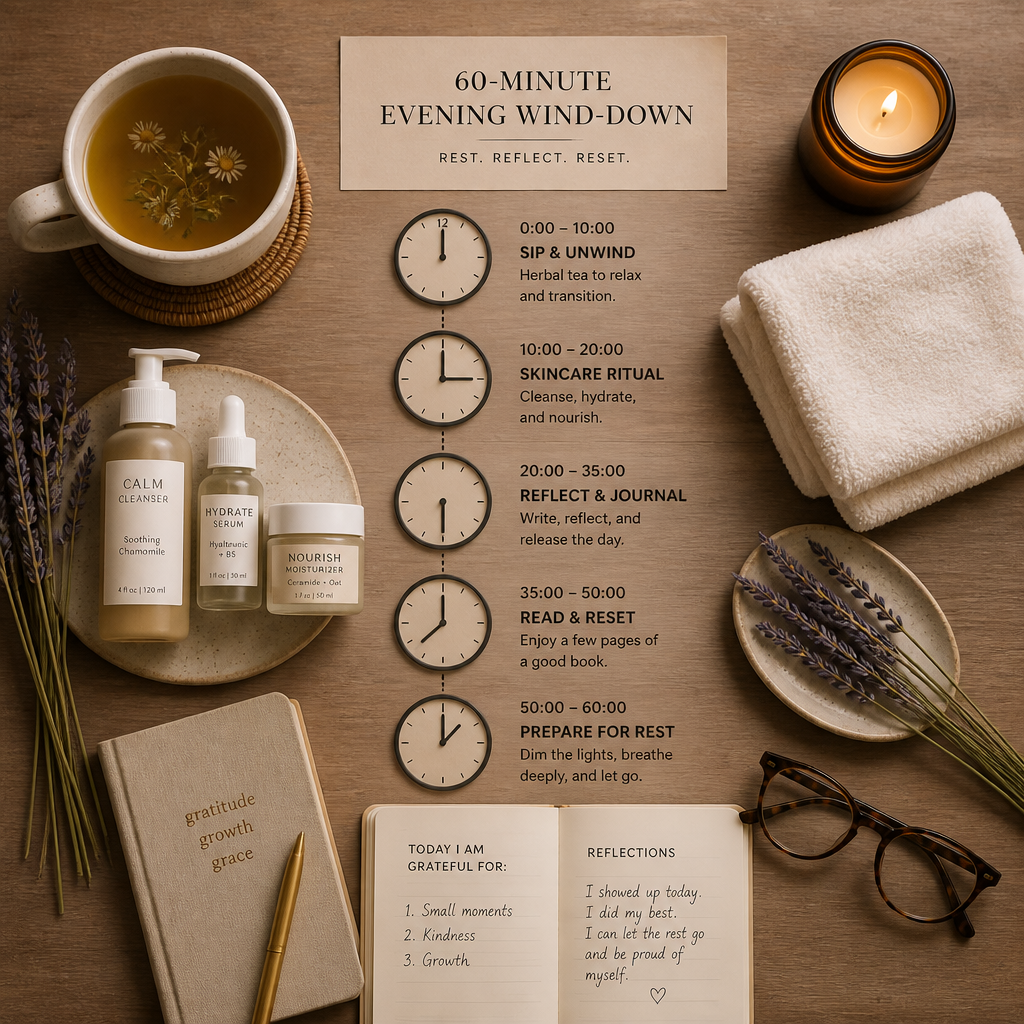
Step out slowly and pat, do not rub, dry. Apply a body oil or lotion while your skin is still slightly warm and damp. This is not just better for moisture retention. It also extends the sensory ritual, keeping your attention on your body rather than your inbox. Keep the product simple: a fragrance-free or lightly scented body butter or oil is enough. You do not need a ten-step regimen at this point in the evening.
For your face, a gentle cleanser followed by a hydrating serum and a night moisturiser is the right rhythm. The goal is to keep it unhurried and tactile, not efficient. Rushing this step is a signal to your nervous system that the evening is still busy, which is exactly the opposite of what you need.
Getting Into Something Comfortable
The clothes you wear to bed affect how quickly you fall asleep and how deeply you stay there. A soft, breathable fabric (cotton, bamboo, or modal) that is loose enough to not restrict movement makes a measurable difference. A quality robe for the transition period between the bath and getting into bed is an underrated tool. It keeps your body temperature from dropping too fast, maintains that warm, cocooned feeling, and signals that the evening is moving toward rest rather than activity.
The transition from bath to bed is not a pause in the routine. It is the routine. What you do in those fifteen minutes determines whether the bath's calming effect carries through to sleep or evaporates the moment you reach for your phone.
Minutes 35 to 50: The Wind-Down
By this point in the routine, your body temperature is actively cooling, your skin is nourished, and you are in comfortable clothes. The next fifteen minutes are about quieting the mind, which is often the harder task. Physical relaxation comes relatively quickly with the right bath. Mental relaxation requires a bit more deliberate effort.
Journalling Over Scrolling
Five minutes of writing in a physical notebook is more effective at clearing mental residue than any amount of passive content consumption. The act of writing slows your thought pattern down. You do not need a structured prompt. Writing out three things that happened during the day, or a short list of what you want to carry into tomorrow, is enough. The goal is to give your mind a place to deposit unfinished thoughts so they are not still cycling when you turn the light off.
Gentle Stretching or Breathing
A short, floor-based stretch targeting the hips, neck, and lower back addresses the physical tension that accumulates from sitting. Five to eight minutes is sufficient. You do not need a yoga practice or a specific method. A few slow spinal twists, a child's pose held for thirty seconds, and some gentle neck rolls will do more for your sleep than a complicated routine done inconsistently.
Pairing movement with deliberate breathing deepens the effect. A simple ratio like four counts inhale, hold for four, exhale for six shifts your nervous system toward the parasympathetic state associated with rest. It is one of the few evidence-adjacent techniques that actually works as advertised, and it requires no equipment and no prior experience.
Reading Instead of Watching
If you want passive relaxation rather than active journalling or movement, reading a physical book or a quality e-reader at low brightness is a strong choice. The key difference from a screen is that reading does not trigger the same anticipatory reward loops that social media and streaming platforms are specifically designed to create. A novel, a magazine, or even a few pages of something non-urgent is enough. The bar is low. You are not trying to learn something. You are trying to slow down.
Pro tip: Keep a dedicated "evening only" candle, a body oil, and your journal on a small tray or basket near your bed. When these items are visible and together, they act as a physical prompt that cues the wind-down. The ritual becomes easier to start when everything is already in place.
Minutes 50 to 60: Bed Prep and Environment
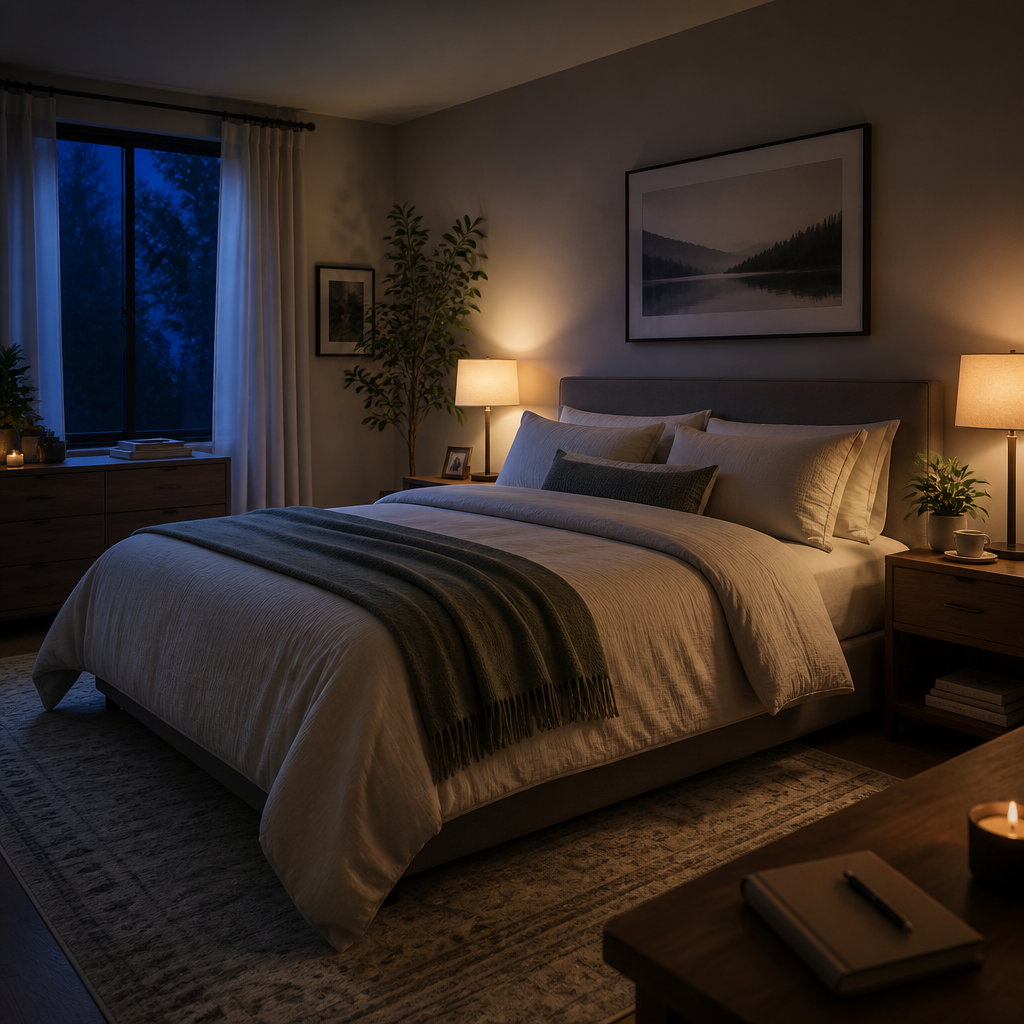
The final ten minutes are about your environment, not yourself. Most people collapse into bed without adjusting the room at all, and then wonder why sleep takes so long to arrive. Your bedroom needs to be set up as a sleep environment before you get into it, not treated as a room that doubles as a sleep environment.
Temperature, Darkness, and Sound
A cooler room consistently supports better sleep. The body continues to lose heat throughout the night as part of its natural sleep cycle, and a room that is too warm works against that process. A good target range is roughly 65°F to 68°F (18°C to 20°C) for most people, though individual preference varies. If you cannot control your room temperature easily, breathable bedding becomes more important.
Darkness matters more than most people appreciate. Even low-level ambient light from streetlights, electronics, or hallway gaps can reduce sleep depth. Blackout curtains or a sleep mask are both practical, inexpensive fixes. If your bedroom has multiple LED indicator lights from chargers or devices, covering them with electrical tape costs almost nothing and makes a genuine difference.
For sound, total silence works for some people and is actively uncomfortable for others. A consistent low-level ambient sound, like a fan or white noise, can mask irregular environmental sounds that would otherwise interrupt sleep. The specific type of sound matters less than its consistency.
The Final Sensory Signal
If you used a scented candle during your bath, now is the time to extinguish it safely and let the last trace of fragrance settle into the room. If you used a diffuser, set it to a timer so it runs for another twenty minutes and then turns off. This final sensory moment, the soft smell of lavender or cedar, the cool room, the darkened space, the comfortable fabric against your skin, is the accumulation of everything the past hour has been building toward. It is not dramatic. It should feel like relief.
Routine Comparison: Three Approaches
| Approach | What It Looks Like | Best For |
|---|---|---|
| The Minimal Version (20 minutes) | Warm shower or short bath, basic moisturiser, screens off, cool dark room. No extras. | Busy weeknights, those new to evening routines, or anyone building the habit from scratch. This version will still meaningfully improve sleep quality over doing nothing. |
| The Full 60-Minute Ritual | Drawn bath with salts or a bath bomb, body care post-soak, candle, comfortable robe, gentle stretch or journalling, physical book, and a fully prepared bedroom environment. | Days when you actually need to decompress. High-stress periods, weekends, or anyone who has already built the habit and wants to get full value from it. |
| The Gift-Ready Version | A curated set of bath essentials (bath salts, a candle, a quality robe or body oil) presented together, so the recipient can run the full ritual without sourcing products separately. | Gift-giving occasions where the recipient is a self-care enthusiast, or anyone who wants to introduce someone they care about to a proper evening ritual. Bathwater & Beyond's monthly product drops are designed exactly for this purpose. |
Frequently Asked Questions
How warm should the water be for a sleep-supporting bath?
The temperature range most consistently cited in sleep research is between 104°F and 109°F (40°C to 43°C). This is warm enough to trigger the thermoregulatory response that supports sleep onset, without being so hot that it becomes physically draining or overstimulating. If you have any cardiovascular conditions, check with your doctor before using very hot water.
Can a shower replace a bath in this routine?
Yes. The core mechanism, raising your skin temperature so that it drops when you exit, works with a shower as well as a bath. A ten-minute warm shower in the same temperature range produces a similar effect. The difference is experiential. A bath allows you to add salts, oils, and a longer soak, which extends the sensory and mental wind-down in ways a shower does not. Both are better than nothing. A bath is better when you have the time.
What if I do not have 60 minutes on a weeknight?
Start with the minimal version: a 10-minute warm shower, basic moisturiser, screens off 20 minutes before bed, and a cool dark room. That is five core decisions, not sixty minutes of ritual. Once those four things are consistent, add elements one at a time. The biggest mistake is treating the full routine as all-or-nothing and then doing nothing at all on busy nights.
Are bath bombs safe to use every night?
For most people, a well-formulated bath bomb used a few times per week is perfectly fine. Look for products with clean ingredient lists that avoid artificial dyes, synthetic fragrance in high concentrations, and harsh preservatives. If you have sensitive skin or experience any irritation, switch to plain Epsom salts and a few drops of essential oil instead. The rule is to match the product to your skin's actual tolerance, not to what the packaging implies.
Does it matter what I read or listen to during the wind-down phase?
It matters a great deal. The goal is content that does not trigger strong emotional or cognitive engagement. News, work emails, and social media are specifically bad choices because they are designed to create urgency and keep your attention activated. Fiction, light non-fiction, a calm playlist, or ambient sound are all solid alternatives. The test is simple: does it make you more awake or less? Choose accordingly.
Where do candles fit into the routine, and are they safe to use in the bath?
Candles work best during the bath itself and during the wind-down period. They replace overhead lighting with a warm, low-intensity glow that does not suppress melatonin the way bright artificial light does. Always place a candle on a flat, stable surface away from towels and fabric, never on the edge of a tub. Extinguish it before you fall asleep. A properly positioned candle in a good holder is not a safety risk. An unattended one absolutely is.
Can I use this routine as a gift framework for someone else?
Absolutely, and it is one of the most thoughtful gift approaches available because it gives someone a complete experience rather than a single product. A set that includes a quality bath soak, a candle, and a body oil or lotion covers every phase of the routine. If you know the recipient's scent preferences, tailor around those. Bathwater & Beyond's limited monthly drops are curated specifically to work together as a cohesive ritual, which removes the guesswork from assembling a set yourself.
Have you tried building a bath-to-bed ritual of your own? Share what works (or what absolutely did not) in the comments below.
References
- Sleep Foundation: research on warm baths, body temperature, and sleep quality
- Psychology Today: how warm baths before bed trigger melatonin production and improve sleep
- Study-backed evening wind-down techniques including bath timing and aromatherapy
- Building a self-care night routine that addresses the whole person: body, mind, and environment
- 17 practical ways to incorporate self-care into a bedtime routine