

Waffle vs. Terry vs. Plush: How to Pick the Best Bath Robe
Most people buy a robe the same way they buy a throw pillow: they grab whatever looks softest in the photo and hope for the best. Then it sits on the back of the bathroom door, too hot in summer, not absorbent enough after a shower, or so heavy it feels like wearing a wet towel. Choosing the best bath robe is not complicated, but it does require knowing what the three main fabric types actually do, and which one fits how you live. This guide cuts through the marketing language and gives you a straightforward answer based on your body, your routine, and your climate.
Table of Contents
- Quick Takeaways
- What Makes Robe Fabrics Different
- Waffle Robe: The Case for Lightweight Breathability
- Terry Cloth Robe: The Post-Shower Workhorse
- Plush Robe: When You Want Warmth Above Everything Else
- Robe Fabric Comparison Table
- How to Choose a Robe Based on Your Body and Lifestyle
- Caring for Your Robe So It Stays That Way
- Frequently Asked Questions
- References
Quick Takeaways
| Key Insight | Explanation |
|---|---|
| Waffle robes are for warm climates and warm sleepers | The honeycombed weave promotes airflow, making them ideal when you run hot or live somewhere humid. |
| Terry cloth is the best choice right after a bath or shower | Its looped construction actively absorbs moisture, doing double duty as a towel and a robe. |
| Plush robes prioritize warmth, not absorbency | Fabrics like microfiber fleece trap body heat but do not wick moisture well, so wear them once you are already dry. |
| GSM tells you more than the label does | Higher GSM (grams per square meter) means heavier and warmer. Lower GSM means lighter and more breathable. Aim for 300-500+ GSM for genuine warmth in a plush robe. |
| Terry cloth improves with washing | Quality terry softens with every wash as cotton fibers relax, while plush robes can flatten permanently if dried on high heat. |
| Waffle robes dry faster than any other fabric type | The open weave structure means the robe dries quickly between uses, which matters if you bathe daily or share a bathroom hook. |
| Gifting a robe? Plush microfiber or mid-weight cotton blend is the safest choice | When you are unsure of the recipient's preference, these fabrics are broadly comfortable across body types and temperatures. |
What Makes Robe Fabrics Different
The softness, warmth, and absorbency of a robe come down to three things: fiber type, GSM weight, and weave construction. A brand name on the label does not change this. Understanding these three variables is what separates a good robe purchase from a frustrating one.
Fiber type determines the base character of the fabric. Cotton absorbs water and breathes well. Polyester microfiber is soft and lightweight but does not wick moisture the way cotton does. Sherpa and fleece, which fall under the plush category, are synthetic fibers designed to trap heat rather than release it.
GSM, or grams per square meter, is the most honest number on a robe's specification sheet. A higher GSM means a denser, heavier, warmer fabric. A lower GSM means a lighter, more breathable one. Plush robes in the 300 to 500+ GSM range tend to provide meaningful warmth and weight. Waffle weave robes typically sit at a lower GSM by design, since their entire purpose is to stay light and breathable.
Warmth and fluffiness are not the same thing. A robe can feel soft and plush without providing meaningful insulation. The material type determines which you are actually getting, not the marketing copy.
Weave construction decides everything else. Looped weaves (terry) trap both air and moisture. Open grid weaves (waffle) allow airflow. Dense pile or fiber constructions (plush, sherpa, fleece) create insulating layers. Match the construction to your actual use case, and the rest follows naturally.
Waffle Robe: The Case for Lightweight Breathability
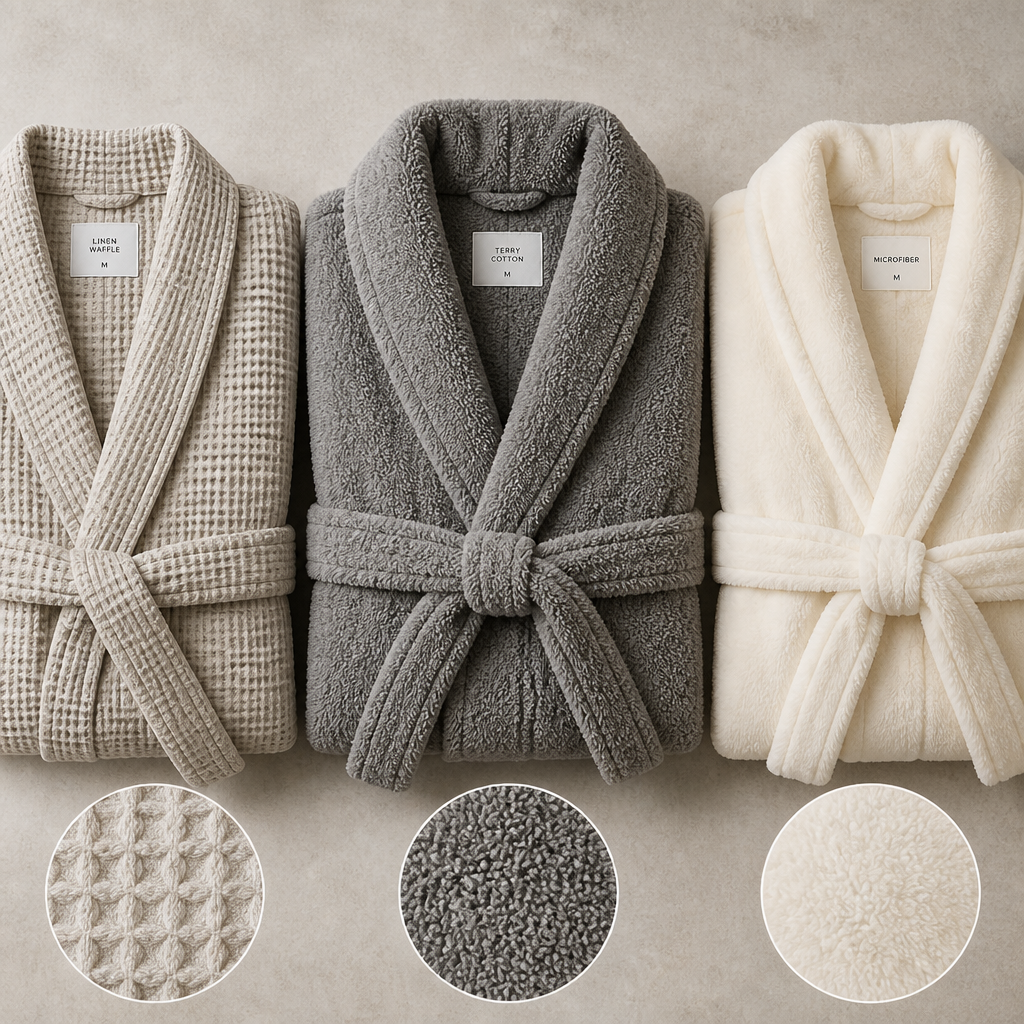
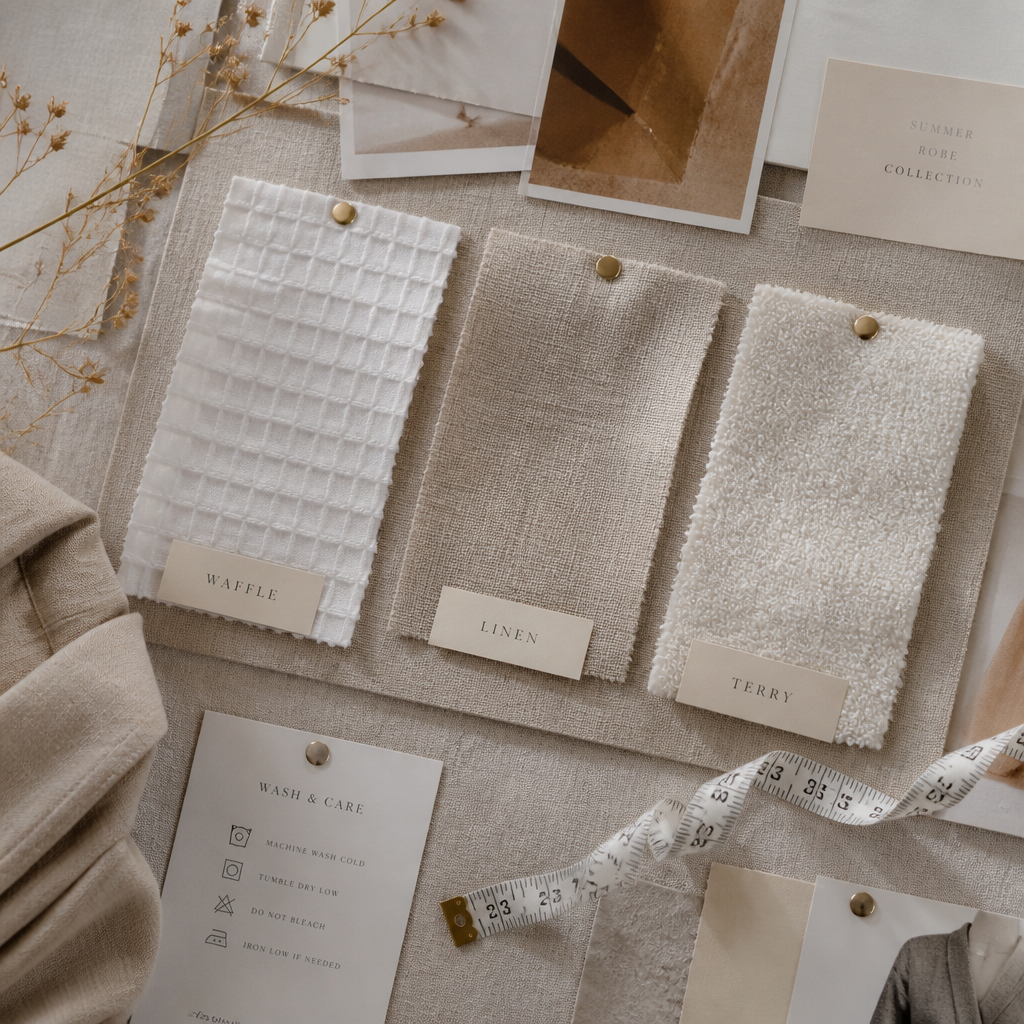
A waffle robe is defined by its honeycombed, grid-like texture. That open weave is not decorative: it provides superior breathability by allowing air to move freely across the skin. If you run hot at night, live in a warm climate, or use your robe during a sweaty post-workout cool-down, a waffle robe is almost certainly the right answer.
What Waffle Fabric Actually Does
The textured structure does two things simultaneously: it allows airflow to prevent overheating, and it still provides some moisture absorption through its woven surface area. It cannot match terry cloth for raw absorbency, so it is not the ideal grab after a dripping shower. But for lounging, morning coffee, or anything where you want to feel covered without feeling wrapped in a blanket, it performs well.
Waffle robes also dry significantly faster than terry alternatives. If you hang your robe on a hook between uses, this matters more than most people expect. A terry robe left damp all morning can feel heavy and slightly musty by the next day. A waffle robe in the same situation is usually dry within an hour or two.
Who Should Buy a Waffle Robe
Choose a waffle robe if you tend to overheat in heavy fabrics, if your bathroom or bedroom stays warm year-round, or if you want a robe that looks polished enough to wear through a morning routine without feeling sloppy. The textured surface gives it a clean, spa-like aesthetic that sits comfortably between casual and put-together. It is also the easiest robe to pack if you travel and want to bring your own.
Pro tip: If you tend to overheat at night, a waffle robe is also a better sleep-adjacent garment than plush alternatives. The breathability that makes it less insulating in cold weather works in your favor when your body temperature is still elevated after a bath.
Terry Cloth Robe: The Post-Shower Workhorse
The terry cloth robe has been the default in hotels and spas for decades, and there is a straightforward reason for that: nothing else absorbs water as efficiently. The looped construction, the same structure used in high-quality bath towels, creates a surface area that actively draws moisture away from the skin. When you step out of the shower, a good terry robe does not just cover you, it starts drying you.
The Terry Cloth Advantage in Cold Climates
Terry cloth traps air between its loops, which provides natural insulation. If you live somewhere with cold winters, or your bathroom has poor heating, a terry robe delivers genuine warmth without needing to be made from synthetic materials. And unlike plush robes, which can flatten and lose their feel over time, quality terry cloth actually improves with washing. The cotton fibers relax with each cycle, and the loops become progressively softer and more pliable over hundreds of washes.
The Terry Cloth Trade-Off
Terry robes are heavier than waffle alternatives. A high-GSM terry robe can feel substantial, which some people find comforting and others find oppressive, especially in warm weather or right after exercise. The same loops that make terry so absorbent also mean it holds moisture longer and takes more time to dry between uses. In a humid bathroom environment, this can be a real inconvenience if you bathe every day.
A common mistake is buying the heaviest terry robe available under the assumption that heavier always means better. If your climate is warm or your robe is used mainly for lounging rather than immediate post-shower use, that extra weight works against you. Match the GSM to your actual environment, not to an aspirational idea of luxury.
Plush Robe: When You Want Warmth Above Everything Else
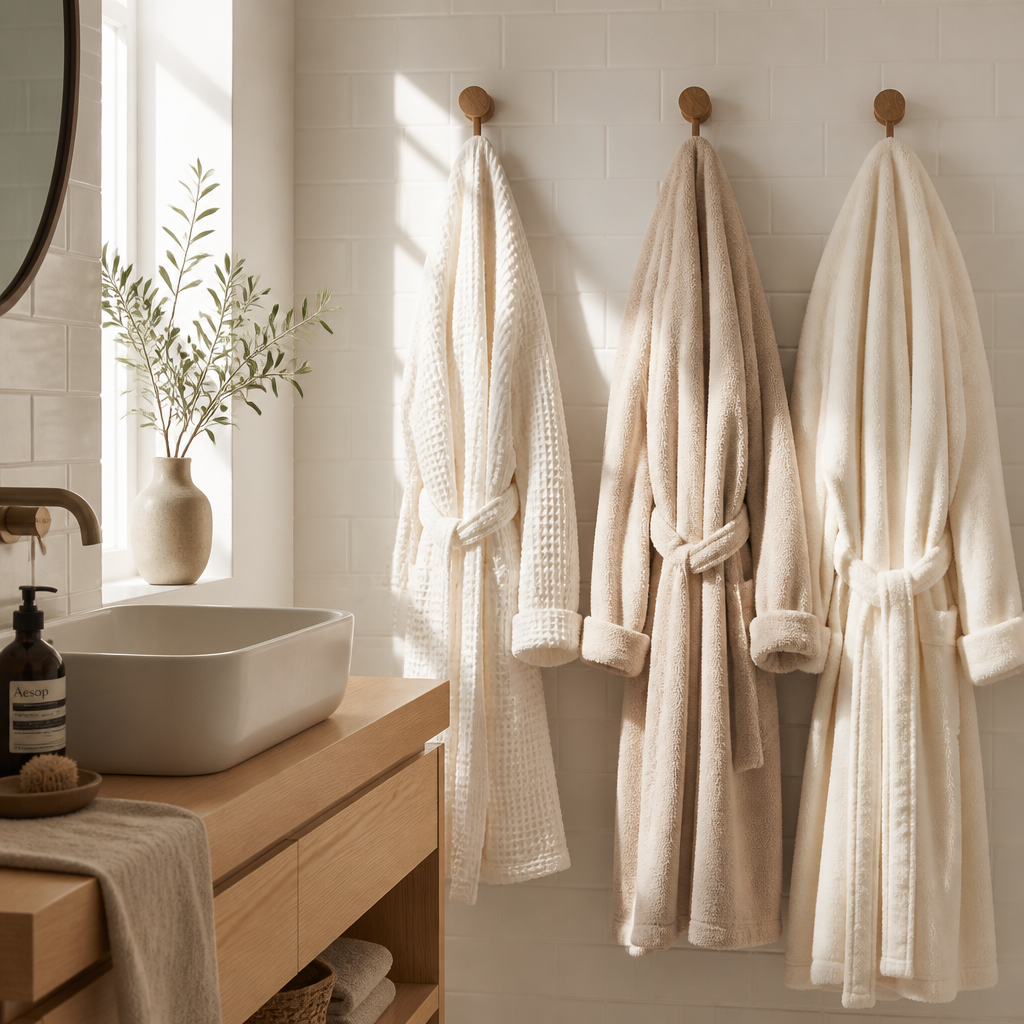
A plush robe made from microfiber, fleece, or sherpa is the warmest option in the robe category. These fabrics insulate through dense synthetic fiber that traps body heat rather than releasing it. If your priority is to feel warm the moment you slip the robe on, especially on cold mornings or in poorly heated spaces, a plush robe delivers that better than either terry or waffle.
Plush Fabrics Are Not All the Same
Sherpa and plush fleece sit at the top of the warmth hierarchy. Microfiber feels soft and looks luxurious, but it insulates less than fleece. A robe described as "ultra-plush" could be dense sherpa fleece that traps heat aggressively, or it could be loosely woven microfiber that photographs beautifully but fails to keep you warm. The GSM number is the most reliable way to cut through the ambiguity here. A plush robe under 300 GSM is likely more about aesthetics than genuine warmth.
What Plush Robes Cannot Do
Plush robes are not designed for post-shower use. The synthetic pile does not absorb water effectively. Wearing a plush microfiber robe directly out of the shower means you are trapping moisture against your skin, not wicking it away. These robes belong after you have toweled off, or over pajamas on a cold evening. Think of them as the robe equivalent of a weighted blanket: warm, comforting, and best used once you are already dry and ready to settle in.
Pro tip: When buying a plush robe as a gift, stick with plush microfiber or a mid-weight cotton blend. These fabrics work well across different body types and temperature preferences, making them a far safer choice than a heavy sherpa robe that might be too much for someone who sleeps warm.
Robe Fabric Comparison Table
The table below compares the three main robe fabric categories across the factors that matter most in daily use. Use this as a practical reference, not an absolute ranking, since the right robe depends entirely on your specific context.
| Feature | Waffle Robe | Terry Cloth Robe | Plush Robe (Fleece/Microfiber) |
|---|---|---|---|
| Breathability | Excellent (open honeycomb weave) | Moderate | Low (traps heat by design) |
| Absorbency | Moderate | Excellent (looped cotton construction) | Poor (synthetic pile repels moisture) |
| Warmth | Low to moderate | Moderate to high (depends on GSM) | High to very high (sherpa at top) |
| Drying time | Fast | Slow (holds moisture in loops) | Moderate |
| Weight/bulk | Light | Medium to heavy | Medium (feels lighter than terry) |
| Gets better with washing? | Holds up well | Yes, noticeably softer over time | No, high heat permanently flattens pile |
| Best use case | Warm climates, hot sleepers, lounging | Right after bathing, cool climates | Cold mornings, over pajamas, gifting |
How to Choose a Robe Based on Your Body and Lifestyle
The fabric is only part of the decision. Your body type, your typical body temperature, and how you actually use a robe all shape which option will feel right after a week of daily wear rather than just a first impression out of the packaging.
If You Run Hot
If you tend to overheat, whether during sleep, exercise recovery, or just in general, a waffle robe is the correct choice regardless of season. The breathable weave prevents the trapped, stifling feeling that comes with terry or plush in warm conditions. A common mistake here is buying a plush robe because it looks cozy, then never actually reaching for it because it is too hot to wear comfortably.
If You Run Cold or Live in a Cold Climate
In a Canadian winter, a waffle robe will leave you shivering before your coffee finishes brewing. If cold mornings are a consistent part of your life, a terry cloth robe with a higher GSM or a plush fleece robe will make a meaningful difference. Terry insulates through its looped air pockets. Fleece insulates by trapping body heat in its dense synthetic fibers. Both are significantly warmer than waffle, but they achieve it in different ways. Terry is the better choice if you also want absorbency. Fleece is the better choice if you want maximum warmth and do not mind toweling dry first.
If You Are Buying for a Gift
When you do not know the recipient's temperature preferences, plush microfiber or a mid-weight cotton blend is the most reliable starting point. It is broadly comfortable, visually appealing, and does not come with the risk of being too hot or too cold for most people. At Bathwater and Beyond, the robes in the monthly drops are selected specifically with this gifting use case in mind: quality fabrics that feel considered rather than generic, without pushing into the heavy-duty territory that only works for a narrow range of body types and climates.
If You Want One Robe That Does Most Things
Terry cloth is the most versatile single choice. It handles post-shower use better than waffle or plush, provides reasonable warmth, and lasts for a long time with proper care. If you live in a climate with distinct seasons and want a year-round option, a mid-weight terry robe (roughly 400 GSM) is the most balanced call. It will not be as warm as fleece in January or as breezy as waffle in July, but it will be genuinely useful every day of the year.
Caring for Your Robe So It Stays That Way
The most overlooked factor in robe longevity is how you wash and dry it. In practice, more robes are ruined by the dryer than by actual wear. High heat is the main culprit, and it affects each fabric type differently.
For terry cloth robes, wash in warm to hot water to preserve the loops, and tumble dry on medium heat. Avoid fabric softener consistently: it leaves a coating on the cotton fibers that gradually reduces absorbency. Use white vinegar occasionally in the rinse cycle to strip buildup and restore that fresh-from-the-wash feel.
For plush robes, whether microfiber or fleece, the rule is always low heat or air dry. High heat permanently flattens the pile, turning a fluffy robe into a stiff, matted version of itself after just a few cycles. Wash on a gentle cycle in warm or cold water, and skip fabric softener entirely, it clogs the synthetic fibers and reduces their softness over time.
For waffle robes, machine wash in warm water and tumble dry on low to medium heat. The structured weave holds up well without much fuss, and fabric softener is less harmful here than with terry or plush. The waffle texture is durable and generally does not require the same level of care vigilance as the other two fabric types.
Pro tip: Never judge a robe's long-term quality on its first wash. Terry cloth, in particular, takes several washes before it reaches its best softness. If a terry robe feels slightly stiff out of the package, that is normal. Give it three or four washes before deciding whether it is right for you.
Frequently Asked Questions
What is the best bath robe fabric for sensitive skin?
For sensitive skin, 100% cotton terry or a cotton waffle weave are the safest options. Both are natural fibers that breathe well and are unlikely to cause irritation. Synthetic plush fabrics like polyester fleece can trap heat and cause skin reactions in people prone to sensitivity. If you are unsure, look for OEKO-TEX certified fabrics, which have been tested for harmful substances.
Can I wear a waffle robe right out of the shower?
You can, but it is not what waffle fabric does best. A waffle robe will absorb some surface moisture, but it will not dry you efficiently the way terry cloth does. If you like stepping straight into your robe after a shower, terry cloth is the better choice. If you prefer to do a quick towel-dry first, a waffle robe works fine.
How do I know if a plush robe will actually keep me warm?
Check the GSM. Plush robes in the 300 to 500+ GSM range provide meaningful warmth. Below that, you are largely paying for softness and aesthetics rather than genuine insulation. Also look at the fiber type: sherpa and fleece insulate more effectively than loosely woven microfiber, even at similar GSM ratings. When in doubt, sherpa sits at the top of the warmth hierarchy.
Are terry cloth robes better quality than plush robes?
Not inherently. Quality depends on GSM, fiber quality, and construction, not fabric type. A well-made waffle robe will outlast a poorly made terry cloth one. What terry cloth does offer is the advantage of improving with repeated washing, while plush synthetic robes can degrade if washed incorrectly. In terms of longevity with proper care, high-GSM cotton terry tends to hold up the longest.
What robe should I buy if I want to use it as a gift?
When you do not know the recipient's temperature preferences, stick with plush microfiber or a mid-weight cotton blend. These fabrics are broadly comfortable across different body types, sleep temperatures, and climates. Avoid very heavy terry or sherpa robes as gifts: they are only ideal for a narrow range of people, and they are difficult to return or exchange if the fit or weight feels wrong.
How often should I wash my bath robe?
A general guideline is every three to four uses for a robe used after bathing. A robe worn over dry clothing for lounging can go longer between washes. Terry cloth robes benefit from regular washing since it maintains the absorbency of the cotton loops. Plush and waffle robes are more forgiving between washes, but still need regular laundering to prevent odor buildup, especially in humid bathroom environments.
Is a hooded robe better than a standard collar robe?
This comes down to personal preference and primary use. A hooded robe is better for post-shower hair drying and for people who get cold easily around the head and neck. A standard collar or shawl collar robe is generally more comfortable for extended lounging since there is no hood to bunch up behind you when you sit or lie back. If you are buying for gifting purposes, a shawl collar tends to work for a wider range of preferences.
We would love to hear which robe fabric has worked best for your evening routine: drop your experience in the comments below.
References
- Robe fabric types explained: terry, waffle, fleece, satin, and more
- Waffle versus terrycloth bathrobes: a detailed comparison of feel, warmth, and absorbency
- How bathrobe fabric softness actually works: fiber type, GSM, and weave construction
- Warm and fluffy bathrobe fabric comparison: which materials actually insulate
- Terry robe or waffle robe: features, benefits, and differences