

Why Limited Edition Self-Care Drops Beat Big Catalogs
Scroll through any large wellness retailer and you will find hundreds of bath products, dozens of candle lines, and enough robe options to fill a small warehouse. Yet most people walk away without buying anything. That is not a coincidence. Research on consumer decision-making has repeatedly shown that once the number of choices crosses a certain threshold, shoppers freeze, second-guess themselves, and abandon the cart entirely. Limited edition self-care drops flip this dynamic completely, and for self-care brands that genuinely care about the customer experience, a tightly curated monthly release is not just a marketing tactic. It is a fundamentally better way to shop, to build rituals, and to feel good about what you bought.
Table of Contents
- Quick Takeaways
- Reason 1: A Curated Drop Eliminates Decision Fatigue
- Reason 2: Curation Signals Quality Over Quantity
- Reason 3: Monthly Drops Create a Ritual, Not Just a Purchase
- Reason 4: Exclusive Wellness Products Feel Personal, Not Mass-Market
- Reason 5: Smaller Runs Mean Smarter Sourcing and Better Value
- Curated Drop vs. Large Catalog: A Direct Comparison
- Frequently Asked Questions
- References
Quick Takeaways
| Key Insight | Explanation |
|---|---|
| Fewer choices drive more purchases | The classic jam study found that a display of 6 jams produced a 30% purchase rate versus 3% for a display of 24, a tenfold difference in conversion. |
| Scarcity increases perceived product value | Research confirms that limited-quantity scarcity messages make consumers feel a product is more special, unique, and worth buying at full price. |
| Monthly drops build habitual anticipation | A predictable release cycle gives customers something to look forward to each month, transforming a one-time purchase into an ongoing self-care ritual. |
| Exclusivity creates community identity | Owning a product from a limited curated product drop connects buyers to a specific group, reinforcing personal identity and brand loyalty. |
| Small-batch sourcing enables better quality control | When a brand commits to a short run, it can vet each supplier and product far more carefully than a retailer managing a catalog of hundreds of SKUs. |
| Inventory simplicity benefits the customer | Limited drops make inventory forecasting straightforward, which means fewer out-of-stock surprises mid-order and more reliable fulfillment for buyers. |
| FOMO is a real, measurable driver | In a 2025 survey of more than 3,000 shoppers, nearly half said they want early access to limited-edition items, confirming demand for this format. |
Reason 1: A Curated Drop Eliminates Decision Fatigue
If you have ever opened a large wellness retailer's website, spent 40 minutes comparing bath oils, and then closed the tab without buying anything, you have experienced decision fatigue firsthand. It is not a lack of interest. It is the direct psychological cost of too many options.
Psychologist Barry Schwartz popularized this concept with his 2004 book arguing that eliminating consumer choices can significantly reduce anxiety for shoppers. The evidence is stark: Iyengar and Lepper's widely cited jam study found that shoppers were far more likely to complete a purchase when shown six options rather than twenty-four. The larger display attracted browsers. The smaller display converted buyers.
A curated product drop applies this principle to self-care deliberately. When a brand releases four or five carefully selected products per month rather than maintaining a catalog of two hundred, it removes the cognitive burden from the shopper entirely. The question is no longer "which of the forty bath salts should I choose?" It becomes "do I want this one?" That is a question most people can answer in thirty seconds.
Pro tip: When browsing a curated monthly drop, read the brand's notes on why each product was selected. Those notes tell you more about actual product quality than five pages of bullet points on a large retailer's product listing ever will.
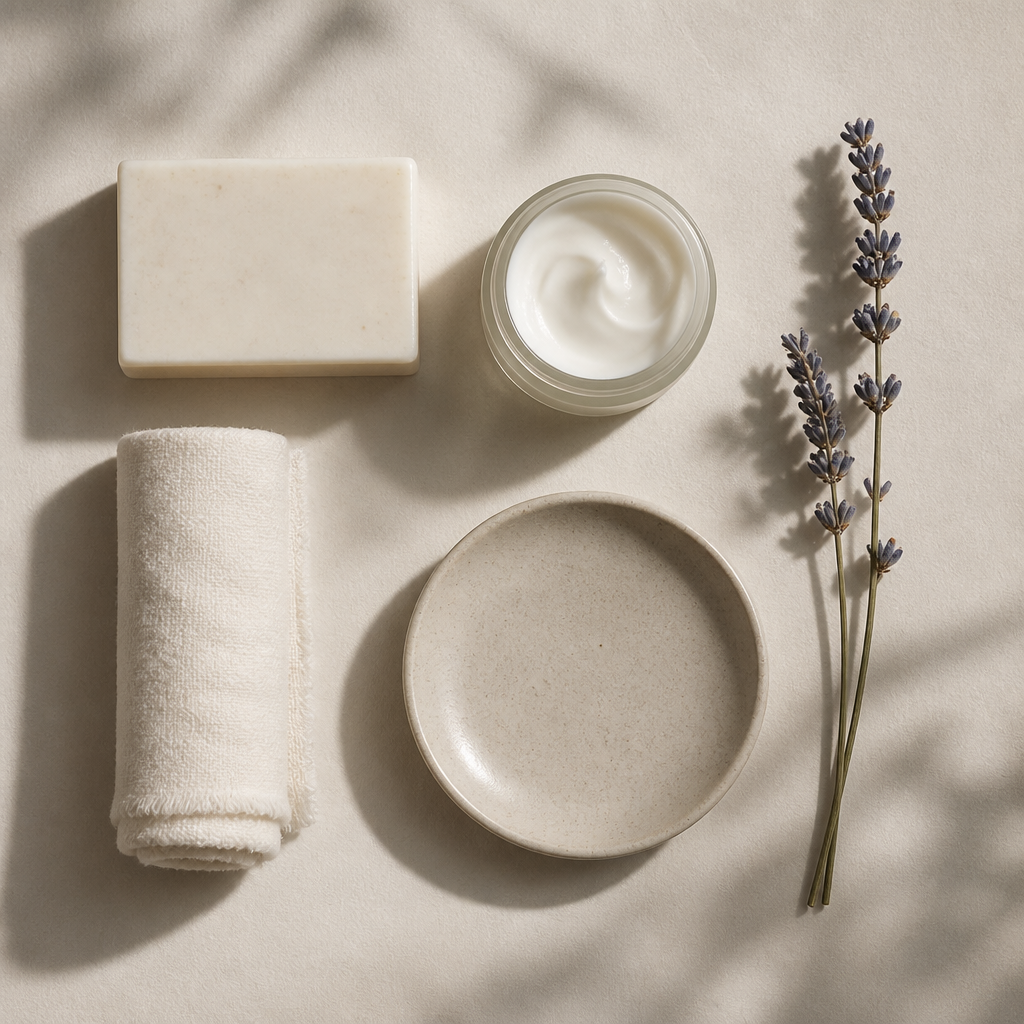

The practical implication for someone building an evening self-care routine is significant. A never-ending catalog demands that you do the curation work yourself. A monthly drop shifts that work to a brand you have already decided to trust. You stop shopping and start enjoying.
Reason 2: Curation Signals Quality Over Quantity
A retailer with a catalog of 500 products cannot give equal attention to all 500. Some are there to fill space. Some are legacy items nobody buys anymore. Some were added because a supplier offered a good price, not because the product was exceptional. In a large catalog, mediocre products hide in plain sight.
A monthly drop with five or six items carries a fundamentally different commitment. Every product in that release had to earn its place. A brand selecting items for a limited run is answering a harder question than "can we sell this?" It is answering "is this good enough to represent everything we stand for this month?"
What Curation Actually Looks Like in Practice
In practice, a curated approach means testing multiple versions of a product before committing, sourcing from smaller producers who cannot supply at catalog scale, and being willing to say no to a product that is merely acceptable. A common mistake large catalog retailers make is conflating variety with value. They are not the same thing.
For self-care specifically, this distinction matters more than in most categories. A bath oil that irritates your skin, a candle that burns unevenly, or a robe that pills after two washes does not just fail as a product. It actively undermines the relaxation experience you were trying to create. The standard for a curated self-care drop has to be higher because the entire point is to make your evening better, not to add clutter to your bathroom shelf.
When a brand limits what it sells, it is forced to stand fully behind every single item. There is nowhere to hide behind volume.
This is why exclusive wellness products from a drop-based brand tend to generate stronger word-of-mouth than comparable items from large catalog retailers. Customers who receive something genuinely well-chosen feel the intentionality and talk about it. That is very hard to manufacture at scale.
Reason 3: Monthly Drops Create a Ritual, Not Just a Purchase
The wellness industry talks a lot about building rituals. Fewer brands actually create the structure that makes a ritual possible. A monthly drop does exactly that by giving you something to look forward to on a predictable schedule.
Anticipation is part of the self-care experience, not just a marketing trick. When you know a new selection of products is arriving this month, you start thinking about your evening routine, your bath setup, what you want to try next. That anticipatory mindset is itself a form of wellness. It pulls your attention toward comfort and rest, which is where it belongs.

Subscription box research consistently shows that the recurring anticipation of a curated release drives stronger brand loyalty than one-time purchases. Wellness brands that release products on a monthly cadence are not just selling products. They are selling a reason to check back in, to re-engage with the brand, and to recommit to the habit of taking care of yourself.
How Anticipation Translates to Better Self-Care Habits
The psychology here is straightforward. A habit needs a cue. For many people, a new product arrival functions as that cue. It signals: this is your night, set up your space, slow down. A curated drop that arrives once a month gives you twelve of those cues per year. A never-ending catalog gives you none, because there is no moment of arrival, no occasion, just an endless scroll you can do at any time and therefore never quite get around to.
Pro tip: When a new monthly drop lands, schedule the time to actually use those products the same week they arrive. Treating the unboxing as the start of a ritual, rather than adding items to a shelf to use "eventually," dramatically increases the chance you will actually build the routine you are buying for.
Reason 4: Exclusive Wellness Products Feel Personal, Not Mass-Market
There is a meaningful difference between owning something that anyone can buy at any time and owning something that was available for a specific window. That difference is not purely emotional. It changes how you relate to the product and, by extension, how you relate to the brand that sold it to you.
Research on scarcity and consumer behavior is clear on this point: limited-quantity products are consistently perceived as more special, more valuable, and more reflective of the buyer's personal identity. This is not about luxury posturing. It is about the simple fact that when something is not ubiquitous, it carries meaning. It says something about what you pay attention to and what you value.
The Self-Care Angle That Most Brands Miss
For self-care shoppers specifically, this matters because self-care is inherently personal. A bath ritual, an evening routine, a favourite candle, these are intimate experiences. Mass-market products sit awkwardly in that context. When your bath product is the same one available in every pharmacy chain and online marketplace, it does not feel like a treat. It feels like a commodity.
A limited edition self-care item resolves that tension. You are not using the product that everyone else reached for out of convenience. You are using something that was selected deliberately, released in limited quantities, and chosen by you before it was gone. That context changes the experience of using it.
A 2025 survey of more than 3,000 shoppers found that nearly half said they specifically want early access to limited-edition items, confirming that this desire for exclusivity is not a niche preference but a mainstream expectation among active shoppers.
Reason 5: Smaller Runs Mean Smarter Sourcing and Better Value
This is the reason that benefits customers most directly, and it is the one least often discussed. When a brand commits to a small production run, it can source ingredients and materials at a level of care that simply is not possible at catalog scale.
A large retailer ordering a product that will sit in inventory for eighteen months is making a very different sourcing decision than a brand ordering a sixty-day supply of something it has chosen to feature this month only. The small-batch approach invites better suppliers, fresher raw materials, and more flexibility to say yes to a small artisan producer who cannot supply at volume but makes something exceptional.
Inventory Simplicity and What It Means for You
From the customer side, smaller inventory runs translate to more reliable fulfillment. Industry analysis of the drop model notes that producing small batches that sell out quickly makes inventory forecasting straightforward, which means fewer situations where something is theoretically available online but actually back-ordered for six weeks.
It also means the brand is not carrying dead stock, which creates pressure to discount and to push products that were not working. The typical large catalog retailer's sale section is full of products nobody loved enough to buy at full price. A drop-based brand does not accumulate that inventory problem, so its pricing stays honest and its full-price items never feel like they should have been marked down to begin with.
For shoppers who care about where their products come from, the small-batch model is also better aligned with thoughtful sourcing. When quantity is constrained, brands have less incentive to race to the cheapest supplier. They have more incentive to find the right one.
Curated Drop vs. Large Catalog: A Direct Comparison
| Factor | Limited Monthly Drop | Never-Ending Catalog |
|---|---|---|
| Decision experience | Simple, low-friction, fast to decide | High cognitive load, frequent cart abandonment |
| Product quality signal | Strong: every item earned its place in the release | Weak: quality varies widely across hundreds of SKUs |
| Customer relationship | Ongoing, anticipatory, builds ritual and loyalty | Transactional, visit-when-needed, low repeat engagement |
| Perceived product value | Higher: scarcity and exclusivity reinforce worth | Lower: always available means always fungible |
| Sourcing and freshness | Small-batch, flexible, artisan-friendly | Volume-driven, often skewed toward lowest cost at scale |
| Inventory reliability | Predictable sell-through, fewer backorders | Dead stock, unpredictable demand, frequent discounting |
| Fit for self-care rituals | High: arrival creates a monthly moment to engage | Low: no seasonal moment, no cue to start a routine |
Frequently Asked Questions
What makes a product drop different from a regular product launch?
A product drop is defined by intentional scarcity, either a limited quantity produced or a short purchase window, or both. A regular product launch adds items to a permanent catalog that stays available indefinitely. The drop model is designed around the idea that availability itself has a time limit, which changes how shoppers prioritize and decide. A standard launch does not carry that urgency or that signal of deliberate selection.
Is limited edition self-care actually better quality, or is it just marketing?
It depends on the brand, but the structural incentives of a drop model genuinely push toward higher quality. When a brand releases only a handful of products per month, each one carries more reputational weight. A poor product in a drop of five damages the brand far more visibly than a poor product buried in a catalog of five hundred. That accountability pressure is real, and honest brands use it to maintain a higher editorial standard for what they release.
Will I miss out if I do not check the drop right when it launches?
That depends on how popular the drop is and how limited the quantity. Signing up for early-access notifications from a brand you trust is the practical solution. Many drop-based brands offer subscribers first access before the general public, which is a meaningful perk. If missing a drop genuinely disappoints you, that is actually useful information: it tells you this brand has succeeded in making its products feel worth prioritizing.
How do curated product drops work for gift shopping?
Drop-based brands are particularly well-suited to gift shopping because the curation work is already done for you. Instead of combing through a catalog trying to judge which of forty similar products is actually good, you are choosing from a small selection that the brand has already verified. The limited availability also adds a layer of thoughtfulness to the gift. You sought it out during a specific window, which signals care in a way that a product available everywhere does not.
How often should a brand run a product drop to keep it meaningful?
Monthly is generally the right cadence for wellness and self-care categories. It is frequent enough to maintain engagement and give customers a recurring ritual to look forward to, but infrequent enough that each release still feels like an event. More frequent drops can dilute the sense of occasion. Less frequent drops can lose the habitual connection that makes self-care routines stick. Monthly aligns naturally with how most people think about their routines and budgets.
Do exclusive wellness products from drops cost more than catalog items?
Not necessarily. The pricing logic is different. Catalog retailers often inflate margins on popular items and discount slow movers. Drop-based brands tend to price consistently because they are not managing dead stock or running clearance cycles. The absence of discounting pressure can actually make full-price drops feel fairer, even when the absolute price is comparable to a catalog item of similar quality. What you are paying for is the selection judgment and the sourcing care, not a luxury markup.
If you have tried building an evening routine around products from a large wellness catalog and found yourself overwhelmed, or if you have experienced a monthly drop that genuinely changed how you approach self-care, share what worked or did not work for you in the comments below.
References
- Shopify guide to limited product drops: how scarcity drives demand and brand loyalty
- Psychology of limited edition products: scarcity, exclusivity, and consumer behaviour explained
- How curated catalog strategy reduces choice overload and improves e-commerce conversion rates
- The paradox of choice: what the jam study and Barry Schwartz's research actually show
- The psychology of scarcity and limited releases as a brand marketing engine