

How to Choose the Right Candle Scent for Relaxation
Most people grab a candle based on how the jar looks or what smells appealing in the store, then wonder why it does nothing to help them unwind at the end of the day. Choosing a candle for relaxation is not guesswork. Scent directly influences the limbic system, the part of the brain that processes emotion and memory, and the wrong fragrance can actually increase alertness rather than calm it. This guide breaks down exactly how to match a candle scent to your mood, your wind-down goal, and your evening routine so that every burn actually does something useful.
Table of Contents
- Quick Takeaways
- Why Scent Affects Your Mood More Than You Think
- Best Candle Scents for Sleep and Deep Rest
- What Aromatherapy Candles Actually Do
- How to Match a Candle Scent to Your Mood
- Comparing Scent Families: Which One Is Right for You
- Common Mistakes When Choosing a Relaxation Candle
- Building an Evening Ritual Around Your Candle
- Frequently Asked Questions
Quick Takeaways
| Key Insight | Explanation |
|---|---|
| Lavender is the most evidence-backed scent for sleep | Multiple peer-reviewed studies show lavender lowers heart rate and reduces anxiety, making it the clearest choice for bedtime wind-down candles. |
| Citrus scents work against sleep preparation | Orange, grapefruit, and lemon are stimulating, not calming. Save these for morning or focus sessions, not your evening ritual. |
| Wax type changes how well the scent releases | Soy wax throws scent more evenly and cleanly than paraffin, which matters when you want consistent aromatherapy benefits without irritating smoke. |
| Burn time affects ritual consistency | A candle with under 30 hours of burn time will not survive a full month of nightly 45-minute sessions. Match burn time to your actual habit. |
| Single-note scents are easier to predict than blends | Blended candles can smell different at different temperatures. If you are building a reliable wind-down trigger, start with a single dominant note. |
| Fragrance load matters as much as the scent itself | A candle with under 6% fragrance load in a large room will barely register. For real aromatherapy candle benefits, look for 8 to 12% fragrance concentration. |
| Scent memory builds over time | Using the same candle scent every evening trains your brain to associate that smell with rest, speeding up the relaxation response within two to three weeks. |
Why Scent Affects Your Mood More Than You Think
Smell is the only sense that bypasses the thalamus and goes directly to the limbic system, which governs emotion, memory, and arousal levels. Every other sense has to pass through a relay station first. This is why a familiar scent can change your emotional state within seconds, faster than music, faster than visual cues.
Inhaling certain aromatic compounds, particularly linalool found in lavender, has been associated with measurable reductions in cortisol levels. A well-chosen candle for relaxation is not decoration. It is a functional tool.
In practice, people underestimate how quickly scent conditioning happens. Within two to three weeks of using the same fragrance during a specific activity, your brain begins to anticipate the state change. Light the candle and your nervous system starts shifting toward rest before you have even done anything else. That conditioned response is worth building deliberately.
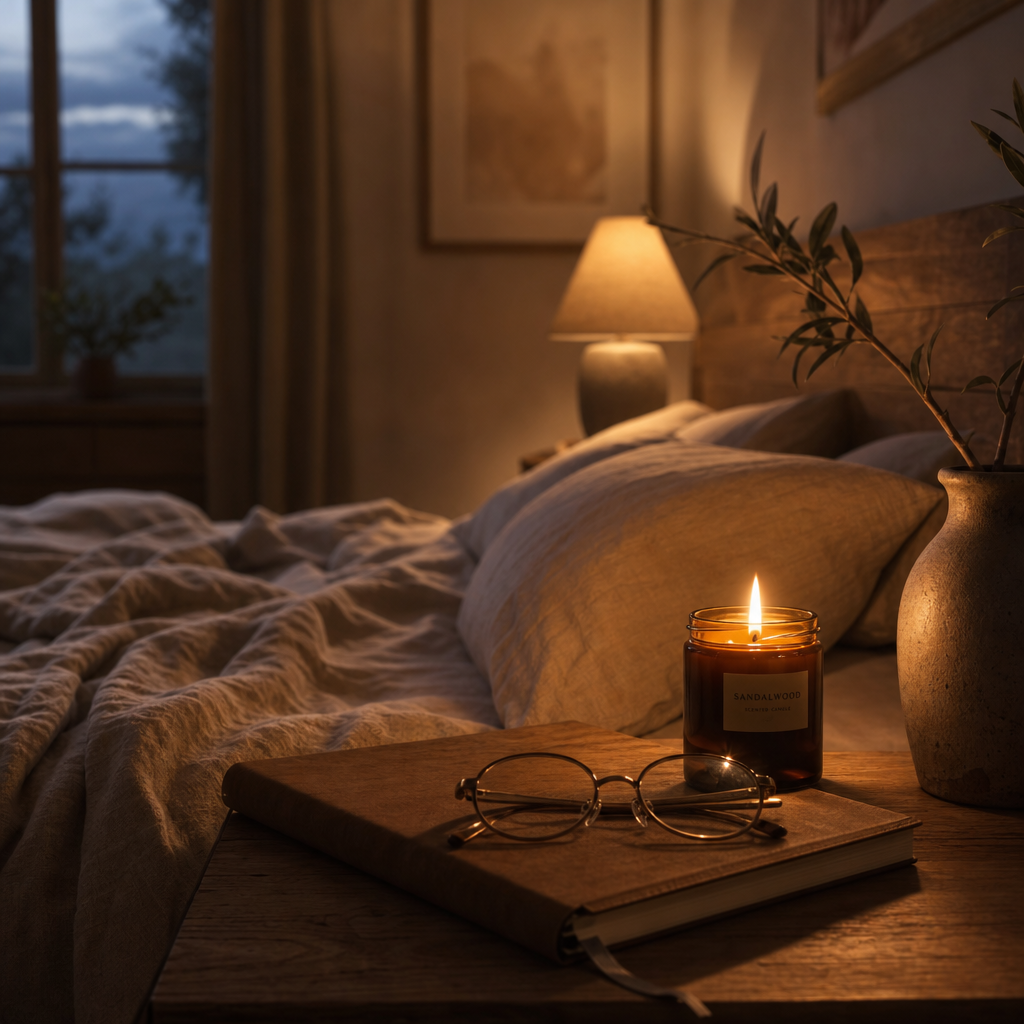
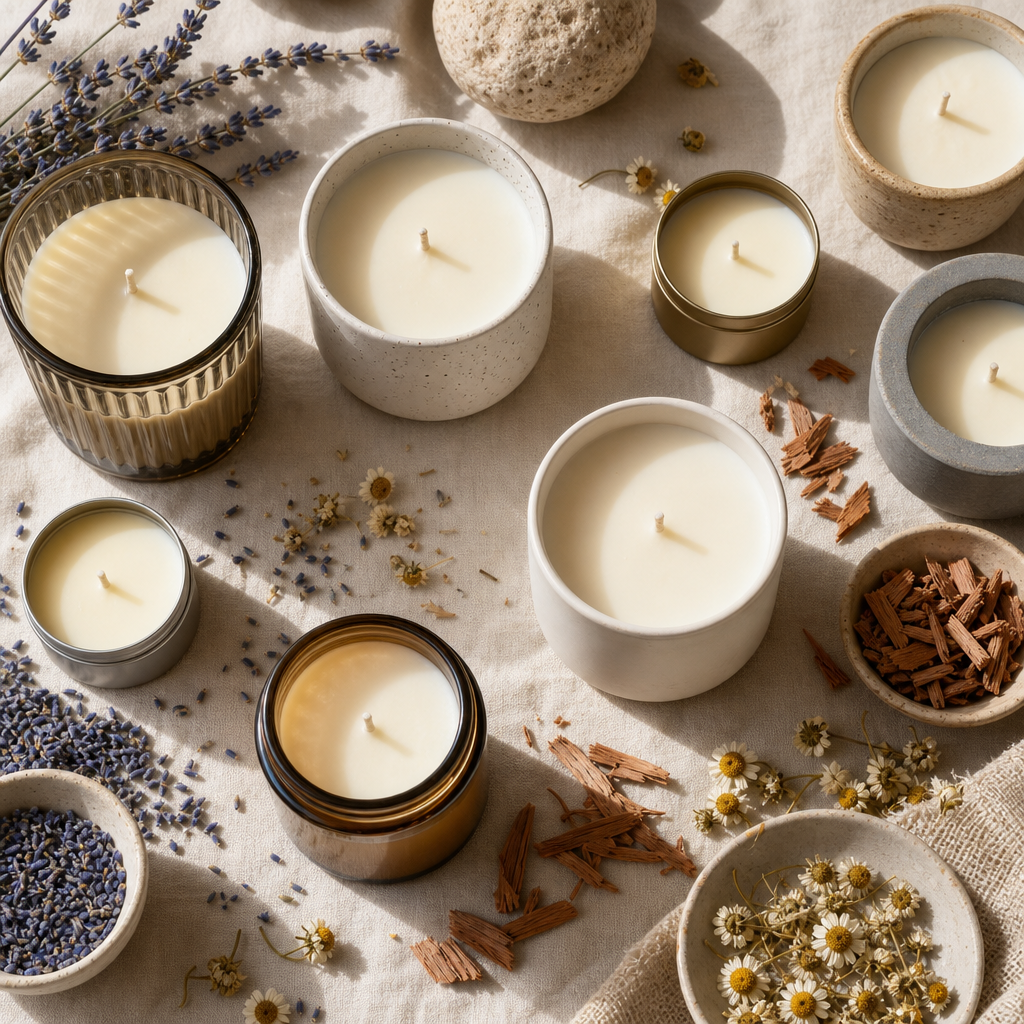
Pro tip: Do not rotate between multiple relaxation candles when you are starting out. Pick one scent and use it exclusively for your evening wind-down for three weeks. You are building a neurological shortcut, and variety works against that process.
Best Candle Scents for Sleep and Deep Rest
Not every calming scent is equally effective for sleep preparation specifically. There is a meaningful difference between a scent that feels pleasant and a scent that actively shifts your physiology toward rest. The best candle scents for sleep all share one characteristic: they lower arousal rather than sustain it. If you want a broader look at which candles suit which routine, our guide to the best candles for relaxation and self-care routines covers the product side in more detail.
Lavender: The Most Researched Option
Lavender is not popular because of marketing. Linalool, its primary active compound, binds to GABA receptors in a way that resembles mild sedation, and lavender aromatherapy has been repeatedly associated with improved sleep quality and fewer nighttime wakings. For anyone serious about sleep quality, lavender is the starting point.
Chamomile: Gentle and Underrated
Roman chamomile is softer than lavender and suits people who find lavender slightly medicinal or overpowering. The apigenin compounds in chamomile also interact with GABA receptors, producing anxiolytic effects. Chamomile-scented candles rarely get the credit they deserve for bedtime wind-down purposes.
Sandalwood: For Minds That Do Not Quiet Easily
Sandalwood works through a different mechanism. Its woody, grounding quality reduces mental chatter rather than producing drowsiness directly. For people who lie awake with racing thoughts, sandalwood is often more effective than lavender because it anchors attention in the present moment without the sedative quality that some find too heavy.
Vetiver: The Deep Sleep Option
Vetiver is earthy, smoky, and rich. It is not a mainstream candle scent, but for sleep specifically it performs exceptionally well. If you sleep lightly and wake frequently, vetiver-based candles are worth exploring.
What Aromatherapy Candles Actually Do
Aromatherapy candles get dismissed as spa-day gimmicks, but the functional category is real when you know what to look for. The key distinction is between candles that contain synthetic fragrance oils and those that use pure essential oils as the scent source. Synthetic fragrances can smell identical to the real thing but do not carry the same active compounds. Linalool from a lab-synthesized fragrance oil does not behave the same way physiologically as linalool derived from actual lavender.
That said, this does not mean all synthetic fragrance candles are worthless for mood. The scent memory and conditioned response benefits still apply regardless of whether the fragrance is natural or synthetic. Where the gap matters most is when you are specifically trying to produce a physiological effect, such as reducing cortisol, rather than simply creating an environmental cue.
When shopping for a true aromatherapy candle, check for the fragrance source disclosure on the label. Reputable candle makers will specify essential oils by name and concentration. Vague terms like "natural fragrance" or "fragrance blend" are not the same thing and should be treated as synthetic until proven otherwise. It is the same principle we apply to reading bath salt ingredient lists — transparency about what is actually inside is the clearest quality signal you get.
Pro tip: Look for candles that list their essential oil content by percentage or by weight. A candle claiming aromatherapy benefits with no fragrance load disclosure is relying on the label doing more work than the product.
How to Match a Candle Scent to Your Mood
The mistake most people make is choosing a candle for the mood they want to sustain rather than the mood they need to move toward. If you come home stressed and tense, you do not need a scent that amplifies comfort. You need one that actively interrupts the stress response first. That requires understanding what your nervous system is doing before you light the candle.
When You Are Overstimulated or Anxious
Choose lavender, clary sage, or bergamot. These scents have been consistently associated with reduced perceived anxiety and lower heart rate. Bergamot is particularly useful because it combines calming effects with a mild mood-lifting quality, so it addresses both the tension and the low-grade irritability that often comes with a hard day.
When You Are Emotionally Flat or Low-Energy
Reach for ylang ylang or rose. These floral scents produce a warming, emotionally nourishing effect without being stimulating. They suit the kind of tiredness that feels more like emotional depletion than physical exhaustion, the type where you need comfort rather than sedation.
When You Cannot Switch Off Mentally
Frankincense and cedarwood are both effective for reducing mental activity. Frankincense in particular has a long cross-cultural history of use in contemplative practice. For people who decompress through reading or journaling in the evening, these grounding scents support focus without stimulation.
Comparing Scent Families: Which One Is Right for You
Understanding the broad scent families helps you make better decisions when browsing candle collections, especially when you encounter blends that combine multiple notes. Here is how the major categories compare for evening wind-down purposes.
| Scent Family | Best For | Avoid If |
|---|---|---|
| Floral (lavender, rose, chamomile) | General relaxation, anxiety reduction, sleep preparation, emotional comfort after a hard day | You find floral scents overwhelming or headache-inducing in enclosed spaces. Opt for woody alternatives. |
| Woody and Earthy (sandalwood, vetiver, cedarwood, frankincense) | Mental grounding, reducing racing thoughts, supporting meditation or journaling, deep sleep | You prefer lighter, brighter scents or find earthy notes too heavy for bedroom use before sleep. |
| Herbal and Green (clary sage, eucalyptus, green tea) | Transition from a high-stimulation day, clearing mental clutter, light decompression without heavy sedation | You are burning the candle immediately before bed. Eucalyptus in particular can be mildly alerting at high concentrations. |
Common Mistakes When Choosing a Relaxation Candle
A common mistake is buying a candle based on cold throw rather than hot throw. Cold throw is how the candle smells unlit in the store. Hot throw is how the scent actually performs when burning. These are often completely different experiences, and a candle that smells beautiful in the jar can be underwhelming or even unpleasant when lit.
Another frequent error is burning a relaxation candle in too large a space. A small soy candle rated for a room up to 200 square feet will produce almost no discernible scent in an open-plan living area. Match the candle size to the room you are actually using it in. For a bedroom, a smaller candle works well. For a bathroom soak, the smaller and more enclosed the space, the more effective even a modest candle becomes.
People also underestimate wick trim frequency. A wick longer than 5mm produces more soot, more smoke, and a faster, uneven burn that wastes both the candle and the fragrance. Trim before every single burn. The scent experience is measurably cleaner when you do.
Finally, avoid mixing conflicting candle scents in the same session or burning multiple candles simultaneously unless they share the same primary note. Layering a floral and a citrus simultaneously does not double the benefit. It creates olfactory confusion that your nervous system will not associate clearly with rest.
Building an Evening Ritual Around Your Candle
A candle for relaxation works best as the anchor of a broader ritual rather than a standalone item. The candle signals the beginning of a defined transition period between your active day and genuine rest. That signal only becomes powerful when it is consistent and paired with other low-stimulation behaviors.
A practical starting structure: light the candle at the same time each evening, ideally 60 to 90 minutes before you want to be asleep. Pair it with something tactile and calm, whether that is a bath with a mineral soak, applying a body oil, or wrapping in a soft robe while you read. The goal is to use multiple senses simultaneously so that the entire sensory environment becomes associated with the transition to rest. Our guide to building an evening self-care routine at home walks through how to sequence the whole thing.
We build our own recommendations around exactly this kind of sensory layering. Candles, bath essentials, and robes work better chosen as a system than as isolated products. If you are starting from scratch, picking items from the same mood category or scent family creates a coherent experience that reinforces the wind-down response faster than mixing and matching randomly.
Sleep onset latency, meaning the time it takes to fall asleep, tends to decrease when people follow a consistent pre-sleep routine over two to four weeks. The candle is not the magic ingredient. The consistency is — something we wrote about at length in why consistency beats perfection. The candle just makes the consistency easier to maintain because it is enjoyable rather than prescriptive.
If you are gift shopping for someone who needs to build a better evening routine, a candle alone is a nice gesture. A candle paired with one complementary bath product and a note explaining the pairing rationale is a genuinely useful gift. That specificity is what separates a thoughtful self-care gift from a generic one, and it is the logic behind our self-care gift guide.
Frequently Asked Questions
What is the single best candle scent for relaxation if you are new to aromatherapy?
Lavender is the most reliable starting point. It has the strongest body of evidence behind its calming effects, it is widely available, and it is familiar enough that most people already have a positive association with the scent. If you find straight lavender too medicinal, look for a lavender and chamomile blend, which softens the herbal edge while keeping the same functional benefit.
Can a candle actually help you sleep better?
Yes, but the mechanism is indirect. The candle does not sedate you chemically at the levels produced by a burning wick. What it does is create a consistent environmental cue that signals to your nervous system that it is time to shift toward rest. Over time, this conditioned response speeds up sleep onset. The scent compounds in pure essential oil candles, particularly lavender, also have a mild physiological calming effect through inhalation.
How long should you burn a relaxation candle during an evening routine?
Between 45 minutes and 90 minutes is the practical range for an evening wind-down session. This is long enough to fill the room with scent and build the ritual signal, but short enough that you are extinguishing the candle well before sleep and not running through your candle's burn life in a week. Always extinguish the candle before leaving the room or getting into bed.
Are aromatherapy candles with synthetic fragrance oils worth buying?
Yes, for mood and ritual purposes. No, if you specifically want the physiological effects of essential oil compounds. Synthetic fragrance oils can smell identical to natural counterparts but lack the active botanical compounds responsible for measurable changes in heart rate or cortisol. For scent memory conditioning and creating a pleasant atmosphere, they work well. For targeted aromatherapy effects, look for candles that clearly disclose essential oil content.
What candle scents should you avoid before bed?
Avoid citrus scents including lemon, orange, and grapefruit, as well as peppermint, eucalyptus, and rosemary. All of these have stimulating effects and are better suited to morning or mid-day use. Eucalyptus in small amounts can be tolerable in a large space, but at closer range, particularly in a small bedroom, it actively increases alertness rather than reducing it.
How do you know if a candle has enough fragrance load to be effective?
Reputable candle makers will disclose fragrance load as a percentage of total candle weight. The general standard for effective scent throw in a room is 8 to 12 percent fragrance concentration. Below 6 percent, you will likely struggle to notice the scent in any room larger than a bathroom. If no fragrance load information is available, that is a signal the brand is not being transparent about product quality.
Can you use a relaxation candle every night without the scent losing its effect?
Olfactory adaptation, where you stop noticing a familiar scent after repeated exposure, is a real phenomenon. However, it typically applies to continuous exposure rather than scheduled use. Lighting a candle for 60 to 90 minutes each evening and then extinguishing it gives your olfactory receptors enough recovery time that the scent remains perceptible and effective. You are unlikely to experience meaningful adaptation with nightly use at this duration.