

Self-Care Ritual: Why Consistency Beats Perfection
Most people who struggle with self-care are not lazy. They are perfectionists waiting for the ideal moment, the perfect products, or the right mood. The result is an all-or-nothing cycle that produces neither rest nor results. A genuine self-care ritual does not require a two-hour window, a spa-grade bathroom, or a complete lifestyle overhaul. What it requires is a reliable pattern you can return to, even when life gets messy. Research from University College London found that habits form on average in 66 days, not 21, which means the real barrier to a sustainable wellness routine is not willpower but unrealistic expectations about how fast consistency should feel comfortable.
Table of Contents
- What Is a Self-Care Ritual, Exactly
- Ritual vs. Routine: Why the Distinction Matters
- Why Consistency Matters More Than Perfection
- Building a Self-Care Habit That Actually Sticks
- The Elements of an Effective Evening Self-Care Ritual
- Common Mistakes That Derail Wellness Routine Consistency
- Comparing Three Self-Care Ritual Approaches
- Frequently Asked Questions
Quick Takeaways
| Key Insight | Explanation |
|---|---|
| Rituals are intention-driven, routines are habit-driven | A self-care ritual requires deliberate attention to each step. Without intention, it becomes a mindless checklist that loses its restorative value. |
| Consistency outperforms intensity every time | Ten minutes every night for 30 days produces more lasting change than a four-hour spa day once a month. |
| Perfection is the enemy of the repeat | Skipping a ritual because conditions are not perfect breaks the habit loop. Showing up imperfectly preserves the streak that matters. |
| Sensory cues anchor the ritual faster | Using the same scent, bath product, or candle each time creates a conditioned signal that tells your nervous system to begin unwinding. |
| Small rituals are more sustainable than elaborate ones | A ritual you can complete in 15 minutes will outlast a 90-minute routine you abandon after week two. |
| Evening is the highest-leverage time for self-care rituals | Evening rituals improve sleep onset and create a clear boundary between work and rest that morning routines cannot replicate. |
| Products matter, but only if they support the habit | A bath soak or quality robe is not vanity. It is a tangible cue that signals transition and makes the ritual worth returning to. |
What Is a Self-Care Ritual, Exactly
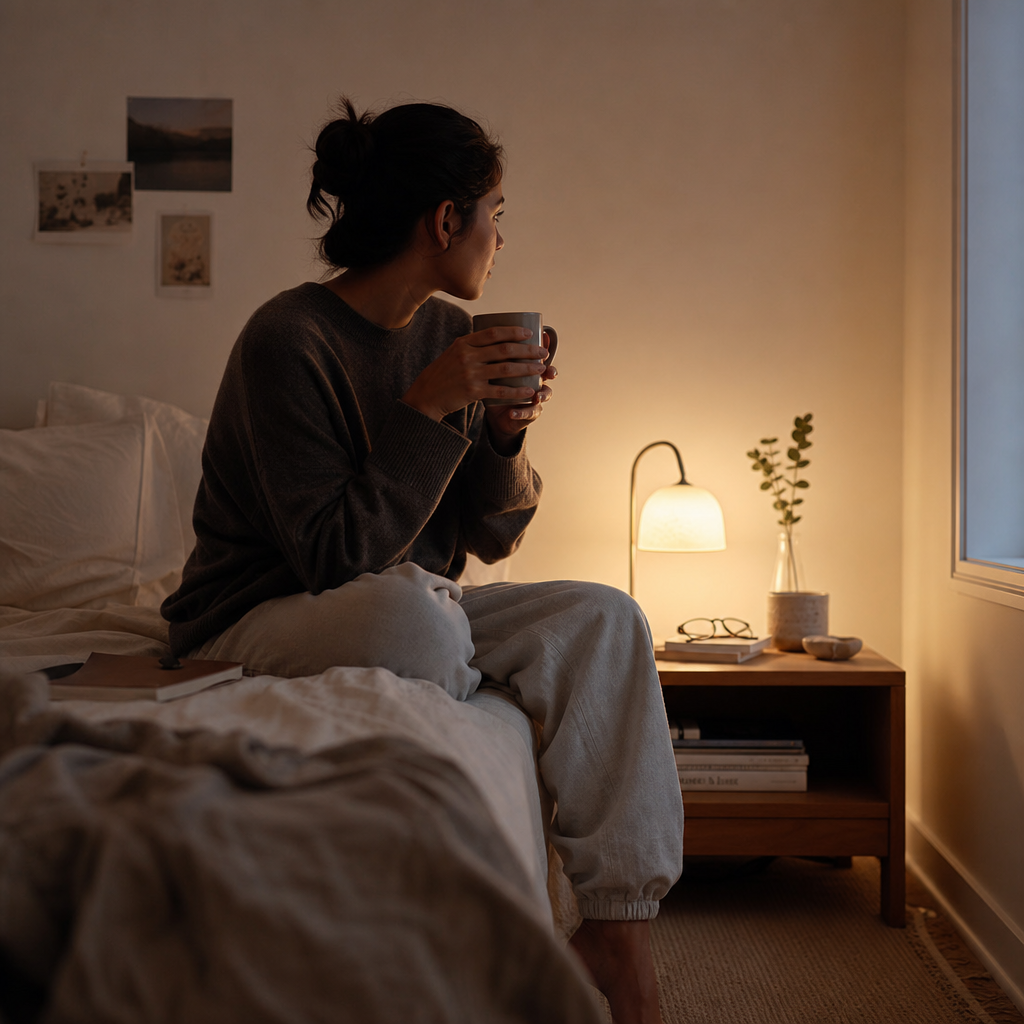
A self-care ritual is a repeated, intentional sequence of actions designed to restore your mental, physical, or emotional state. The word "ritual" is doing real work here. It implies that the sequence has meaning attached to it, not just function.
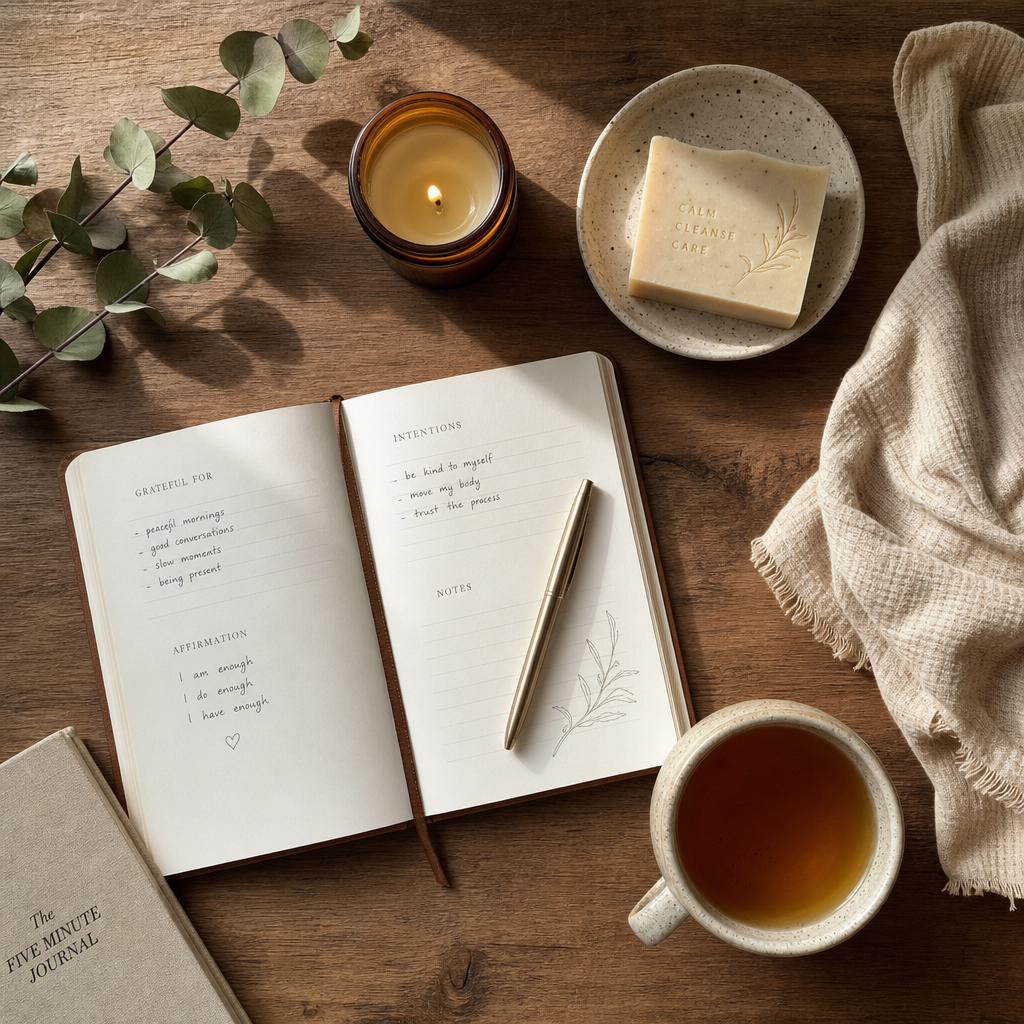
In practice, this means a bath is not just about getting clean. It becomes a ritual when you treat the process — the temperature of the water, the scent of the product, the absence of a screen — as signals to your body that recovery is happening now. The repeated sequence conditions your nervous system to relax on cue. Our guide to creating an evening self-care routine at home walks through one version of that sequence.
Self-care rituals differ from wellness trends in one important way. Trends are adopted and discarded. Rituals are built slowly and owned permanently. They do not require expensive equipment or a dedicated room. They require that you return to them consistently enough that your body starts to anticipate them.
Ritual vs. Routine: Why the Distinction Matters
The difference between a self-care ritual and a self-care routine is not semantic. It determines whether the practice survives contact with a stressful week.
Routines are mechanical, rituals are meaningful
A routine is a sequence you follow because it is efficient. You shower, brush your teeth, and get dressed without thinking about any of it. That is useful, but it does not produce the parasympathetic nervous system activation that actual rest requires.
A ritual asks you to be present for each step. You notice the warmth of the water, the texture of a robe, the smell of a candle. This deliberate attention is what makes the practice restorative rather than just procedural.
Why this matters practically
When life gets difficult, routines are the first things to collapse because they carry no emotional weight. Rituals are more resilient. People protect them. The goal of building a self-care habit is to create something you want to return to, not something you feel obligated to complete.
A common mistake is treating self-care as a productivity tool, something to make you more efficient at work. That framing turns a ritual into a routine immediately, and it tends to be abandoned the moment life gets busy.
Why Consistency Matters More Than Perfection
The science here is clear. A 2010 study published in the European Journal of Social Psychology found that habit formation is not about perfect repetition. It is about frequency. Missing one day has almost no statistical effect on long-term habit retention. Missing three or four in a row does.
"Habits are formed through repetition, not resolve. The neurological pathway deepens each time a behavior is repeated in a consistent context, regardless of how perfectly that behavior is executed." — Wendy Wood, research psychologist and author of Good Habits, Bad Habits
This is the core argument against perfectionism in self-care. If your evening ritual requires a pristine bathroom, a specific candle, two uninterrupted hours, and the right mood, you will execute it perhaps four times a month. That is not enough repetition to build a neural groove.
If your evening ritual requires a warm bath, a product you like, and 20 minutes of quiet, you can hit that 20 to 25 nights a month. At that frequency, the habit becomes automatic within two to three months. Your body begins to anticipate the ritual before you consciously initiate it.
Wellness routine consistency is not about being disciplined every single night. It is about lowering the barrier to entry so that showing up imperfectly is still showing up.
Building a Self-Care Habit That Actually Sticks
There are three mechanics that determine whether a self-care habit survives past the first month. Most guides skip two of them entirely.
Anchor it to an existing behavior
Habit stacking — pairing a new behavior with an established one — is one of the most well-supported tools in behavioral psychology. Link your self-care ritual to something you already do without thinking. After you put the kids to bed. After you close your laptop. After you change out of work clothes. The existing behavior becomes a trigger that fires the new ritual automatically.
Make the environment do the work
If your bath products are buried under the sink, you will skip the ritual on tired nights. If they are visible, arranged deliberately, and ready to use, you will not need willpower to start. The environment cue is more reliable than motivation. Keep your bath soak, your candle, and your robe where you will see them when you walk into the bathroom. The setup reduces the cognitive load of beginning.
Define what "enough" looks like
The most durable self-care habits have a minimum viable version. A full ritual might be a 20-minute bath, a skincare routine, and 10 minutes of reading. The minimum viable version is five minutes of hot water and one product you genuinely enjoy using. On the nights you can only manage the minimum, you still preserve the habit loop. That is more valuable than skipping entirely because the full version was not available.
Pro tip: Write down your minimum viable ritual in a single sentence and put it somewhere visible. On hard nights, that sentence is your permission to do less without quitting the habit entirely.

The Elements of an Effective Evening Self-Care Ritual
An evening ritual works because it signals transition. Your nervous system is not designed to switch instantly from high-alert work mode to deep rest. It needs a bridge, and a deliberate sequence of sensory actions is one of the most effective bridges available. For seven specific ones, see our evening ritual upgrades.
Temperature: warm water is not optional
Warm water, whether in a full bath or a foot soak, triggers vasodilation. Blood moves to the surface of the skin, core body temperature then drops slightly when you step out, and that drop signals the brain that it is time to sleep. A warm bath 60 to 90 minutes before bed consistently improves both sleep onset time and sleep quality. Our guide to mineral bath soaks covers what to add to the water.
Scent as a neurological anchor
The olfactory system has a direct pathway to the limbic system, the part of the brain that processes emotion and memory. Using the same scent consistently during your ritual, whether from a bath product, a candle, or a room spray, creates a conditioned association between that scent and a relaxed state. Over time, the scent alone begins to trigger the relaxation response before you have even started the ritual fully.
Physical comfort as a deliberate signal
Putting on a quality robe after a bath is not indulgence for its own sake. It is a physical cue that the transition from effort to rest is complete. The tactile comfort reinforces the neurological signal. This is why the products in your ritual matter. Not because of brand prestige, but because sensory quality produces a stronger conditioned response than a product that simply gets the job done.
Pro tip: Choose two or three products to anchor your ritual and use them consistently for at least 60 days before rotating. Novelty is appealing, but consistency of product builds the sensory memory that makes the ritual restorative.
Common Mistakes That Derail Wellness Routine Consistency
Most people abandon self-care habits within the first three weeks, not because the practice does not work, but because of predictable structural errors.
Starting too big
A common mistake is designing an elaborate first ritual that requires 90 minutes, seven products, and complete silence. When real life arrives, that ritual becomes impossible three nights out of five. The habit collapses. Start with 15 minutes. Build up only after the habit is automatic.
Treating missed days as failures
Missing one night is not a failure. It is statistical noise in a long-term practice. The problem is when people interpret a missed day as evidence that they are "not a self-care person," which turns one missed night into an abandoned habit. Neutral self-talk on missed days, something as simple as "I will do it tomorrow," preserves more habits than any motivational strategy.
Using the ritual as a reward for productivity
When self-care becomes something you earn rather than something you do, it stops being a consistent practice. You will skip it on the nights you feel you have not done enough, which are the exact nights you need it most. The ritual must be unconditional to be consistent.
Comparing Three Self-Care Ritual Approaches
| Approach | Structure | Best For |
|---|---|---|
| Minimum Viable Ritual | One to three steps, 10 to 15 minutes, consistent nightly anchor. Example: warm bath with a single soak product, followed by putting on a robe. | Beginners, people with unpredictable schedules, anyone rebuilding after burnout. |
| Layered Evening Ritual | Three to five steps, 30 to 45 minutes. Includes sensory elements like candles or bath salts, a skincare sequence, and a wind-down activity such as reading. | People with established evening availability who want a more complete transition from work to rest. |
| Themed Ritual Rotation | Assigns specific rituals to specific nights. Example: deep bath with Epsom salts on Sundays, light skincare-only ritual on weeknights, robe and reading ritual on Fridays. | People who find full daily rituals unsustainable but want more than a minimal practice on most nights. |
In practice, most people who sustain a self-care ritual long-term start with the Minimum Viable approach and naturally expand it without forcing the transition. The expansion happens because the ritual starts delivering results, which makes it worth spending more time on. Imposing the Layered approach from day one typically backfires.
Frequently Asked Questions
What is the difference between a self-care ritual and a self-care routine?
A self-care routine is a sequence you follow for efficiency, often without conscious attention. A self-care ritual is the same sequence performed with deliberate intention and presence. The ritual version activates the parasympathetic nervous system more effectively because the attention itself signals safety and rest to your brain. Both can include identical steps. The difference is entirely in how engaged you are while doing them.
How long does it take to build a consistent self-care habit?
Research from University College London puts the average habit formation period at 66 days, with a range of 18 to 254 days depending on the complexity of the behavior and the individual. For a simple evening ritual anchored to an existing behavior, most people report it feeling automatic within four to six weeks of daily repetition. Skipping occasional days does not significantly delay this timeline.
Can a self-care ritual be effective if it only lasts 10 to 15 minutes?
Yes, and shorter rituals often outperform longer ones over time because they are more sustainable. A 10-minute ritual completed 25 nights per month produces more conditioning than a 60-minute ritual completed six nights per month. Frequency matters more than duration, particularly in the early weeks of habit building.
What products actually support a self-care ritual versus just adding clutter?
Products earn their place in a ritual when they serve as sensory cues that reinforce the transition you are trying to create. A bath soak with a consistent scent, a quality robe that signals physical comfort, or a single candle that anchors the atmosphere are all functional ritual tools. Products that require significant effort to use, that need specific conditions, or that you feel obligated to finish rather than genuinely enjoy, will quietly undermine the ritual.
Is it possible to build a self-care ritual on a tight budget?
Completely. The ritual's effectiveness comes from consistency and intention, not from product cost. A warm bath with an affordable soak, a clean robe, and a candle you reuse regularly can produce the same conditioning as a premium spa product lineup. Spending beyond your comfort level on self-care products introduces a different kind of anxiety that works against the ritual's purpose. Our guide to a spa bath at home without the price tag is built around this.
Why do evening rituals work better than morning rituals for stress recovery?
Morning rituals are valuable for priming focus and energy, but they do not address stress accumulated across the day. Evening rituals create a deliberate transition out of stress mode, which improves sleep quality and allows genuine overnight recovery. The drop in core body temperature after a warm bath, the absence of screens, and the sensory anchors of a consistent ritual all combine to support the shift toward sleep.