

10 Bath Essentials Every Self-Care Enthusiast Needs
Most people treat their bath as an afterthought, a quick rinse before bed with whatever soap is sitting on the ledge. But the at-home wellness category has grown sharply in recent years, driven largely by people deliberately upgrading their evening rituals. The difference between a forgettable shower and a genuinely restorative evening routine often comes down to having the right bath essentials in place. This guide cuts through the noise and tells you exactly which must-have bath products are worth your money and which ones you can skip entirely.
Table of Contents
- Why Your Bath Setup Matters More Than You Think
- The 10 Bath Essentials, Ranked and Explained
- Comparison: Bath Essential Formats Side by Side
- How to Build Your Evening Ritual Around These Products
- Gifting Self-Care Products: What Actually Lands
- Frequently Asked Questions
Quick Takeaways
| Key Insight | Explanation |
|---|---|
| A quality bath soak is the single highest-impact purchase | Magnesium-rich bath soaks support muscle relaxation and signal the body to wind down. They deliver the most noticeable ritual benefit per dollar spent. |
| Your towel matters more than your body wash | A dense, absorbent towel or robe elevates every bath experience. Low-quality towels undo the work of premium bath products instantly. |
| Candles set the environment, not just the mood | Scented candles with clean wax and cotton wicks reduce ambient mental stimulation and prime the nervous system for rest. |
| A bath caddy converts a bath from passive to intentional | Having a place for a book, drink, or face mask turns a soak into a deliberate ritual rather than just lying in water. |
| Dry brushing before bathing amplifies skin benefits | Dry brushing removes dead skin cells so that bath oils and scrubs absorb more effectively. |
| Most people overbuy and under-use bath products | A curated set of five to seven core items used consistently outperforms a cluttered shelf of thirty products used sporadically. |
| Fragrance-free options are underrated for sensitive skin | Many products marketed as luxurious contain synthetic fragrance that irritates skin. Fragrance-free formulas often perform better for daily use. |
Why Your Bath Setup Matters More Than You Think
The case for bathing as a wellness practice rests on two reasonably well-supported mechanisms. Thermal regulation helps lower core body temperature after the bath, which is a reliable sleep-onset trigger. And the sensory environment of a well-prepared bath reduces stimulation by removing visual and auditory input. Our guide to mineral bath soaks goes further into what the water itself is doing.
The products you use are not decoration. They are functional tools that either support or undermine the physiological and psychological benefits of the ritual. Choosing the wrong ones, like a bath bomb packed with synthetic dye and no skin benefit, gives you the aesthetic without the function.
Our approach here is built on a simple principle: fewer, better things. We would rather point you toward a short list you will actually use than a catalogue you will scroll past. You are building a ritual, not a collection.
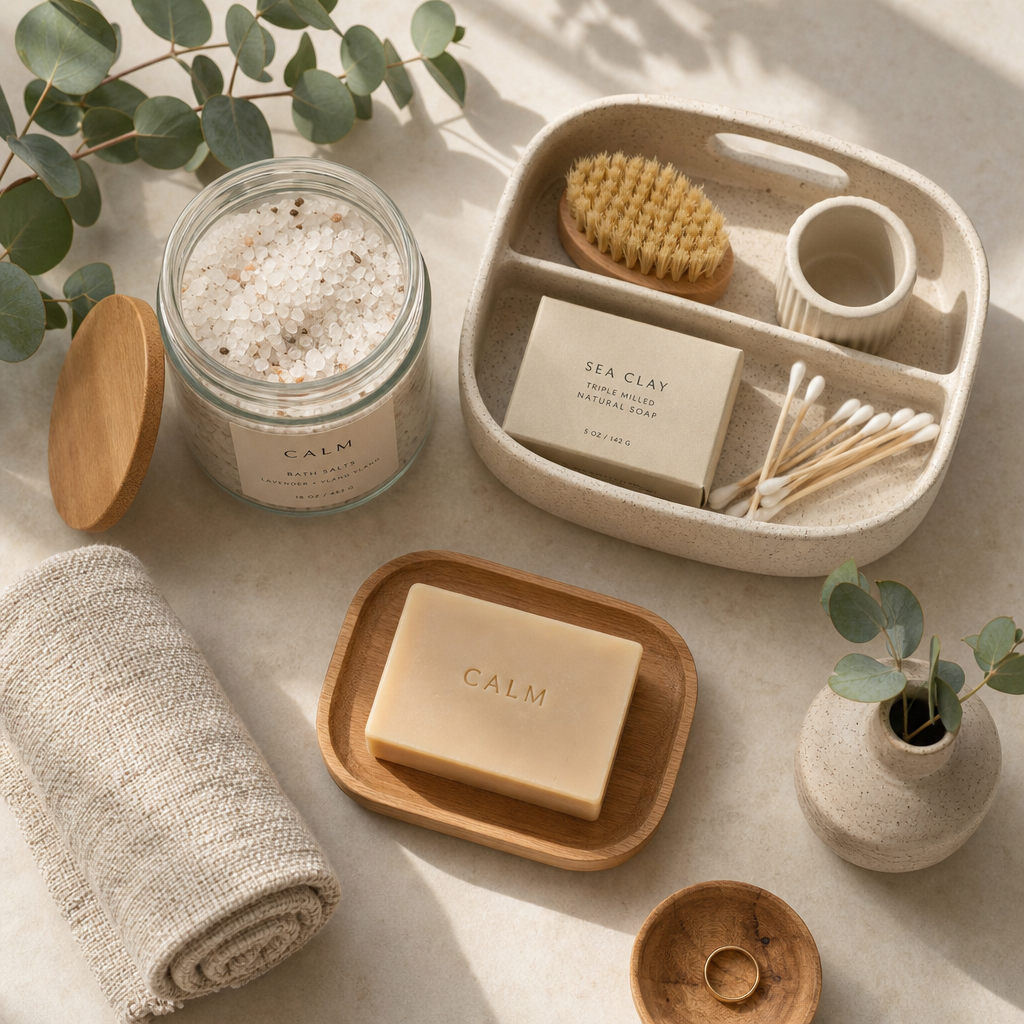
The 10 Bath Essentials, Ranked and Explained
1. Magnesium Bath Soak or Epsom Salt Blend
This is the non-negotiable anchor of any serious bath ritual. Magnesium sulfate is associated with muscle relaxation and is the most common base for recovery-focused soaks. A common mistake is buying the cheapest generic option from a grocery store. Look for blends that combine Epsom salt with added botanicals or essential oils so the soak does double duty on both skin and senses. Our guide to choosing the perfect bath salts compares Epsom, Dead Sea, and Himalayan options.
Pro tip: Use two full cups of Epsom salt per standard-sized bath. Half a cup is decorative, not functional.
2. A High-Quality Robe or Plush Towel
A dense Turkish cotton robe is one of the must-have bath products that people consistently underestimate until they own one. The sensory experience of wrapping yourself in something genuinely soft and absorbent after a warm bath is not indulgent. It completes the thermal wind-down cycle your body needs. Thin, scratchy towels create friction, literally and psychologically, that interrupts the transition to rest. We cover materials and weight in how to choose a bath robe and towels.
3. Aromatherapy Candles with Clean Wax
The candle category is overcrowded with poor performers. Soy or coconut wax candles with cotton or wood wicks burn cleaner and throw scent more consistently than paraffin. For bath rituals specifically, lavender, eucalyptus, and cedarwood are well-supported choices. Our guide to the best candles for relaxation covers what to look for.
4. A Bamboo or Teak Bath Caddy
A bath caddy is the organizational backbone of a functional ritual. Without one, your products end up on the floor or the toilet lid. A proper caddy with extendable arms holds a book, a drink, your phone face-down (intentionally), and any face or hair masks you are applying during the soak. This single purchase converts passive bathing into structured self-care time.
5. Body Scrub or Exfoliating Treatment
Exfoliation is the step most people skip and then wonder why their moisturizer does not absorb well. A sugar or salt-based scrub used two to three times per week removes dead skin cells and improves the effectiveness of any body oil or lotion applied post-bath. In practice, scrubs with carrier oils like jojoba or sweet almond oil are preferable to dry salt scrubs because they moisturize while they exfoliate.
6. Nourishing Body Oil or Butter
Post-bath moisturizing is most effective within three minutes of exiting the bath, while skin is still damp. A body oil applied to slightly damp skin locks in hydration far more effectively than lotion applied to dry skin. Shea butter, argan oil, and rosehip oil are well-researched ingredients for skin barrier support.
7. Dry Body Brush
Dry brushing before your bath is not a trend from wellness influencers. It has been used in Ayurvedic practice for centuries and remains a simple way to encourage skin cell turnover. Use firm, upward strokes toward the heart before stepping into the bath. Your skin will absorb everything that follows, including bath soaks and oils, more readily.
8. A Clarifying or Nourishing Shampoo
A bath ritual is a complete experience, and your scalp deserves the same intentional care as your skin. A clarifying shampoo used once a week removes product buildup and improves scalp health. On non-clarifying days, a nourishing formula supports everyday maintenance without stripping natural oils.
9. A Face Mask Designed for Steam Application
The steam environment in a warm bath softens skin in a way that makes masks more comfortable to wear. A clay or kaolin mask applied at the start of a 20-minute soak works better than the same mask applied cold in front of a mirror. This is one of the highest-value multitasking opportunities in a bath ritual, and most people leave it unused.
10. A Bath Pillow or Lumbar Support Cushion
Comfort determines whether you actually stay in the bath long enough for the ritual to work. Most standard bathtubs have a hard, sloped back that becomes uncomfortable within 10 minutes. A suction-cup bath pillow fixes this entirely. This is a modest purchase with outsized impact on consistency.
Comparison: Bath Essential Formats Side by Side
Not all versions of the same product category deliver equal results. Below is a direct comparison of the most common format choices within three core bath essential categories. This is where many buyers make expensive mistakes by choosing convenience over function.
| Product Category | Premium Format (Recommended) | Budget or Common Alternative |
|---|---|---|
| Bath Soak | Pure Epsom salt with botanical infusion, no synthetic fragrance. Higher magnesium concentration per cup. | Pre-packaged fizzing bath bombs with artificial dye. Minimal therapeutic value, mostly aesthetic. |
| Candle | Soy or coconut wax with essential oil fragrance and cotton or wood wick. Clean burn, consistent scent throw. | Paraffin wax with synthetic fragrance. Produces more soot during burning. |
| Moisturizer | Body oil applied to damp skin post-bath. Absorbs well, longer-lasting hydration. | Standard body lotion applied to dry skin. Sits on the surface, requiring reapplication within hours. |
Pro tip: When evaluating any new self-care product, check whether the first five ingredients include recognizable, skin-benefiting compounds. If the first five are mostly water, alcohol, and preservatives, the product is likely underdelivering on its promise regardless of how premium the packaging looks.
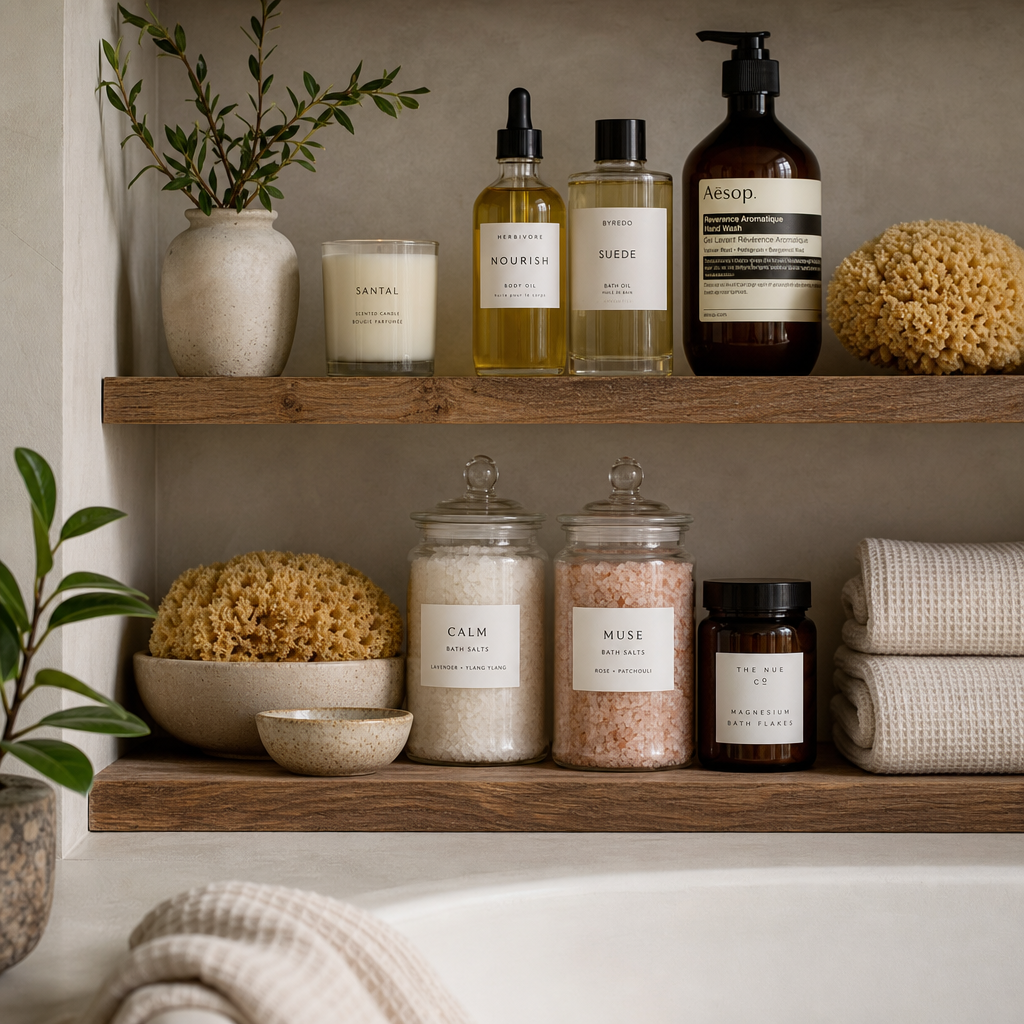
How to Build Your Evening Ritual Around These Products
Owning the right products is step one. Knowing how to sequence them is step two, and most self-care guides skip it entirely. The order in which you use your bath essentials affects both the physical outcomes and the psychological sense of ritual completion. Our evening self-care routine guide covers the full sequence.
The Optimal Sequence for a 30-Minute Bath Ritual
Start with dry brushing before the water runs. Light your candle and dim the lights before you step in. Add your bath soak to running water so it dissolves fully. Apply your face mask within the first two minutes of entering the bath. At the 15-minute mark, use your body scrub, then rinse. Exit the bath within 20 to 25 minutes. Apply body oil immediately to damp skin. Wrap in your robe.
This sequence takes 30 minutes from prep to completion and delivers every benefit these products can offer. Consistency matters more than duration — a 20-minute ritual done four nights per week outperforms a 60-minute ritual done once on Sunday, which is the argument we make in full in why consistency beats perfection.
The bath caddy earns its place in this sequence by keeping everything within arm's reach. Reaching out of the bath to grab products off the floor breaks the ritual state. Every interruption costs you more than the five seconds it takes. It chips at the continuity that makes a ritual feel like one.
Adjusting for Weeknight vs. Weekend Rituals
Weeknight rituals should be streamlined: bath soak, one candle, robe, body oil. That is it. Reserve the face mask, dry brush, and full scrub sequence for two to three sessions per week maximum. Overcomplicating a nightly ritual leads to skipping it entirely, which is the opposite of the goal. For the weekend version, see spa bath at home.
We select what we recommend with this frequency reality in mind. Nothing on the list requires a long commitment to be effective. These are self-care products chosen for real schedules, not aspirational ones.
Gifting Self-Care Products: What Actually Lands
Bath and self-care gifts are among the most popular gift categories in Canada, but most of them miss the mark because they prioritize presentation over function. A beautifully boxed set of synthetic-fragrance bath bombs and a plastic loofah does nothing for the recipient's actual wellbeing. It smells nice for ten seconds and then collects dust.
The gifts that land are the ones that introduce the recipient to a product they would not have bought for themselves but will not stop using once they try it. A high-quality Epsom salt blend, a single exceptional candle, or a properly dense bath towel fits this description. These are not flashy, but they are the kind of gift that comes up in conversation two months later.
How to Build a Thoughtful Self-Care Gift Set
Choose a primary anchor product, either a bath soak or a robe, at a price point that reflects quality. Add one complementary item, a candle or a body oil. Include a brief handwritten note explaining how to use them together. That is a better gift than a 12-piece set of products the recipient will never use. Our self-care gift guide breaks this down further by budget and occasion.
Frequently Asked Questions
What are the most important bath essentials for beginners?
Start with three things: a quality Epsom salt or magnesium bath soak, a dense robe or towel, and one clean-burning candle. These three items deliver the highest immediate improvement to your bath experience without requiring a large investment or a complicated routine. Add additional products one at a time so you can actually notice the difference each one makes.
How often should I use a body scrub in the bath?
Two to three times per week is the optimal frequency for most skin types. Over-exfoliating strips the skin barrier and causes dryness and sensitivity. Under-exfoliating limits how effectively your moisturizers and body oils can absorb. For sensitive skin, once a week with a gentle sugar scrub is the right starting point.
Are bath bombs actually worth it or are they just for aesthetics?
Most mass-market bath bombs are primarily aesthetic. They create fizz, color, and fragrance but deliver little measurable skin benefit. The exception is bath bombs formulated with genuine Epsom salts, skin-nourishing oils, and essential oils rather than synthetic fragrance.
What is the best way to moisturize skin after a bath?
Apply a body oil or a rich body butter within three minutes of leaving the bath, while skin is still slightly damp. This is the single most effective moisturizing window available because the skin has maximum absorption capacity. Standard lotion applied to dry skin hours later is far less effective and requires more frequent reapplication.
Can self-care bath products actually help with sleep?
Yes, and the main mechanism is well-documented. Warm baths taken 60 to 90 minutes before bedtime trigger a drop in core body temperature that mimics the natural physiological shift the body makes when entering sleep. Pairing a warm soak with lavender aromatherapy from a candle or bath oil adds a behavioral cue that the body learns to associate with sleep onset over time.
How do I choose self-care products that are right for sensitive skin?
Look for products labeled fragrance-free rather than unscented. Fragrance-free means no added fragrance compounds. Unscented sometimes means fragrance was added to mask other odors, which still irritates sensitive skin. Avoid products with alcohol, synthetic dyes, and sulfates near the top of the ingredient list. Ingredients like oat extract, aloe vera, and ceramides are specifically supportive of compromised skin barriers.
What is the difference between a bath soak and a bath oil?
A bath soak, typically Epsom salt or a mineral blend, dissolves in water and delivers minerals to the skin. A bath oil floats on the surface of the water and deposits a hydrating layer on skin as you move through it. Both serve a purpose. Soaks address muscle relaxation. Oils address skin hydration and softness. You can use both in the same bath — add the soak first so it dissolves completely before adding oil.