

Spa Bath at Home: Luxury Results Without the Price Tag
Most people underestimate how far a genuinely restorative bath departs from a forgettable soak. The gap between the two has nothing to do with price. It has everything to do with sequence, environment, and knowing which products actually do something versus which ones just smell nice in the shop. This guide treats a spa bath at home as a repeatable ritual, not a one-off indulgence, and every recommendation below reflects that frame.
Table of Contents
- Why Most Home Baths Miss the Mark
- The Essential Spa Bath Toolkit
- Setting the Environment Before You Fill the Tub
- Water Temperature, Minerals, and What Actually Works
- Bath Add-Ins That Earn Their Place
- Comparing Three Spa Bath Approaches
- After the Bath: The Ritual Most People Skip
- Building a Weekly Bath Ritual on a Canadian Budget
- Frequently Asked Questions
Quick Takeaways
| Key Insight | Explanation |
|---|---|
| Temperature matters more than products | Water between 37 and 40 degrees Celsius triggers the nervous system's relaxation response. Too hot can briefly raise cortisol before it drops. |
| Epsom salts are not a gimmick | A standard dose is 2 cups per full bath, not the tablespoon many people use. |
| Scent is the fastest sensory trigger | The olfactory nerve connects directly to the limbic system. Lavender and cedarwood are the two most research-supported options for relaxation. |
| Lighting changes the experience completely | Overhead fluorescent or bright white light keeps your brain in alert mode. Candles or warm-spectrum bulbs below 2700K signal evening and wind-down. |
| Your robe is not optional | The transition from warm water to cold air is where most home baths fail. A quality cotton or waffle-knit robe preserves body warmth and extends the relaxed state. |
| Bath duration has a sweet spot | 15 to 20 minutes is the optimal window. Beyond 30 minutes, skin begins to lose moisture rather than absorb it. |
| Curated product selection beats a cluttered shelf | Three well-chosen products used consistently outperform a shelf of ten mediocre ones. Fewer, better choices reduce decision fatigue before a bath even starts. |
Why Most Home Baths Miss the Mark
The average person runs a bath, climbs in, scrolls their phone for 10 minutes, and gets out feeling vaguely damp rather than restored. That outcome is not about the products. It is about the absence of intention.
A common mistake is treating the bath as an afterthought rather than an event. When the bathroom is cluttered, the lighting is harsh, your phone is within arm's reach, and you have not decided what you are actually trying to get out of the experience, the nervous system does not fully shift into parasympathetic mode. You can spend $80 on a single bath oil and still walk out feeling exactly the same as you went in.
The other frequent error is expecting instant results from bath products without addressing the sensory environment first. Scent, light, and sound reach the brain faster than any topical ingredient absorbs through skin. Get those three right before worrying about which bath bomb to buy — our 7 evening ritual upgrades covers each of them in order.
The Role of Sensory Environment
Pre-sleep warm baths have been shown to reduce the time it takes to fall asleep by roughly 10 minutes, but the surrounding environment has to support relaxation. A bath in a bright, cold, stimulating room does not produce the same neurological shift.
In practice, the environment setup takes about 5 minutes and costs almost nothing. Dim the lights, remove clutter from the counter, put your phone in another room, and choose one scent source before the water even starts running.
The Essential Spa Bath Toolkit
A true luxury bath on a budget does not require 15 products. It requires the right 4 or 5, used correctly. Here is what actually belongs in the rotation. For the longer list, see our 10 bath essentials guide.
Bath Salts or Soaks
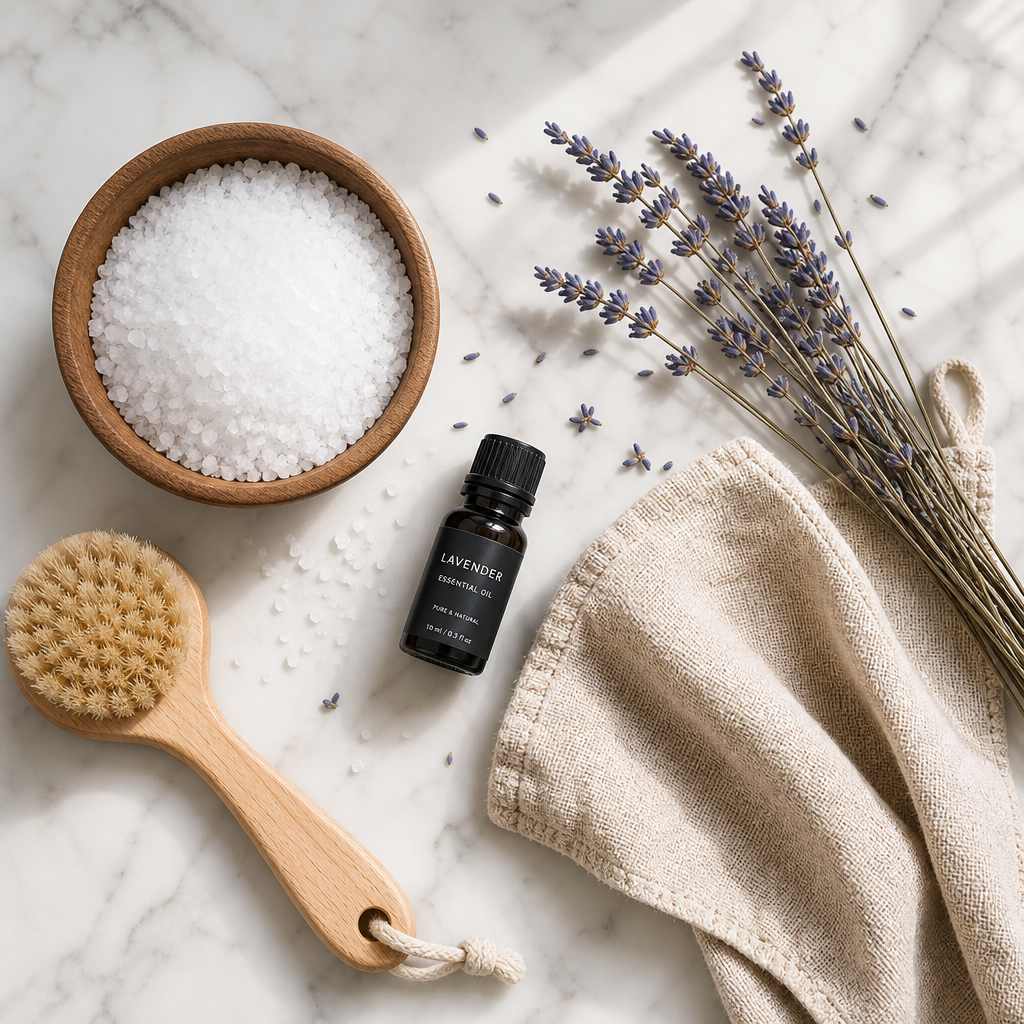
Epsom salts remain the most cost-effective foundation. Two full cups dissolved in a warm bath delivers a meaningful magnesium sulfate concentration. Dead Sea salts add trace minerals but come at a higher price point. For most people, pharmaceutical-grade Epsom salts with a few drops of essential oil added at home will outperform a branded bath soak that costs three times as much. Our guide to choosing the perfect bath salts compares the types in detail.
A Quality Body Oil or Moisturizer
Apply immediately after the bath while skin is still slightly damp. This is the step most people skip, and it is the one that leaves skin feeling genuinely different the next morning. Jojoba oil is the closest match to the skin's own sebum and absorbs without leaving a greasy residue. Shea butter works well for very dry skin but needs a minute to absorb before you put on a robe.
A Robe That Actually Insulates
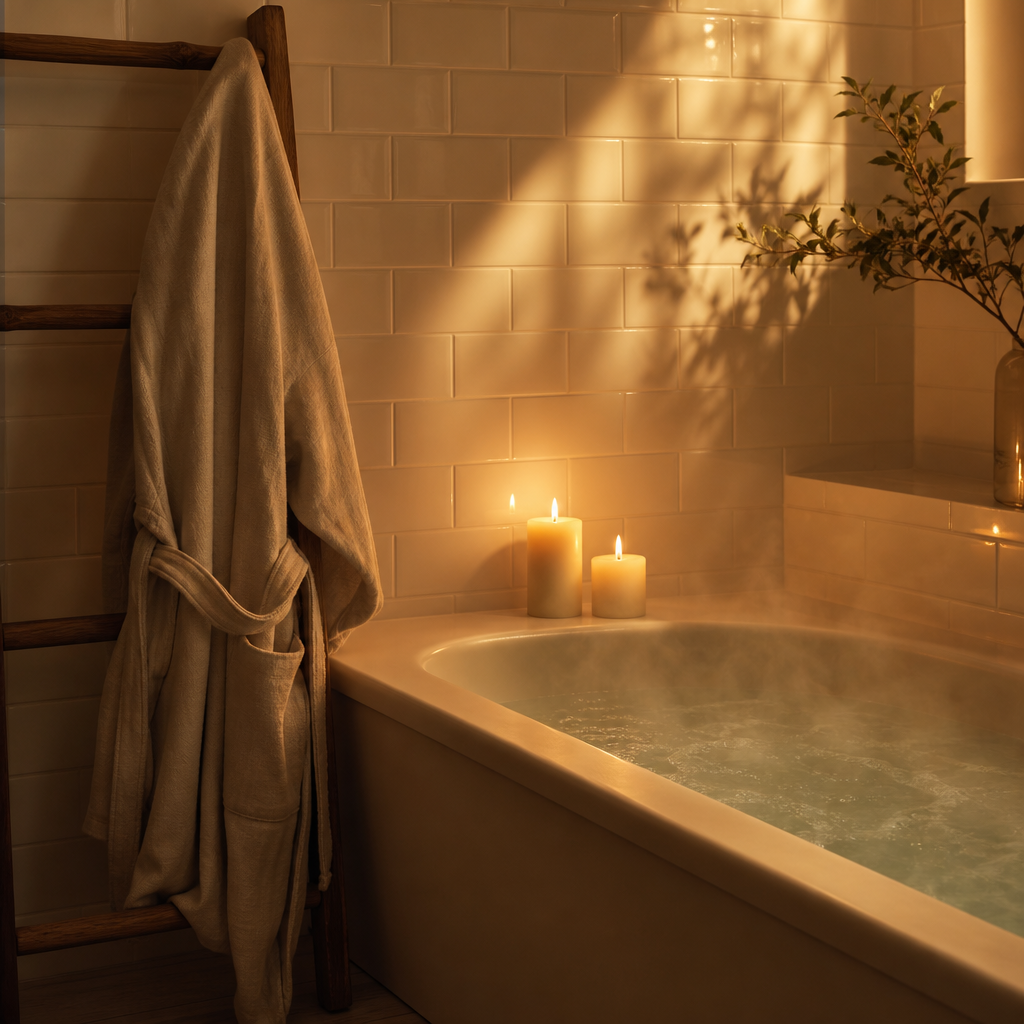
This is not optional. The thermal drop after a warm bath is real, and getting cold immediately ends the relaxed state the bath created. A mid-weight cotton waffle robe or a plush terry robe preserves warmth without overheating. We select robes specifically for this post-bath transition rather than for aesthetic appeal alone — our guide to choosing a bath robe and towels explains what to look for in material and weight.
Pro tip: Warm your robe on a heated towel rack or in a dryer for 5 minutes before your bath ends. Stepping into a warm robe instead of a cold one is the single easiest upgrade to the post-bath experience and costs nothing extra.
Setting the Environment Before You Fill the Tub
The setup window matters. Do not start running the bath and then scramble to set the mood while the tub fills. That approach creates low-grade stress at exactly the moment you want the opposite. Spend 5 minutes preparing the space before the water starts.
Lighting
Overhead lighting above 4000K is the enemy of relaxation. Switch to candles, a salt lamp, or a warm-toned bulb in a lower position. If your bathroom has a dimmer, use it. The visual cue of low, warm light tells your brain that the high-alert portion of the day is over.
Scent
Choose one scent source, not three. Layering a candle, a bath product, and a diffuser creates olfactory confusion rather than calm. If you are using a scented bath product, skip the candle or use an unscented one for the light alone. Lavender, bergamot, and eucalyptus are the three most consistently cited options in relaxation research — our guide to choosing the right candle scent covers how to pick one and stick with it.
Sound
Silence works. So does ambient sound at low volume. What does not work is a notification-enabled device anywhere near the bath. Put it on silent in another room. This one change alone meaningfully extends how long you stay in a relaxed state after the bath ends.
Water Temperature, Minerals, and What Actually Works
Water temperature is the most underrated variable in achieving a genuine spa experience. Most people run baths that are either too hot or too cool, and the difference in outcome is significant.
The Optimal Temperature Range
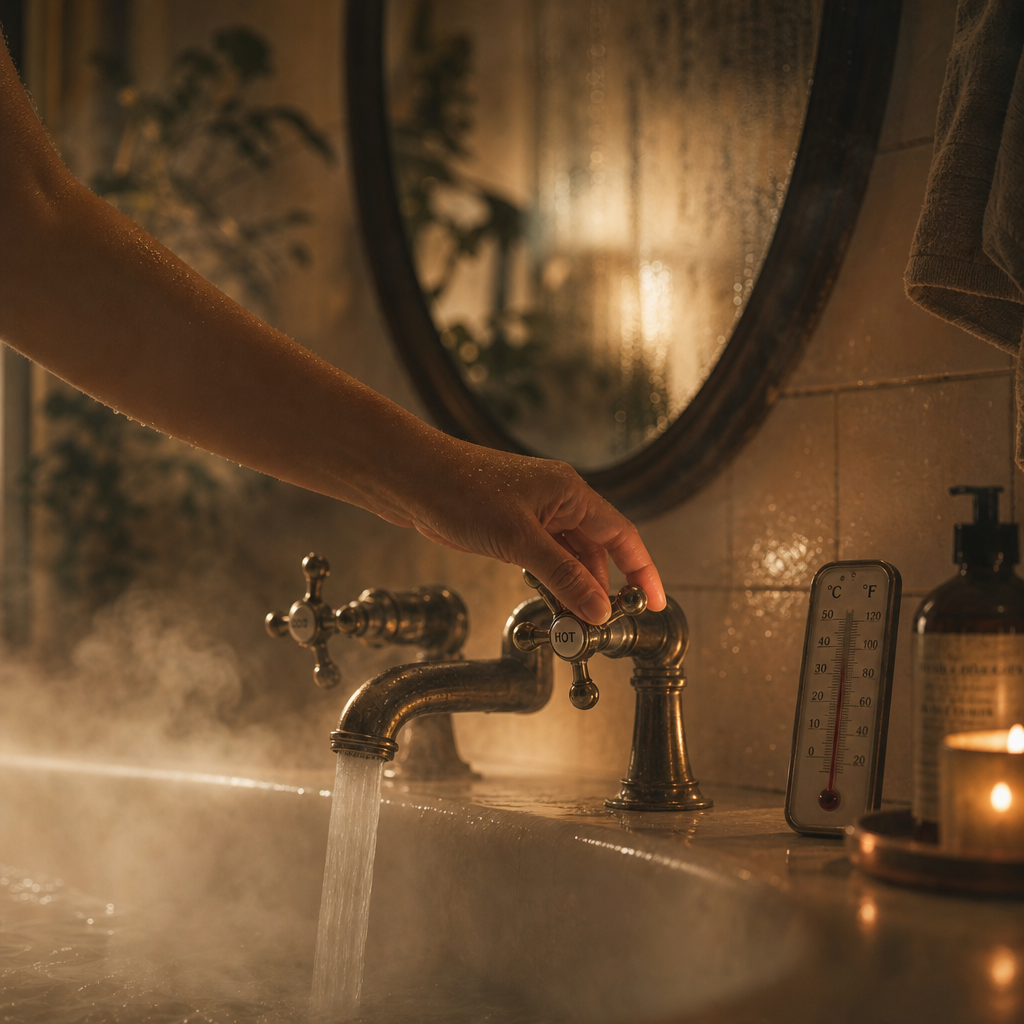
The target is 37 to 40 degrees Celsius, which is just above core body temperature. This range promotes vasodilation, reduces muscle tension, and supports the parasympathetic nervous system without the brief cortisol spike that comes from water above 41 degrees. A simple bath thermometer costs under $10 and removes the guesswork entirely.
Passive body heating through warm water immersion accelerates sleep onset and improves self-rated sleep quality, particularly in baths taken one to two hours before bedtime. — 2019 systematic review published in Sleep Medicine Reviews, analyzing data from 17 studies
What Minerals Actually Do
The literature on transdermal magnesium absorption is still developing. What is consistent is that warm water alone relaxes muscles, and magnesium sulfate is widely used to support that effect. Colloidal oatmeal, often included in bath soaks for sensitive skin, has strong evidence for reducing skin irritation and is worth using if your skin is reactive or dry.
Bicarbonate of soda added to a bath softens water and leaves skin feeling noticeably smoother. A quarter cup combined with two cups of Epsom salt is a functional, affordable base for almost any bath soak.
Pro tip: If you are building your own bath soak blend rather than buying pre-made, add your essential oils to the Epsom salt first and let it sit for 24 hours before using it. This allows the oil to bind to the salt crystals so it disperses evenly in water instead of floating on the surface.
Bath Add-Ins That Earn Their Place
Not every trendy bath product deserves shelf space. Here is an honest assessment of what works and what is mostly marketing.
Products That Deliver Consistent Results
Epsom salts, colloidal oatmeal, and bicarbonate of soda are the three workhorses. They are inexpensive, widely available across Canada, and have well-documented effects on skin and muscle tension. Any bath routine built on these three will outperform a routine built on novelty products with impressive packaging.
Bath oils with actual fatty acid content, like sweet almond, argan, or jojoba, add genuine skin conditioning that rinses off less completely than water-soluble products. They cost more per use but deliver visible results on skin texture over time.
Products That Are Mostly Aesthetic
Glitter bath bombs, colour-changing soaks, and products with ingredient lists dominated by synthetic fragrance are experience products rather than wellness products. That is not a reason to avoid them entirely, but do not confuse them with functional skincare. They produce a pleasant bath and not much else.
Bubble bath, particularly foaming products designed for heavy lather, can disrupt the skin's pH balance with repeated use. For occasional use they are fine. As a daily or near-daily product, they are not a first choice for anyone with sensitive or dry skin.
Comparing Three Spa Bath Approaches
The table below compares three distinct approaches to a spa bath at home, from the most accessible to the most complete. All three are achievable in a Canadian context without access to specialty retail.
| Approach | What It Includes | Best For |
|---|---|---|
| Minimalist Soak (Under $20/month) | Epsom salts, one essential oil, candles, a single post-bath moisturizer | Beginners, budget-conscious routines, or weeknight recovery baths |
| Mid-Level Ritual ($30 to $60/month) | Dead Sea or Himalayan salt blend, a body oil, a quality robe, candles, and a curated bath soak product | Regular self-care practitioners who want consistency and sensory quality |
| Full Spa Equivalent ($60 to $100/month) | Curated soak products, body oil, a plush robe, a bath tray, premium candles, a quality washcloth or loofah, and a dedicated post-bath skin routine | Gift sets, weekly ritual bathers, and anyone treating the bath as a genuine wellness practice |
In practice, the mid-level ritual delivers most of the full spa outcome at roughly half the cost. The jump from minimalist to mid-level is where the experience shifts most dramatically. Moving from mid-level to full equivalent is largely about texture, presentation, and enjoyment rather than a measurable change in the physiological benefit.
After the Bath: The Ritual Most People Skip
The 10 minutes after the bath determines whether the relaxation carries into sleep or dissipates the moment you step onto the cold tile. Most people rush through this window, and it is the single largest missed opportunity in a home bath routine.
The Post-Bath Sequence That Works
Pat dry rather than rubbing. Rubbing a towel across warm skin creates friction that re-stimulates circulation and partly undoes the calming effect of the bath. Pat gently and leave skin slightly damp before applying body oil or moisturizer.
Put on your robe immediately. Stay warm for at least 10 minutes before getting dressed or going to bed. If you are bathing before sleep, going straight to bed in light sleepwear while your body temperature is still elevated helps trigger the natural temperature drop that signals sleep onset.
Avoid screens for at least 20 minutes. The relaxed state created by a warm bath is genuinely fragile in the first 15 to 20 minutes after you exit. A bright phone screen and incoming notifications undo it rapidly. The bath is wasted if the next thing you do is check social media.
Skincare in the Post-Bath Window
Skin absorbs active ingredients more readily in the minutes immediately after a warm bath, when circulation is elevated and the surface is still hydrated. If you use any serums or targeted skincare, this is the most effective window to apply them. Keep the routine simple so it does not feel like a chore at the end of an otherwise relaxing experience.
Building a Weekly Bath Ritual on a Canadian Budget
The challenge with bath essentials Canada is not product availability. It is navigating a market where high prices are often used as shorthand for quality when the actual quality difference does not justify the gap. Building a weekly ritual that feels genuinely luxurious on a reasonable Canadian budget requires knowing where the money actually matters.
Where to Spend and Where to Save
Spend on the robe, a good candle, and one or two well-formulated bath products. These are the items that directly affect how the experience feels. Save on the mineral base, which can be purchased in bulk from pharmacy or grocery channels at a fraction of specialty retail pricing. A 2 kg bag of Epsom salts costs roughly $6 to $10 Canadian and covers many full baths.
We approach this problem by keeping our recommendations deliberately short. Rather than helping you build a collection of 15 products, we would rather point you at a focused selection of complementary items designed to work together as a system. If you do not want to spend hours researching bath products, that curation is the whole point.
Monthly Budget Benchmark
A genuinely good weekly bath ritual in Canada, including product costs amortized over a month, falls in the $35 to $55 range. That includes a quality bath soak or salt blend, a body oil or moisturizer, candles, and robe maintenance. It does not require a monthly subscription to a luxury brand or a $200 bath collection to start.
Wellness routines usually fail because of complexity, not cost. Keep the product count low, the sequence consistent, and the environment intentional. Those three variables matter more than any single product you could add to the shelf — the case we make in full in why consistency beats perfection.
Frequently Asked Questions
How long should a spa-quality bath actually last?
The optimal duration is 15 to 20 minutes. This is long enough for the body to fully relax and for any active bath ingredients to have contact time with the skin, but short enough to avoid the moisture loss and skin irritation that comes with prolonged soaking. Beyond 25 minutes, most people are not gaining additional benefit and may actually be drying out their skin.
Is a daily bath too much for skin health?
Daily baths are fine for most people if the water temperature stays moderate and you apply moisturizer immediately after. The concern about bathing frequency is mostly about very hot water and using harsh soaps or bubble baths that strip the skin's natural oil barrier. A daily warm soak with Epsom salts and a gentle product is not going to damage healthy skin.
What is the best bath product to start with if you are completely new to this?
Start with plain Epsom salts, one candle, and a body oil for after the bath. These three items cost under $25 Canadian combined and deliver a noticeably different experience than a plain water bath. Once you have that baseline, you can layer in additional products based on what you want to get from the experience.
Do bath bombs actually do anything for skin or are they purely aesthetic?
Most standard bath bombs are primarily an aesthetic product. The fizzing reaction, colour, and scent create a sensory experience but the skin benefit is minimal unless the bomb contains a meaningful concentration of a functional ingredient like colloidal oatmeal, coconut oil, or shea butter. Read the ingredient list rather than the marketing claim. If the oil content is in the bottom half of the list, the moisturizing effect is cosmetic at best.
Can a bath genuinely help with sleep, or is that overstated?
It is well-supported, not overstated. A 2019 meta-analysis in Sleep Medicine Reviews reviewed 17 studies and found that warm water immersion one to two hours before bed meaningfully reduced sleep onset time and improved self-reported sleep quality. The mechanism is the post-bath drop in core body temperature, which mimics the natural temperature reduction that signals sleep onset. The key is timing. Bathing right before bed or too early in the evening reduces the effect.
How do I make my bathroom smell like a spa without spending much?
One good candle and a single essential oil added to your bath products will do it. The mistake people make is using multiple competing scents at once. Choose one scent profile per session: either floral, citrus, earthy, or herbal. Lavender and eucalyptus together work well. Everything else competing in the same space creates a muddy result that smells busy rather than calming.
Are there bath products specifically formulated for Canadian water conditions?
This is worth paying attention to. Much of urban Canada has moderately hard water, which can reduce the lathering of soaps and leave a slight film on skin. Adding a quarter cup of bicarbonate of soda to your bath softens the water and noticeably improves the skin feel of the soak. Dead Sea salts are also effective in hard water conditions. If you notice your skin feels tight after baths, hard water is often the culprit rather than the product.