

Best Candles for Relaxation and Self-Care Routines
Most people grab a candle based on how the jar looks or what was on sale. Then they wonder why their bath feels like a mediocre spa experience instead of an actual reset. The truth is that candles for relaxation work through specific mechanisms tied to scent chemistry, burn quality, and environmental context. Get those right and your evening routine shifts in a measurable way. Get them wrong and you have a pretty jar that smells vaguely of cleaning products. This guide gives you a clear, opinionated framework for choosing the right candle so your self-care time actually delivers what it promises.
Table of Contents
- Why Scent Choice Changes Everything
- Wax Type and Burn Quality
- Matching Candle Scents to Your Bath Routine
- Candle Size, Burn Time, and Ritual Consistency
- Comparing Candle Types for Self-Care
- Red Flags to Avoid When Buying Self-Care Candles in Canada
- Gifting Candles: What Makes One Actually Worth Giving
- Frequently Asked Questions
Why Scent Choice Changes Everything
The olfactory system connects directly to the limbic brain, which is the part responsible for emotion and memory. This is not wellness marketing copy. It is anatomy. Scent bypasses the rational cortex faster than any other sense, which is exactly why certain smells trigger an immediate physical response before you have consciously processed them.
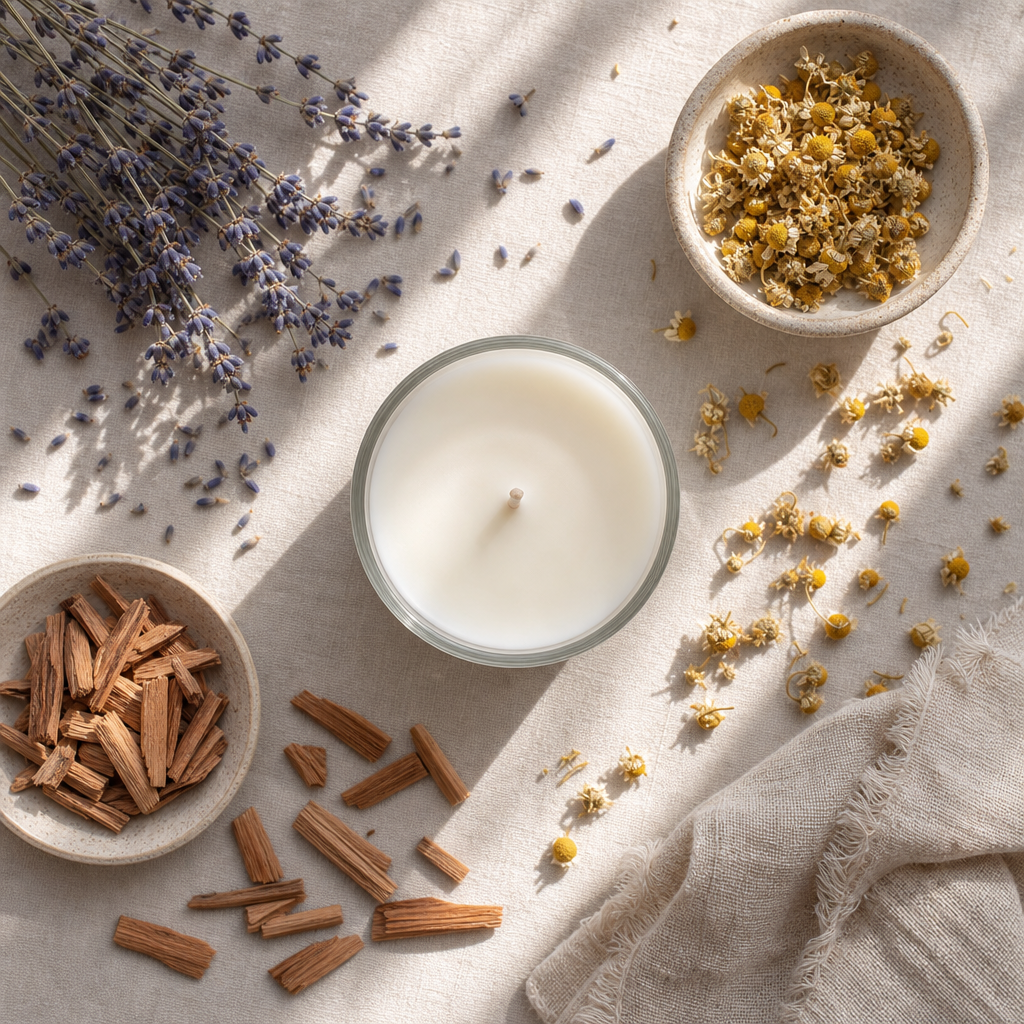
Lavender aromatherapy has been repeatedly associated with reduced anxiety scores and lower heart rate in controlled settings. Chamomile shows similar effects. Sandalwood and vetiver work through different pathways but produce comparable grounding results. Scent selection is the single highest-leverage variable in whether a candle supports your self-care routine or simply decorates the room — we break the scent side down further in how to choose the right candle scent for relaxation.
A common mistake is choosing a candle based on a scent that smells good in the store but feels energizing rather than calming. Citrus-forward scents like grapefruit and lemon are genuinely mood-lifting, but they are better suited to a morning shower than a pre-sleep bath ritual. For evening use, lean toward earthy, floral, or resinous profiles: lavender, rose, sandalwood, frankincense, ylang ylang, or cedarwood.
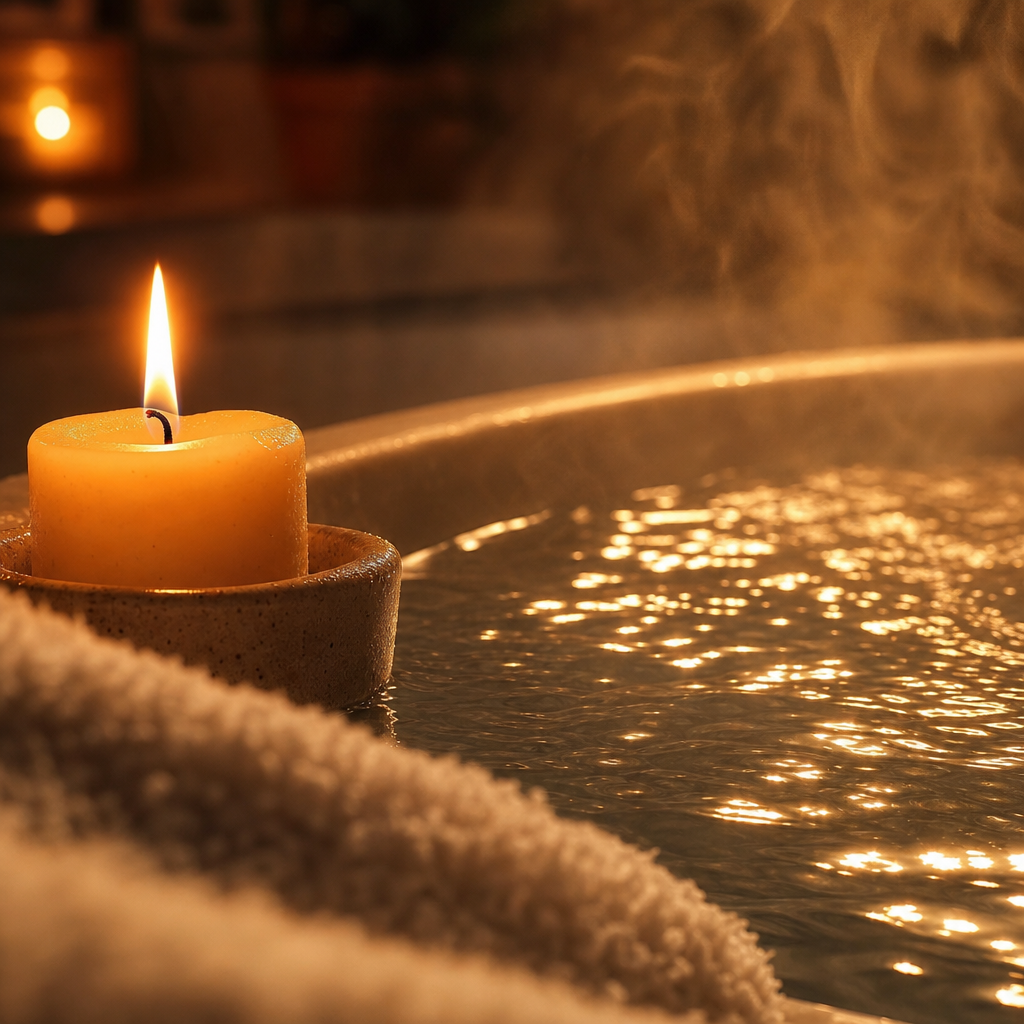
Pro tip: If you want to build a sleep-positive bath routine, keep your scent consistent. Choose one calming candle and use it exclusively during your evening bath. Within two to three weeks, that scent alone begins to signal wind-down time to your nervous system.
Wax Type and Burn Quality
Wax is not a trivial detail, especially when you are burning a candle in a bathroom with the door closed. Paraffin wax is a petroleum byproduct, and burning it in an enclosed, humid space produces combustion byproducts that can act as irritants. Indoor air quality guidance consistently flags poorly ventilated rooms as the main risk factor. Your bathroom during a bath is exactly that environment.
Soy Wax: The Practical Standard
Soy wax burns cooler and cleaner than paraffin. It holds fragrance oil well without needing synthetic boosters, which means the scent you get is more accurate to what was intended. Soy candles also have a longer burn time per ounce than paraffin, which gives you more hours per dollar spent. The trade-off is that soy wax can look uneven or develop surface texture over time. That is cosmetic, not functional.
Coconut Wax: Premium but Worth It
Coconut wax has the cleanest burn of any commonly available wax. It is sustainably harvested, has an excellent hot throw, and produces minimal soot. It is typically more expensive, which is why you see it in best candles for self-care collections positioned at a higher price point. If you are building a bath ritual you plan to maintain long-term, the investment is justified.
Beeswax: For the Purists
Beeswax burns extremely cleanly and the natural honey scent is subtle. The limitation is that beeswax does not hold added fragrance as well as soy or coconut, so your scent options are narrower. It is best used unscented or with minimal essential oil additions.
Matching Candle Scents to Your Bath Routine
Choosing candle scents for bath time is not about picking what smells luxurious in the abstract. It is about matching the scent profile to the specific outcome you want from your bath. Different baths serve different purposes and the candle should reinforce that goal, not contradict it.
For a decompression bath after a stressful workday, opt for lavender, chamomile, or vetiver. These are the best-studied scents for reducing cortisol and promoting parasympathetic nervous system activity. Avoid anything energizing at this stage, even if you love the scent.
For a muscle recovery bath with Epsom salts, eucalyptus and peppermint are strong companions. Both have anti-inflammatory associations and the cool, sharp notes create a mental sensation of relief that complements the physical soak. Our guide to choosing the perfect bath salts covers what to pair them with.
"Scent is the only sense that travels directly to the brain's emotional center without a relay station. Every other sense is processed first." — Dr. Rachel Herz, cognitive neuroscientist and author of The Scent of Desire
For a ritual bath tied to intention-setting or journaling, woody and resinous scents work best: frankincense, sandalwood, palo santo, or cedarwood. These scents have been used in contemplative and ceremonial contexts across cultures for centuries, and their grounding quality supports focused mental states.
Pro tip: Do not layer too many scents in one bath session. If your bath soak is already lavender-scented, light a lavender or unscented candle rather than adding a competing fragrance. Scent overload activates sensory fatigue and reduces the calming effect you are trying to achieve.
Candle Size, Burn Time, and Ritual Consistency
This is the section most candle guides skip, and it is one of the most practically important. Building an evening routine requires repetition, and habit research consistently finds that behavioral cues must be consistent to form durable habits. Your candle is one of those cues — a theme we return to in why consistency beats perfection.
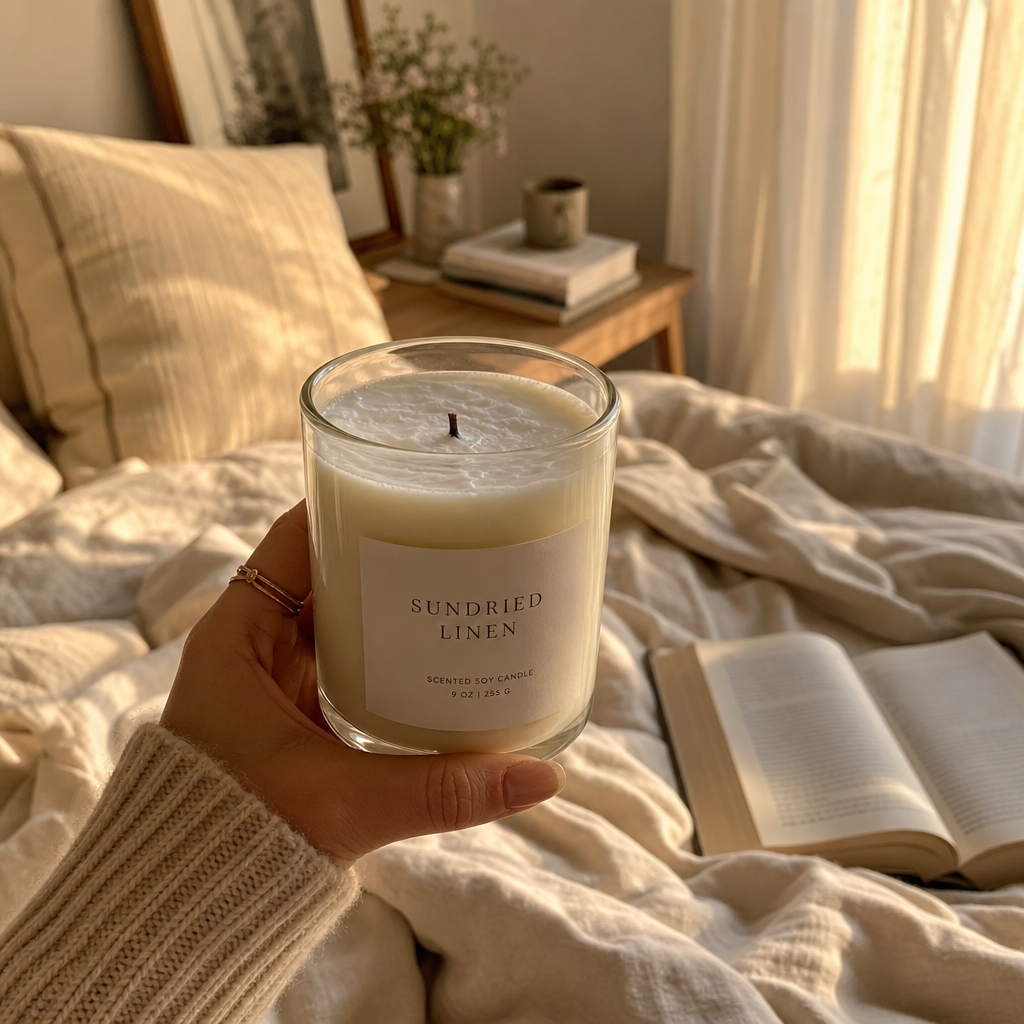
If your candle burns out after eight baths, you break the ritual while you source a replacement. This sounds minor but it is not. Interrupting a forming habit during the first four weeks significantly lowers the probability that it sticks. A candle with fewer than 30 hours of burn time is not sufficient for a daily ritual. Aim for 40 to 60 hours minimum if you intend to build a consistent routine.
Two-wick candles in wide vessels are better for bathrooms than tall, narrow jars. The wider melt pool means more fragrance surface area is exposed, which improves the hot throw in the humidity of a bathroom. A single-wick candle in a narrow vessel often struggles to fill a steamy room with scent at all.
Comparing Candle Types for Self-Care
Not all self-care candles Canada shoppers encounter are created with the same priorities. The table below compares the three most common candle types found in the self-care and wellness market based on criteria that actually matter for a bath ritual.
| Candle Type | Best For | Limitations |
|---|---|---|
| Soy Wax Candle (cotton wick) | Daily self-care routines, clean burn, longer sessions, good scent throw indoors | Surface appearance can look inconsistent; not as premium in gifting context |
| Coconut Wax Candle (wood wick) | Elevated bath rituals, gifting, multi-sensory experience (crackle sound), cleanest burn | Higher price point; fewer mass-market options in Canada |
| Paraffin Candle (standard retail) | Decorative use in ventilated spaces, occasional use only | Poor choice for regular use in an enclosed bathroom |
In practice, soy wax with a cotton wick is the right default for anyone building a daily or near-daily bath ritual on a reasonable budget. Coconut wax with a wood wick is the right choice for a gifting occasion or a candle you want to feel like a considered treat rather than a functional item.
Red Flags to Avoid When Buying Self-Care Candles in Canada
The Canadian self-care market has grown significantly in recent years. Growth means more options, but it also means more noise. Here is what to watch for when shopping for calming candles specifically.
Avoid any candle that does not disclose its wax type. This is a deliberate omission, not an oversight. Brands using quality ingredients are not shy about saying so. If the product listing says "premium wax blend" without elaboration, assume it contains paraffin.
Avoid candles with fragrance lists that include "fragrance oil" as the only ingredient note. Some fragrance oils contain phthalates. Look for candles that use phthalate-free fragrance oils or pure essential oils. Reputable brands will state this explicitly.
Be skeptical of any candle claiming a 100-plus hour burn time in a standard 8 oz jar. The math does not support it. Overstated burn time is one of the most common misleading claims in the candle market. A realistic estimate for a quality 8 oz soy candle with good wick maintenance is 45 to 55 hours.
Finally, avoid buying candles in sealed packaging with no way to assess scent before purchase unless you trust the curation. This is a large part of why we do the selection work here — we have burned the candle so you do not have to guess from a product description.
Gifting Candles: What Makes One Actually Worth Giving
A candle is one of the most common gifts given in Canada, and also one of the most commonly given without thought. The difference between a candle that feels like a considered gift and one that feels like a last-minute filler is almost entirely about specificity and quality of curation.
A best candles for self-care gift works because the giver has made a choice with intention. That means selecting a scent profile appropriate for the recipient's routine, choosing a wax type that performs well rather than just presenting beautifully, and picking a burn time that gives the recipient enough hours to actually build something with it.
For gift purposes, coconut wax candles with wooden wicks in well-designed vessels earn their higher price point. The crackle of a wooden wick during the first light is a sensory detail that makes the gift feel intentional, not accidental.
Pairing a candle with a complementary product amplifies the gesture. A calming candle paired with a bath soak in a matching scent, or with a quality robe or bath towel, shifts the gift from a single item to a complete ritual experience. Our self-care gift guide has more pairings along these lines.
Frequently Asked Questions
What candle scents are best for relaxation during a bath?
Lavender is the most well-researched option for relaxation, with multiple studies showing measurable reductions in anxiety and heart rate. Chamomile, sandalwood, vetiver, and frankincense are strong alternatives. For bath use specifically, eucalyptus adds a sensory dimension suited to muscle recovery soaks. Avoid citrus-dominant scents in the evening as they tend to be energizing rather than calming.
Is it safe to burn candles in the bathroom?
Yes, with two conditions. First, choose a candle made from soy, coconut, or beeswax rather than paraffin. Second, ensure some ventilation. A slightly open window or door crack is sufficient. Never leave a burning candle unattended and keep it away from fabric, shower curtains, and any items that could catch.
How long should I burn a candle during a bath?
Light the candle 5 to 10 minutes before entering the bath so the scent has time to fill the room. The average bath runs 20 to 30 minutes. This means you are looking at a 30 to 40 minute burn per session. Always allow the wax to melt to the edges of the vessel on the first burn to prevent tunneling, which can take up to 45 minutes on a wider candle.
What is the difference between a self-care candle and a regular decorative candle?
The key differences are wax type, fragrance composition, and intended use context. Self-care candles should use clean-burning wax, phthalate-free fragrance oils or essential oils, and scent profiles chosen for their psychological or physiological effects rather than purely for aesthetic appeal. Decorative candles often prioritize appearance and lower production cost over burn quality or scent integrity.
How do I know if a candle has a strong enough scent throw for my bathroom?
Test the cold throw first: if you can barely smell it through the packaging or at room temperature, the hot throw in a humid bathroom will disappoint you. For bathrooms specifically, look for candles described as having a strong hot throw and choose wider-vessel designs with two wicks over narrow single-wick jars.
Are expensive candles actually better for self-care routines?
Price correlates with quality up to a point, but it is not a reliable proxy on its own. A mid-range soy candle from a transparent brand with disclosed ingredients and honest burn time claims will outperform an overpriced candle with vague ingredient labeling. The factors that matter are wax type, wick quality, fragrance composition, and vessel design. Evaluate those directly rather than using price as a shortcut.
Can I use the same candle every day without it losing its calming effect?
Yes, and consistency is actually beneficial. Using the same scent daily as part of a wind-down ritual builds a conditioned association over time. After two to three weeks of repetition, your nervous system begins to associate that specific scent with relaxation, meaning the calming effect strengthens with use rather than diminishing.